

Explore the intricate landscape of UK politics and its far-reaching global implications.
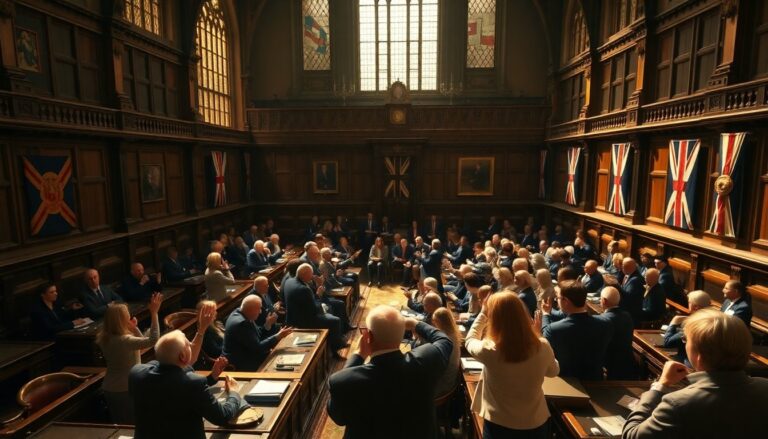
Exploring the political landscape of the United Kingdom
The United Kingdom is known for its rich history and cultural diversity. Its political landscape, however, is both complex and dynamic. To truly understand this landscape, one must consider its historical context, current frameworks, and the evolving challenges it faces.
This overview highlights the key elements that shape UK politics today.
Historical context of UK politics
Modern UK politics has its roots in a constitutional monarchy and parliamentary democracy. The Magna Carta, signed in 1215, established essential individual rights and imposed limitations on royal authority.
This pivotal document paved the way for future reforms, significantly shaping the political landscape.
Throughout the centuries, various legislative changes have transformed the political system. For instance, the Representation of the People Act 1918 extended voting rights to women and working-class men, marking a significant step towards inclusivity in governance.
This historical evolution has fostered a strong framework for governance characterized by a separation of powers and adherence to the rule of law.
The role of political parties
Political parties play a crucial role in the democratic system of the United Kingdom. The major parties, including the Conservative Party and the Labour Party, shape much of the political conversation. Each party embodies different ideologies: the Conservatives generally support free-market principles and uphold traditional values, while Labour focuses on social justice and the welfare of the public. Moreover, smaller parties such as the Scottish National Party (SNP) and the Green Party have gained visibility, illustrating the variety of political perspectives present in the country.
Understanding the political framework in the UK
The United Kingdom operates under a parliamentary system that features a bicameral legislature. This consists of the House of Commons and the House of Lords. Members of the House of Commons are elected by the public, while the House of Lords is made up of appointed life peers and bishops. This dual structure promotes a balance between elected officials and appointed experts, allowing for in-depth discussions on national matters.
Understanding the impact of Brexit
Brexit, the UK’s departure from the European Union, has reshaped the nation’s political landscape. This shift has brought forth challenges in trade, immigration, and international relations. The ongoing negotiations regarding the post-Brexit relationship with the EU and other countries highlight the complexities of establishing a new global identity.
Furthermore, Brexit has reignited the debate over Scottish independence. Many Scots, who preferred remaining within the EU, are reconsidering their position in light of the changes. This situation invites a critical examination of national identity and governance in a post-Brexit context.
Challenges facing the UK political system
The UK faces a series of challenges that test its political resilience. A primary concern is the declining public trust in political institutions. Scandals, policy failures, and accusations of corruption have fostered disillusionment among voters. Restoring this trust is essential for a stable democracy.
Social and economic disparities
Another significant issue is the growing social and economic disparity throughout the nation. Areas like the North East and South West experience higher unemployment rates and lower living standards compared to London and the South East. Tackling these inequalities is crucial for social cohesion and political stability. Government initiatives focused on regional development and investment are fundamental to any effective strategy addressing these disparities.
The future of UK politics
Diciamoci la verità: the future of UK politics will hinge on a mix of domestic and international influences. Key issues like climate change, economic recovery following the COVID-19 pandemic, and the shifting dynamics with the EU will take center stage. Voter engagement is on the rise, pushing political parties to evolve to stay relevant.
The reality is less politically correct: the UK’s political landscape is not just a series of events but a complex tapestry of historical influences and current challenges. Recognizing these elements is crucial for understanding the UK’s role on the global stage and its implications for future generations.
