Practical hacks and budget buys that make everyday cleaning safer and more effective, without complicated products or professional help
Everyday cleaning choices shape how quickly germs spread through your home. Small, smart changes — especially around the kitchen sink and on sofas — reduce cross-contamination, cut costs, and help fabrics and furniture look better for longer. Below is a practical, easy-to-follow guide of habits and inexpensive tools you can start using today.
Who this guide helps
– Shared flats and households with young adults – Busy professionals and families with irregular routines – Anyone who wants fewer sick days, less food waste, and generally cleaner, healthier spaces
Where to begin (and why it matters)
Start with the spots that hold the most grime: sink areas, drying racks, sofa seams and other high-touch fabrics.
These places trap food, oils and moisture — the perfect environment for bacteria and mould. Improve the flow of tasks so dirty items don’t recontaminate clean ones: scrape and sort heavily soiled pieces first, rinse or soak pots separately, wash at the hottest safe temperature, and keep greasy items isolated from clean dishes.
Washing-up made safer and simpler
– Skip needless pre-rinsing; scrape plates and soak only the very dirty pots in a separate basin. – If you use a dishwasher, opt for a high-temperature cycle for cutlery and plates when possible. Hand-wash delicate items last and refresh the rinse water frequently. – Replace sponges weekly and rotate reusable cloths every 2–3 days, or launder them after heavy use. – For raw meat juices or very messy spills, use single-use paper towels or a colour-coded cloth that goes straight into the wash. – When hand-washing, use hot water (as hot as the item can handle) and a good detergent — heat is one of the simplest, most reliable sanitizers.
The two-towel trick (a small habit that pays off)
Keep two dedicated towels and store them apart: – One towel only for food-contact drying (glasses, plates, cutlery). Keep it dry, and replace it whenever it becomes damp. – A second towel for non-food tasks (wiping counters, drying hands, handling bins). Store it separately from the food-contact towel. Machine-wash towels on hot or occasionally boil reusable ones. If you prefer disposables for messier jobs, rotate paper towels and launder cloths weekly. Fast-drying fabrics such as microfiber or linen work best; avoid heavy terry for food-contact drying because it traps moisture.
Upholstery: prevention and quick spot treatment
– Vacuum weekly with an upholstery attachment, paying special attention to seams and crevices where crumbs and microbes gather. – Treat fresh stains immediately: blot gently rather than rubbing, which can push liquid deeper into fibers. Test any cleaner on an inconspicuous patch first. – For removable covers, wash on the hottest setting the fabric allows and dry thoroughly. Stubborn stains or persistent odors often respond better to professional extraction and antimicrobial treatments than to home remedies.
When to call a professional
Bring in a pro for large spills, biological contamination, lingering odors, or any fabric labeled dry-clean-only. Professionals use solvent-based systems, controlled drying and extraction tools that prevent shrinkage, colour migration and structural damage.
Reading and following care tags
Fabric labels are shortcuts to safer cleaning. Common codes: – W — water-cleanable – W/S — safe with water or solvent – S — solvent-only – X — vacuum-only; professional cleaning only Following these codes helps protect colour and fibre structure.
Cleaning cadence: routine vs deep clean
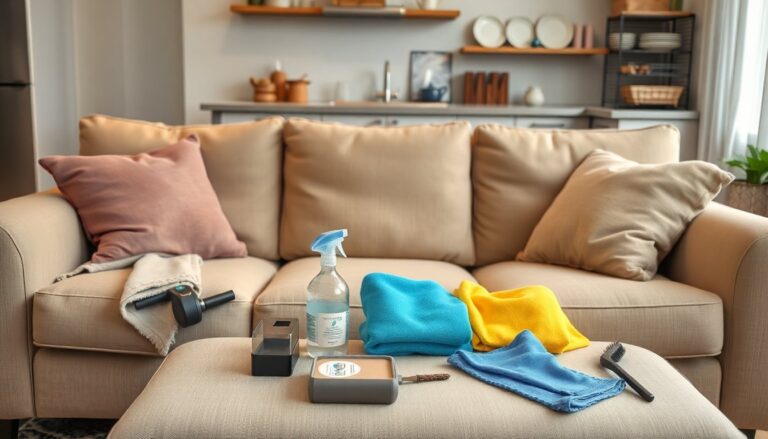
– Routine: vacuum seams and crevices weekly, blot spills immediately, and rotate cushions to even out wear. Keep a small kit handy (mild detergent, microfiber cloths, a soft brush, lint roller). – Deep clean: for light-use sofas, consider professional cleaning every 18–24 months; for high-contact pieces, every 6–12 months. Portable extractors and steam cleaners can work on water-safe fabrics if you follow manufacturer guidance carefully.
Leather care and tackling odors
– Dust leather with a dry microfiber cloth. Clean sparingly with a leather cleaner or diluted mild soap, then buff dry. Finish with a light leather conditioner to prevent cracking. – For odors, sprinkle baking soda, leave it to absorb, then vacuum thoroughly. Avoid heavy sprays that wet the surface and risk mildew.
Who this guide helps
– Shared flats and households with young adults – Busy professionals and families with irregular routines – Anyone who wants fewer sick days, less food waste, and generally cleaner, healthier spaces0