

Is owning a lion the new status symbol in Thailand? Let's dive into the world of exotic pets and the challenges they bring.
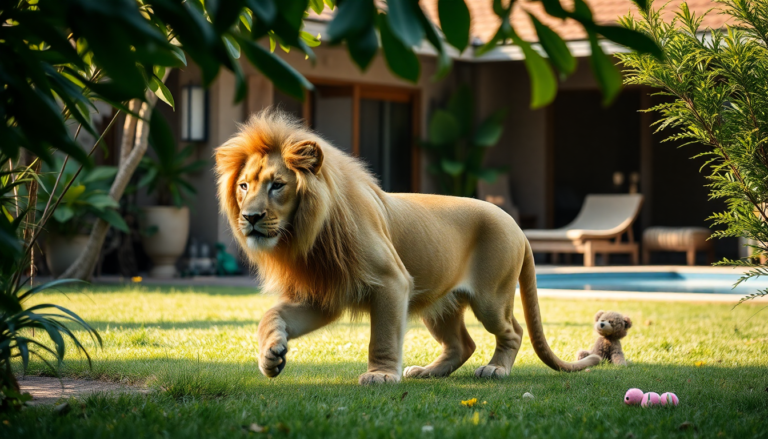
Okay, but can we talk about the latest trend of exotic pets taking over social media? 🦁✨ In Thailand, lion ownership is skyrocketing, and it’s not just a quirky hobby for the rich and famous anymore. It’s becoming a full-blown phenomenon, largely fueled by social media influencers showing off their wild companions.
But while these majestic creatures may look adorable in TikTok videos, the reality behind their ownership raises some serious questions about animal welfare, regulation, and the illegal wildlife trade.
Behind the TikTok curtain: the lion craze
Picture this: you’re scrolling through TikTok, and you stumble upon a guy named Tharnuwarht Plengkemratch.
He’s got two lions and a massive 200kg lion-tiger hybrid named Big George! 🤯 With nearly three million followers, Tharnuwarht has turned his love for these big cats into a social media sensation, posting cute updates and playful interactions. But what happens when the camera stops rolling?
In Thailand, owning a lion is legal, and the number of private owners has skyrocketed.
Recent reports estimate that there are nearly 500 lions registered across various settings, from breeding farms to petting cafes. This surge can be traced back to the irresistible allure of social media. Owners share lighthearted content that paints a rosy picture of life with these big cats, but behind the filters lies a troubling truth.
Despite attempts by the Thai government to introduce regulations—like requiring owners to microchip and register their lions—the law falls short in addressing breeding caps or welfare standards. This lack of oversight raises eyebrows: who’s really looking out for these animals’ well-being? 🐾
The dark side of exotic pet ownership
As the number of privately-owned lions grows, so do the potential issues. Wildlife experts, like Tom Taylor from Wildlife Friends Foundation Thailand, have been tracking this trend closely, and their findings are alarming: from just 130 lions in 2018 to nearly 450 by 2024, the rise is staggering. And here’s the kicker—about 350 lions are classified as “lost to follow-up.” That could mean unreported deaths, illegal sales, or worse, being kept in horrific conditions. 😱
What’s particularly concerning is the illegal trade. While Thailand has regulations that should prevent the trafficking of endangered species, the reality is murky. Traders are willing to cross borders to sell lions, raising the stakes for conservationists who are already stretched thin trying to manage the current population.
And let’s not forget about the rising demand for lion parts, which, despite recent declines in imports, still suggests a troubling underground market. What’s fueling this demand? Is it the thrill of owning a piece of the wild or the allure of an Instagram-worthy pet? 🌍📸
What’s next for Thailand’s lions?
Thailand’s Department of National Parks is aware of the challenges posed by this growing trend. Wildlife protection director Sadudee Punpugdee admits that while private ownership has been a longstanding issue, a gradual approach is needed. Limiting imports may help, but enforcement remains a significant hurdle. With authorities already overwhelmed, can they truly protect these majestic animals? 🤔
As for the lion owners, many justify their choices by claiming conservation motives. But the harsh truth is that these animals will never return to the wild. They’re not just pets; they’re wild beings that deserve to be respected and protected in their natural habitats.
So, what’s your take on this? Do you think owning exotic animals can ever be justified? Or should the focus be on their conservation in the wild? Let’s talk about it! 💬👇
