

Could this peace deal between Azerbaijan and Armenia really last, or are we just seeing a temporary truce?
Hey friends! So, let’s chat about something that’s been buzzing in the news lately: the peace treaty signed between the US, Azerbaijan, and Armenia. 🕊️ It’s a big deal, but as always, I have questions. Is this truly a step towards lasting peace, or just another political maneuver? Let’s break it down together!
The Meeting at the White House
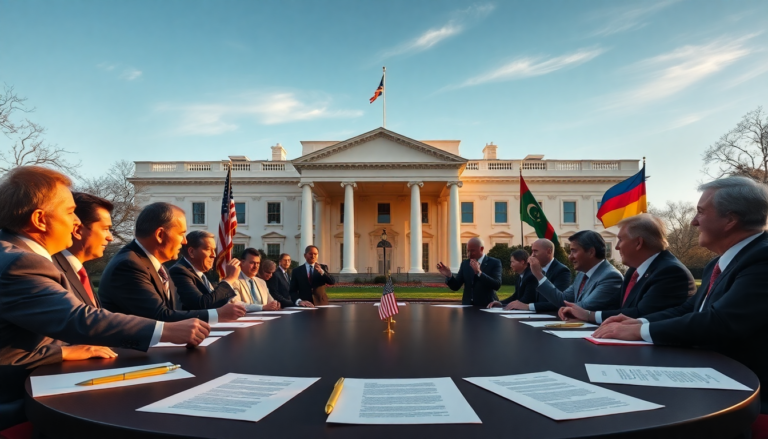
Recently, President Trump hosted Azerbaijani President Ilham Aliyev and Armenian Prime Minister Nikol Pashinyan at the White House to ink a peace treaty aimed at ending years of hostility. Sounds promising, right? 🤔 Trump described the signing as a game-changer, suggesting that these leaders could forge a ‘great relationship’ moving forward.
But, as someone who loves a good plot twist, I can’t help but wonder—will this actually change anything?
During the ceremony, Trump congratulated both leaders, stating that Armenia and Azerbaijan are committing to stop fighting, open up commerce, and respect each other’s sovereignty.
Aliyev even echoed these sentiments, calling it the beginning of ‘eternal peace in the Caucasus.’ But here’s the kicker: these two countries have a long history of conflict, stemming mainly from territorial disputes over Nagorno-Karabakh. Can we really trust that this time it’s different?
Understanding the Historical Context
So, let’s rewind a bit. The tensions between Armenia and Azerbaijan date back to the dissolution of the Soviet Union. Nagorno-Karabakh, an area that’s predominantly Armenian but internationally recognized as part of Azerbaijan, has been a hotbed of conflict. The recent military actions by Azerbaijan in 2023 led to a significant shift, with many ethnic Armenians being displaced from their homes. This is giving me serious vibes of historical injustices that are hard to shake off.
Now, with the new treaty in place, it’s clear that the US is positioning itself as a key player in the region, securing exclusive developmental rights to a transportation corridor that’s being dubbed the ‘Trump Route for International Peace and Prosperity.’ Sounds catchy, but it raises eyebrows. Are we witnessing a genuine effort for peace or just a strategic move for economic gain? Who else thinks the US involvement might complicate things further?
Reactions and Implications
Despite the optimistic tones from Trump and Aliyev, many Armenians are feeling a bittersweet sting from this agreement. The memories of Azerbaijan’s military campaign are still fresh, with accusations of human rights violations hanging in the air. Critics argue that this treaty was essentially signed under duress, and normalizing the situation is tantamount to accepting ethnic cleansing. This perspective is crucial to consider when discussing the future of the region.
Aram Hamparian, the executive director of the Armenian National Committee of America, summed it up well: ‘Erasing Nagorno-Karabakh is not peace.’ His statement really hits home. This isn’t just a political agreement; it’s about real people and their histories. As we look forward, will this treaty hold up against the weight of past grievances? It’s a tough question, and I’d love to hear your thoughts on this! 💬
In conclusion, while the peace treaty signed at the White House is undoubtedly a significant moment, the path ahead is fraught with challenges. It’s a classic case of ‘wait and see,’ but I’m here for the conversation. What do you think—can this treaty pave the way for real change, or is it just a temporary fix? Let’s discuss! #PeaceInTheCaucasus #AzerbaijanArmenia
