

Could an ancient ritual hold the key to better sleep for those with sleep apnea? A new study suggests conch blowing may be the answer.
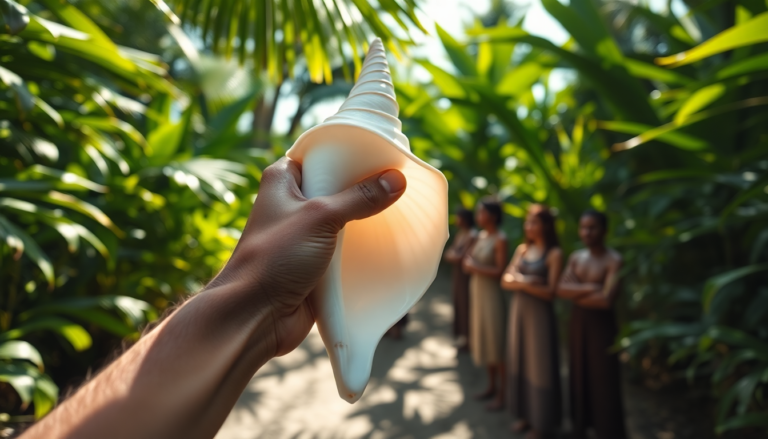
A recent study from India has uncovered an intriguing link between an ancient ritual known as conch blowing and relief from symptoms associated with obstructive sleep apnea (OSA). This sleep disorder, affecting millions globally, is notorious for disrupting breathing during sleep, leading to poor rest and daytime fatigue.
What if a simple, non-invasive practice could improve your sleep quality? Researchers found that participants who engaged in conch blowing experienced significant enhancements in their sleep quality, potentially offering a refreshing alternative to standard treatments.
Understanding sleep apnea and the conch blowing technique
So, what exactly is obstructive sleep apnea? It’s a condition where the throat muscles relax excessively during sleep, which can cause blockages in the airway. Symptoms often include loud snoring, choking sounds, and frequent awakenings. In the UK alone, around eight million people are estimated to be living with this condition.
Could this be you or someone you know?
The conch blowing technique, also known as shankh blowing, involves taking a deep breath and forcefully exhaling into a conch shell, a spiral-shaped shell often used in yogic practices. This method is thought to create strong vibrations and airflow resistance, which might help strengthen the upper airway muscles, possibly preventing the collapse that characterizes OSA.
In a small-scale trial conducted by researchers at the Eternal Heart Care Centre and Research Institute in Jaipur, India, 30 participants aged between 19 and 65 with diagnosed OSA took part. Sixteen individuals received training in shankh blowing, while the remaining 14 practiced deep breathing exercises. Both groups were instructed to practice for at least 15 minutes, five days a week. Sounds manageable, right?
Study findings and implications
After monitoring the participants for six months, researchers observed that those practicing shankh blowing reported a striking improvement in their sleep quality. They experienced a 34% reduction in daytime sleepiness—a significant win for anyone battling fatigue due to sleep apnea. Moreover, participants who practiced this technique showed higher blood oxygen levels at night and had four to five fewer apneas per hour on average. Isn’t that impressive?
Dr. Krishna K. Sharma, who led the study, explained, “The way the shankh is blown is quite distinctive. It involves deep inhalation followed by a forceful, sustained exhalation through tightly pursed lips.” This technique may help strengthen the upper airway muscles, including the throat and soft palate, which are crucial for keeping the airway open during sleep.
Current standard treatments for OSA often involve Continuous Positive Airway Pressure (CPAP) machines, which can be uncomfortable for many patients. Dr. Sharma pointed out, “While effective, many patients find it uncomfortable and struggle to use it consistently.” He suggests that shankh blowing could be a promising alternative, offering a simple, low-cost breathing technique that may enhance sleep quality without complex machinery. Wouldn’t that be a game-changer for those with OSA?
Future research directions
Following these promising results, researchers are gearing up for a larger-scale trial involving multiple hospitals to further validate their findings. Dr. Sharma mentioned, “This next phase will allow us to expand on our findings in a broader, more diverse population and assess how shankh blowing performs over longer periods.”
Additionally, the researchers plan to delve deeper into how this practice affects airway muscle tone, oxygen levels, and overall sleep quality. They’re particularly keen on comparing shankh blowing to conventional treatments like CPAP, especially in cases of more severe OSA. Could this ancient practice revolutionize how we approach sleep apnea?
Professor Sophia Schiza from the University of Crete emphasized the importance of this study, stating, “This is an intriguing study that shows the ancient practice of shankh blowing could potentially offer an OSA treatment for selected patients by targeting muscle training. A larger study will help provide more evidence for this intervention, which could benefit patients as a standalone treatment or in combination with other therapies.”
