

A tragic airstrike on a Gaza hospital has left several journalists and civilians dead, igniting outrage and calls for accountability amidst the ongoing conflict.
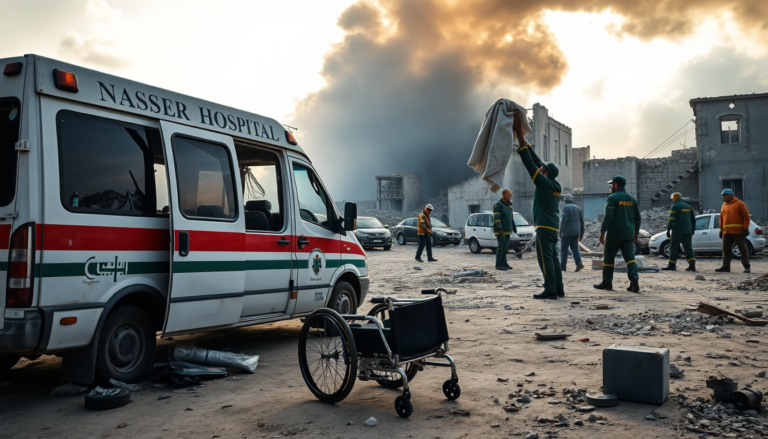
In a troubling escalation of violence, an Israeli airstrike on the Nasser Hospital in Khan Younis, Gaza, has tragically claimed the lives of at least 20 people, including five journalists. Israeli Prime Minister Benjamin Netanyahu described the incident as a “tragic mishap,” noting that the military is currently investigating what happened.
This attack highlights the dire situation in Gaza, where hospitals are already overwhelmed with casualties from ongoing conflicts.
What Happened?
The strike occurred on [insert date], targeting the top floor of the Nasser Hospital. Eyewitnesses recount the chaos that ensued as journalists and rescue workers rushed to help the injured, only to face a second missile that struck nearby, causing even more casualties.
Among the deceased was Mariam Dagga, a 33-year-old visual journalist known for her extensive reporting from Gaza. The loss of life included other journalists affiliated with major media outlets, raising serious concerns about the safety of reporters working in conflict zones.
Brigadier General Effie Defrin of the Israeli military stated that the army does not intentionally target civilians, emphasizing that an internal investigation is underway. However, criticism has mounted over the military’s actions, particularly given that the area was heavily populated with civilians and medical personnel. How can we ensure the safety of those trying to report the truth in such dangerous environments?
Global Reactions
The attack has sparked widespread outrage from leaders and organizations around the world. The UN Secretary-General, alongside officials from the UK and France, expressed their condemnation of the loss of life. Meanwhile, US President Donald Trump, initially unaware of the situation, later commented that he was “not happy about it.” This incident represents one of the deadliest attacks on media personnel during the ongoing conflict, which erupted following Hamas’s assault on Israel on October 7, 2023.
Reports indicate that Israeli forces have repeatedly targeted hospitals throughout the conflict, often justifying these strikes by alleging that Hamas uses these facilities for military operations. Yet, evidence to back these claims has been scarce, and many hospitals in Gaza are now struggling to cope with an increasing number of severely malnourished patients amid the ongoing humanitarian crisis. How can we address the urgent medical needs while navigating the complexities of warfare?
The Healthcare Crisis in Gaza
The healthcare system in Gaza is teetering on the edge of collapse. Emergency rooms are flooded with patients suffering from severe injuries and malnutrition. Healthcare workers, like Dr. Alaa Al-Sharif, are laboring tirelessly under extreme conditions, striving to provide care despite overwhelming demand. The situation is critical, with hospitals running low on supplies and facing constant threats from ongoing military operations.
The humanitarian implications of these strikes are devastating. As the conflict drags on, access to medical care and essential resources continues to dwindle, worsening the suffering of the civilian population. The international community must act urgently to provide aid and alleviate the dire conditions in Gaza, where many are facing starvation and a lack of basic healthcare. Will we rise to this challenge and support those in desperate need?
