

This year's UN General Assembly promises to be a turning point in global diplomacy. What changes are on the horizon?
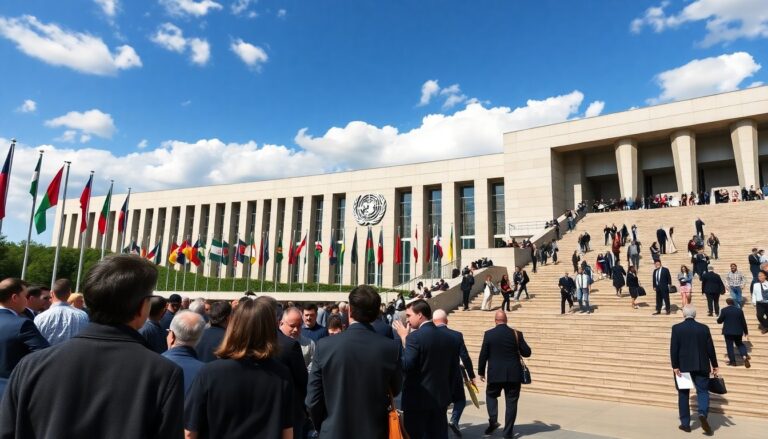
The 80th United Nations General Assembly (UNGA) is set to commence this week in New York. This year’s assembly promises to be a significant event, featuring speeches and debates as the UN faces scrutiny regarding its global role.
Crucial themes: Palestinian statehood and US influence
This year’s UNGA occurs during a time of heightened tension and introspection. A major theme is the question of Palestinian statehood. The US government, under President Trump, has withheld visas for Palestinian officials, contributing to a charged atmosphere. This situation raises concerns about the implications for international relations.
In contrast, France and Saudi Arabia have pledged to recognize a Palestinian state, indicating a shift in global power dynamics. Richard Gowan from the International Crisis Group noted that the UN faces substantial financial and political crises. The pressing question remains: can the UN adapt and navigate these challenges?
Newly elected president Annalena Baerbock will present her agenda, with this year’s theme—“Better Together: 80 years and more for peace, development, and human rights”—reflecting both aspirations and challenges ahead.
Procedures and pivotal moments
The initial week of the UNGA is often procedural but sets the stage for the anticipated “high-level week.” Notably, on September 22, leaders will convene to commemorate the UN’s 80th anniversary, focusing on creating a more inclusive multilateral system.
The General Debate will commence on September 23, allowing approximately 188 high-ranking officials to share their perspectives. This event serves as a global summit for diverse opinions and ideas, prompting discussions on the potential impact on international policies.
In addition to the high-level speeches, several parallel meetings will address pressing issues such as climate change and public health. The agenda is extensive, and the informal diplomacy occurring alongside may yield significant outcomes.
Challenges and opportunities for multilateralism
As the UN marks its 80th anniversary, the challenges it faces are increasingly evident. Recent years have been difficult, particularly with the US’s inconsistent support and funding. During Trump’s administration, the US withdrew from several key international agreements. Now, under President Biden, a reversal of some policies raises questions about future cooperation.
A growing sentiment among countries in the Global South suggests that this is an opportunity to reshape the UN to better serve their needs. Nations such as China, South Africa, and Brazil are seeking greater influence and accountability, indicating a potential shift towards a more balanced global governance model.
Reflecting on past iconic moments at the UNGA, such as Chavez’s impassioned speeches and Netanyahu’s dramatic presentations, this year’s gathering may also redefine traditional narratives. Are we witnessing a shift away from US dominance in global affairs?
This year’s UNGA occurs during a time of heightened tension and introspection. A major theme is the question of Palestinian statehood. The US government, under President Trump, has withheld visas for Palestinian officials, contributing to a charged atmosphere. This situation raises concerns about the implications for international relations.0
Live now
Upcoming matches
 France
 Spain
Spain England
 Argentina
Results
Argentina Switzerland
 NorwayEngland