

Travel Regulation Specialist Objective: Proactive and detail-oriented professional with extensive knowledge of European travel regulations, dedicated to preparing businesses and travelers for the effective navigation of new travel policies. Key Skills: Expertise in European travel regulations Risk assessment and management Excellent communication and advisory skills Strategic planning and implementation Training and development in compliance protocols Experience: Travel Regulation Consultant...
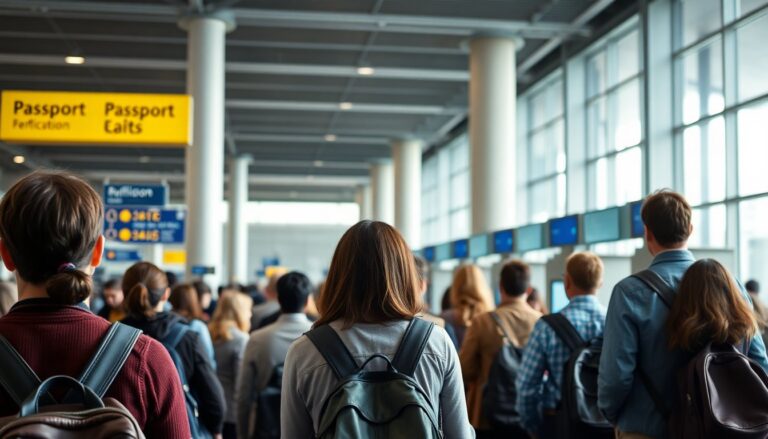
As the weekend approaches, British officials are facing significant uncertainty regarding the implementation of the new Entry/Exit System (EES) across European airports. Starting Sunday, this system could fundamentally change the travel landscape for UK citizens traveling to Europe.
The lack of clarity stems from the European Union’s reluctance to share details with the UK Government about where the new checks will begin.
This absence of transparency raises concerns about potential lengthy delays for travelers, who are advised to allow an additional four hours for their journeys.
The Entry/Exit System and its requirements
The EES mandates that all non-EU travelers, including those from the UK, undergo a series of checks upon entering the EU.
This includes scanning passports, capturing fingerprints and photographs at designated electronic kiosks, and potentially answering questions about travel arrangements. These inquiries may cover accommodation plans, travel insurance, and financial means to support their stay.
Potential impacts on travelers
Responding negatively to any of these questions may result in further scrutiny from border officials, leading to delays.
While some EU nations, such as Estonia, Luxembourg, and the Czech Republic, have confirmed their intentions to implement the EES immediately, a comprehensive list disclosing all locations where checks will commence is still missing.
Conversely, countries like Spain are taking a more cautious approach, initially trialing the EES with a single flight arriving at Madrid Airport. This gradual rollout reflects ongoing efforts to adapt to the new regulations.
Registration and compliance for British citizens
British passport holders must register for the EES during their first visit to any EU country that has implemented the system. This requirement applies to nations within the Schengen area, as well as Iceland, Liechtenstein, Norway, and Switzerland. Trips to Ireland and Cyprus, however, do not require registration.
Once registered, travelers will have their data valid for three years or until their passport expires, facilitating smoother future entries. However, dual nationals may register under only one passport, which could complicate matters for some.
Exit procedures and anticipated delays
When departing from a European nation where the EES is operational, travelers will only need to scan their passports and provide either a fingerprint or a photograph. The Home Office has indicated that while the checks are expected to take only one to two minutes per individual, the cumulative effect may result in longer waiting times upon arrival in the Schengen zone.
At UK ports currently enforcing juxtaposed border controls—such as those with France, Belgium, and the Netherlands—the EES will be gradually introduced over a six-month period, culminating in April 2026. Initially, checks will apply only to large vehicles and coaches, while private vehicles will be exempt from these requirements for the time being.
Government preparations and future expectations
The UK government has invested £10.5 million in enhancing border infrastructure, including establishing significant waiting areas for vehicles approaching Dover. Preparations are also underway to secure parking arrangements along the A20/M20 route, with plans to finalize agreements ahead of peak travel periods.
The lack of clarity stems from the European Union’s reluctance to share details with the UK Government about where the new checks will begin. This absence of transparency raises concerns about potential lengthy delays for travelers, who are advised to allow an additional four hours for their journeys.0
The lack of clarity stems from the European Union’s reluctance to share details with the UK Government about where the new checks will begin. This absence of transparency raises concerns about potential lengthy delays for travelers, who are advised to allow an additional four hours for their journeys.1
The lack of clarity stems from the European Union’s reluctance to share details with the UK Government about where the new checks will begin. This absence of transparency raises concerns about potential lengthy delays for travelers, who are advised to allow an additional four hours for their journeys.2
