

Discover the Unexpected Links Between Hip and Knee Pain: Understanding the Relationship for Effective Relief.
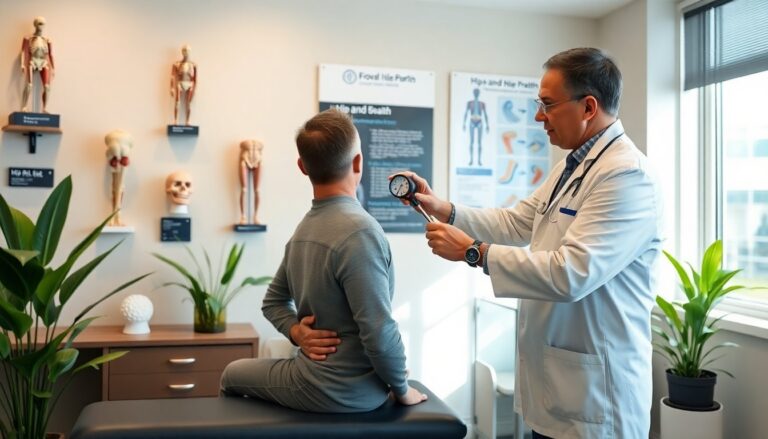
Knee pain often leads to the belief that the joint is the source of discomfort. However, Mr. Mazin Ibrahim, an orthopaedic surgeon at The Princess Grace Hospital in London, suggests that the root cause may actually be higher in the leg.
Many patients who present with knee complaints may not have any issues with their knees; instead, their hip health could be the underlying problem.
According to Mr. Ibrahim, some individuals leave his office needing a hip replacement after discovering significant arthritis in their hips, previously overlooked.
Remarkably, once the hip is treated, the knee pain often resolves. This situation is explained by the concept of referred pain, where the brain misinterprets signals from the body, causing discomfort in one area while the actual source lies elsewhere.
The facts
Understanding the body’s nervous system helps clarify why hip issues can manifest as knee pain. Mr. Ibrahim emphasizes that while hip problems can cause knee discomfort, the reverse is not true. If you experience knee pain, it may originate from hip issues that require attention.
Arthritis as a common culprit
One prevalent reason for this connection is hip arthritis, a condition affecting millions worldwide and significantly contributing to disability. In the UK, approximately 10 million individuals live with osteoarthritis, the degenerative form of the disease, impacting around 3.2 million people in the hips and 5.4 million in the knees. Statistically, one in five adults over 45 is diagnosed with knee osteoarthritis, while one in nine faces hip osteoarthritis.
Osteoarthritis develops when the protective cartilage that cushions the bones deteriorates, leading to stiffness, inflammation, and pain in the joints. Various factors increase the likelihood of developing this condition, including age, obesity, gender (with women being more susceptible), and prior joint injuries. Each year, the NHS performs over 120,000 knee replacements and around 110,000 hip replacements, predominantly due to end-stage arthritis, with a high success rate in restoring mobility.
The importance of early intervention
To mitigate the risk of joint pain, early intervention is crucial. Initial treatments often involve lifestyle modifications such as maintaining a healthy weight, engaging in low-impact exercises, and utilizing pain relief medications alongside physiotherapy. Mr. Ibrahim underscores that regular exercise is essential for overall health, as it helps preserve muscle strength and stability, potentially preventing many joint issues from arising.
Other potential causes of knee discomfort
Besides hip arthritis, other factors can contribute to knee pain. Weakness in the abductor muscles, including the gluteus maximus, medius, and minimus, can lead to discomfort in structurally sound knees. Mr. Ibrahim points out that these muscles play a vital role in stabilizing both the leg and pelvis. Weakness in these muscles can alter leg movement and rotation, resulting in a situation where the knee appears to buckle.
The rise of sedentary lifestyles has exacerbated these issues. Many individuals spend extensive hours seated at desks or lounging on sofas, opting for elevators instead of stairs, and failing to sufficiently challenge their lower-body muscles. Even achieving the recommended daily step count of 7,000 may not provide adequate strength training due to a lack of intensity.
Conditions leading to referred pain
One condition that often leads to knee discomfort is Greater Trochanteric Pain Syndrome (GTPS), characterized by inflammation of the muscles and tendons on the hip’s outer side, resulting in severe pain radiating down the leg. The primary approach to treating both GTPS and abductor weakness typically involves physiotherapy aimed at strengthening the gluteal muscles, often paired with anti-inflammatory medication like ibuprofen or naproxen.
In more complex cases, steroid injections may be necessary for pain relief. For patients experiencing severe arthritis in the hip or knee, surgical options such as joint replacements may ultimately be required, with around 230,000 such procedures conducted annually in the UK.
Maintaining joint health
According to Mr. Ibrahim, some individuals leave his office needing a hip replacement after discovering significant arthritis in their hips, previously overlooked. Remarkably, once the hip is treated, the knee pain often resolves. This situation is explained by the concept of referred pain, where the brain misinterprets signals from the body, causing discomfort in one area while the actual source lies elsewhere.0
According to Mr. Ibrahim, some individuals leave his office needing a hip replacement after discovering significant arthritis in their hips, previously overlooked. Remarkably, once the hip is treated, the knee pain often resolves. This situation is explained by the concept of referred pain, where the brain misinterprets signals from the body, causing discomfort in one area while the actual source lies elsewhere.1
According to Mr. Ibrahim, some individuals leave his office needing a hip replacement after discovering significant arthritis in their hips, previously overlooked. Remarkably, once the hip is treated, the knee pain often resolves. This situation is explained by the concept of referred pain, where the brain misinterprets signals from the body, causing discomfort in one area while the actual source lies elsewhere.2
According to Mr. Ibrahim, some individuals leave his office needing a hip replacement after discovering significant arthritis in their hips, previously overlooked. Remarkably, once the hip is treated, the knee pain often resolves. This situation is explained by the concept of referred pain, where the brain misinterprets signals from the body, causing discomfort in one area while the actual source lies elsewhere.3
