

Professional Summary: Experienced law enforcement professional with a proven track record in drug enforcement and criminal investigations. Successfully apprehended individuals involved in major drug trafficking operations, including a recent high-profile case involving the seizure of thousands of Valium tablets. Demonstrated expertise in surveillance, evidence collection, and collaboration with various agencies to combat drug-related crimes. Committed to enhancing community safety through...
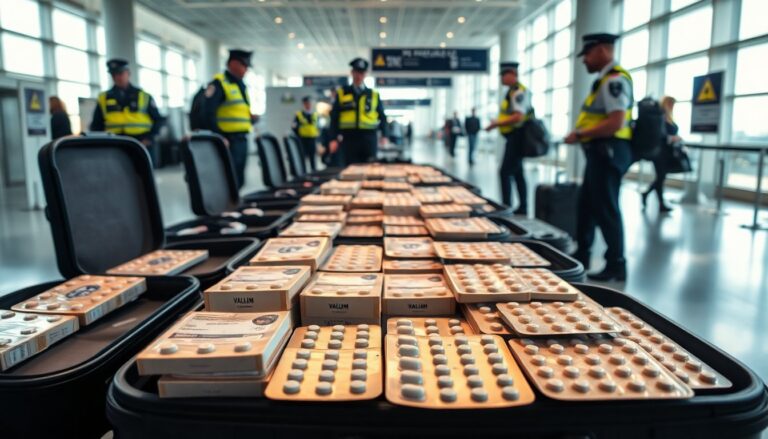
A significant drug smuggling case has emerged from Cardiff Airport, where a man was intercepted with 30,000 Valium tablets. The individual, identified as Joseph Whitbread, was returning from his employment in Ghana, having traveled through Amsterdam. Upon inspection of his luggage, law enforcement officials discovered not only the Valium but also an additional 300 tablets of pregabalin, both classified as controlled substances.
Details of the apprehension
On July 14, last year, Whitbread’s journey took a drastic turn when officers at Cardiff Airport conducted a routine check of his bags. The findings indicated a significant stash of diazepam tablets, which, if sold illegally on the street, could generate an estimated £60,000 profit, with the pregabalin valued around £900.
The sheer volume of these Class C drugs raised immediate concerns regarding the intent behind their importation.
Legal ramifications
Following his arrest, Whitbread entered the legal system. On May 7, he attended Pembroke Dock police station, where he opted to respond to all inquiries with a no comment approach.
After his release on bail, he was ordered to report back and surrender his passport. However, he failed to comply and fled to Ghana, demonstrating a deliberate disregard for the legal proceedings.
Whitbread’s actions drew attention; he later contacted Dyfed-Powys Police from Ghana, stating explicitly that he would not adhere to the bail conditions. His return to Wales on September 18 resulted in his re-arrest, bringing the case back into the courtroom.
Court proceedings and sentencing
At Swansea Crown Court, Whitbread faced serious charges, including multiple counts of improper importation of goods and possession with intent to supply. His criminal record revealed a history of offenses, including grievous bodily harm, which painted a troubling picture of his past behavior.
Defense arguments
In his defense, barrister Hannah George portrayed Whitbread as a dedicated individual employed in the oil industry. She argued that his decision to return to Ghana while on bail was driven not by malice but by necessity, as he sought to fulfill his job obligations. George emphasized that Whitbread’s actions, albeit reckless, should be seen in the context of his commitment to his family and work.
Additionally, it was highlighted that Whitbread faced difficulties while in custody awaiting sentencing, underscoring his capacity for learning from past mistakes. The court acknowledged his role as a father of three, adding complexity to the circumstances of his case.
Judicial response and consequences
Judge Catherine Richards expressed concern over Whitbread’s blatant disregard for the judicial process. She emphasized his ongoing involvement in drug smuggling, despite previous apprehensions, and his attempt to evade justice as reflective of a problematic attitude towards rehabilitation. Nevertheless, after weighing his time served and the effects on his family, she opted to suspend his sentence, demonstrating a measure of leniency.
Whitbread received a 14-month prison term, which has been suspended for 18 months. This suspension is contingent upon several conditions, including participation in a rehabilitation program, completing 150 hours of community service, and observing a nightly curfew for three months. When the judge announced the suspended sentence, supporters in the courtroom erupted in cheers, prompting a reminder from the judge to maintain decorum.
This case highlights the complexities surrounding drug-related offenses and the judicial system’s approach to these situations. It reflects the ongoing battle against illegal drug trafficking and the consequences faced by individuals involved in such activities.
