

Border Clashes Intensify: Pakistan and Afghanistan Tensions Rise Recent reports indicate a significant escalation in tensions between Pakistan and Afghanistan, marked by new clashes erupting along their shared border. The situation has prompted concerns over regional stability and security, as both nations navigate the complexities of their longstanding disputes.
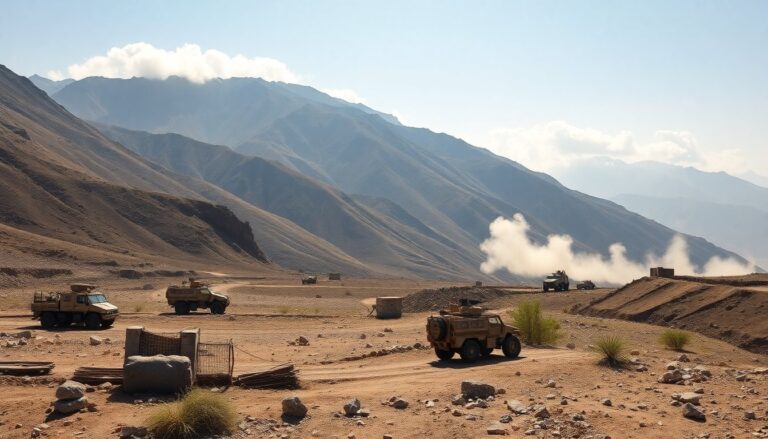
Reports indicate a recent escalation of violence between military units from Pakistan and Afghanistan in a remote area along their northwest frontier. State-operated media in Pakistan characterize these clashes as indicative of ongoing frictions that threaten regional stability.
These border skirmishes are part of a broader, long-standing pattern of disputes along the complex and often volatile border separating the two nations.
The northwest border, known for its rugged terrain, hosts various militant groups, complicating the security landscape further.
Underlying causes of the conflict
The tension between Pakistan and Afghanistan is rooted in various factors, including historical grievances, territorial claims, and differing national interests.
A significant point of contention is the Durand Line, a boundary established in the late 19th century. While Pakistan regards this line as a legitimate border, many in Afghanistan view it as an arbitrary division that ignores ethnic and cultural connections.
Historical context
The historical significance of the Durand Line is crucial for understanding the current hostilities. Over the years, successive Afghan governments have rejected the legitimacy of this boundary, leading to a sustained state of tension. Additionally, the rise of militant groups along the border has strained diplomatic relations, with both nations accusing each other of harboring insurgents.
The role of militant groups
Militant factions operating in the border regions often exploit these tensions to advance their agendas. Groups such as the Tehrik-i-Taliban Pakistan (TTP) and their Afghan counterparts have been known to operate across the Durand Line, creating a perilous environment for both countries. This cross-border terrorism poses threats not only to local security but also to broader regional stability, prompting both governments to enhance their military presence.
Recent developments and reactions
The latest clashes have captured attention from local and international communities, emphasizing the precarious nature of peace in this border area. Following these incidents, Pakistani officials reaffirmed their commitment to securing territorial integrity and combating cross-border terrorism. Afghan authorities have expressed concerns over the rising violence and have advocated for dialogue to address the issues.
Given these developments, the implications for future relations between Pakistan and Afghanistan are significant. Negotiations are essential to prevent further escalation, yet historical mistrust presents substantial challenges. Observers recommend a diplomatic approach prioritizing mutual understanding and cooperation, especially in tackling the threats posed by militant groups.
International implications
The ongoing clashes have both domestic and broader international ramifications. The stability of the South Asian region is intimately connected to the dynamics between Pakistan and Afghanistan. International stakeholders, including the United States and regional powers such as China and India, are closely monitoring the evolving situation.
As both nations face internal challenges, including economic instability and governance issues, the international community may need to take a more proactive role in mediating discussions and fostering peace. The path to resolution will require patience, dialogue, and a commitment to addressing historical grievances that have long affected their relationship.
The recent clashes between Pakistani and Afghan forces highlight the fragile nature of peace in this volatile border region. Ongoing tensions, compounded by historical disputes and the presence of militant groups, underscore the urgent need for diplomatic efforts to promote stability and security. As the situation develops, there is hope that both nations can discover a path toward cooperation and lasting peace.
