

Critics Raise Concerns Over the Effectiveness of Northern Ireland's Proposed Anti-Poverty Strategy
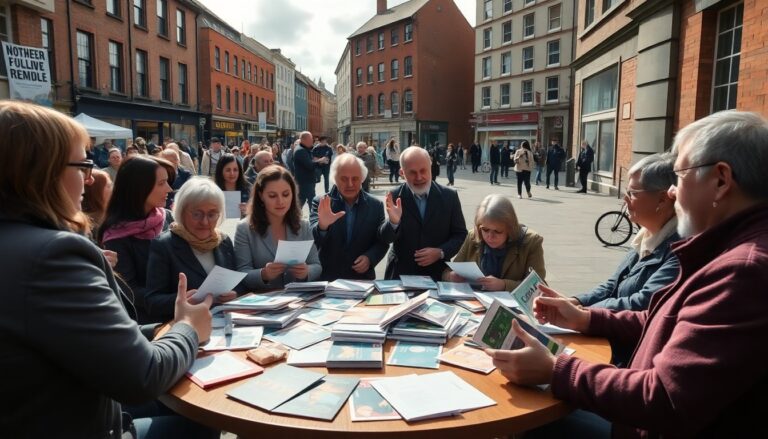
The consultation on the draft Anti-Poverty Strategy in Northern Ireland has concluded, raising skepticism among community members and organizations regarding the government’s commitment to addressing poverty. Minister for Communities Gordon Lyons defended the proposed strategy during a BBC NI podcast, The State of Us, but dismissed the concerns expressed by 95 organizations and individuals who called on the government to reassess its approach.
Amid the ongoing cost-of-living crisis, many families continue to face significant challenges. However, the draft strategy appears to overlook the harsh realities of daily life for many. While it identifies various issues, it fails to translate these into actionable commitments.
Disconnect between strategy and reality
One notable example of the disconnect in addressing food insecurity is reflected in the draft’s acknowledgment that this issue affects individuals across all demographics. This includes children during school holidays and weekends. However, the lack of a commitment to reinstate critical programs like ‘holiday hunger payments’, which the Department of Education discontinued, underscores the absence of significant initiatives to tackle these challenges.
Additionally, while the Labour government in England promotes ‘breakfast clubs’ and has expanded access to free school meals for households receiving Universal Credit, Northern Ireland remains stagnant. Approximately 90,000 children living in absolute poverty in this region are denied the benefits of these policies. Instead, resources are being diverted to other areas, leaving these vulnerable children behind.
Voices of the community
The facts
During a recent consultation process, insights were gathered from women across diverse backgrounds to assess the impact of poverty on families. A total of 145 participants, many of whom are either living on low incomes or supporting those who do, shared their experiences. Their feedback revealed a significant gap between the realities faced by individuals at the grassroots level and the measures proposed by the government.
Voices of frustration
One particularly poignant response emphasized the widespread frustration felt by many: “The draft that has been released is quite frankly a slap in the face. I see hardship every day in my work and personal life. What I see in this draft is a continuation of the status quo: no significant changes, no actionable plans… no funding!” This sentiment resonates with a broader discontent, as 78% of respondents believe that the draft strategy will not address the financial struggles that individuals encounter.
Calls for practical solutions
During the recent consultation, participants proposed practical solutions to address the challenges of poverty. A key point raised was the urgent necessity to cap school uniform costs and to bolster support through the existing school uniform grant. However, the current School Uniform Bill progressing through the Northern Ireland Assembly is unlikely to provide adequate relief for families facing increasing financial burdens.
At present, parents of secondary school students receive just over £90 from the school uniform grant. In contrast, research shows that average back-to-school expenses exceed £1,000. This substantial gap highlights a significant disconnect between the financial realities of families and the support provided by the government.
Impact of work and social policies
Many individuals experiencing poverty are employed, often in households with at least one working parent. Research indicates that a significant number of children living in poverty come from such families. The two-child limit on Universal Credit further complicates matters by restricting financial support for these families. It is concerning that the draft strategy suggests further research on the two-child limit instead of taking immediate actions to mitigate its impact.
Political parties in Northern Ireland largely agree on the necessity to abolish this detrimental policy. However, progress remains stagnant. In contrast, Scotland plans to eliminate the two-child limit next year, showcasing a significant difference in strategies to combat poverty.
The need for change
The facts
The release of a draft Anti-Poverty Strategy has drawn criticism for lacking concrete actions to improve the lives of those facing economic hardships. A respondent voiced the widespread sentiment, stating, “It makes me very sad. I see no change for myself or for many in my situation. This draft offers nothing new.”
The implications
As community advocates continue to press for meaningful change, it is essential for the government to engage with those directly impacted by poverty. Effective strategies must emerge from genuine dialogue with vulnerable populations in Northern Ireland.
What’s next
Moving forward, the government’s responsiveness to community feedback will be pivotal in shaping a strategy that addresses the pressing needs of those affected by poverty.
