

A self-identified science enthusiast was found guilty of serious offenses related to explosives and hate speech.
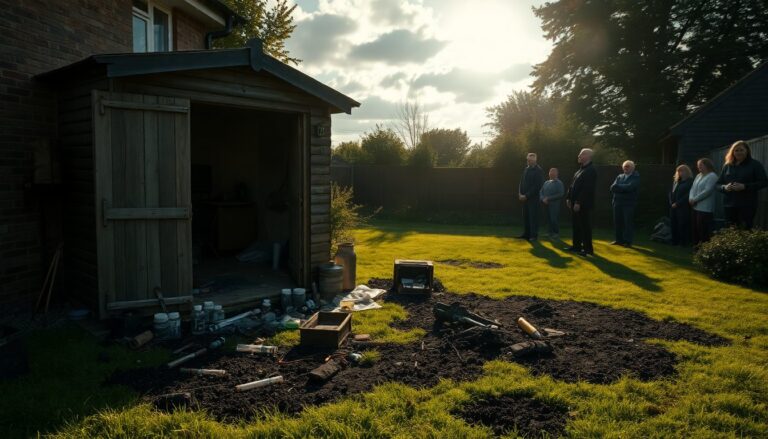
In a shocking case that has captivated the public, a 33-year-old man named Harry Whittaker has been convicted of creating potentially lethal explosives in his makeshift laboratory located in his garden shed. This revelation came to light after local residents reported seeing thick black smoke and hearing loud explosions emanating from Whittaker’s home in Caddington, Bedfordshire, where he lived with his mother.
The alarming situation escalated when Whittaker himself dialed emergency services, claiming he was experiencing a life-threatening allergic reaction. This incident ultimately led to a police investigation that would uncover a trove of dangerous materials.
Uncovering the dangerous laboratory
On April 18, paramedics responded to Whittaker’s call and arrived at his residence.
Upon assessing the situation, they discovered the state of his garden shed, which he described as a laboratory for his chemical experiments. Whittaker explained to the medical team that a recent explosion had shattered a window in his shed, raising immediate concerns.
These concerns prompted the paramedics to alert the authorities, culminating in a police search on May 6. The results of this search were startling: a variety of explosive substances were found in Whittaker’s bedroom and shed, including black powder, live ammunition, and even components that suggested improvised explosive devices.
Shocking discoveries
In addition to the explosives, officers uncovered materials that could pose further risks, such as radioactive substances and white phosphorus, the latter of which is notorious for its ability to ignite spontaneously when exposed to air. The military had to be called in to safely dispose of this highly dangerous material through controlled detonation.
Racist messages and drug possession
Further investigation revealed a disturbing side to Whittaker’s interests. During his arrest, police found a series of racist messages on his WhatsApp account, where he expressed violent thoughts towards a mosque in Luton. One particularly chilling message suggested the need for a tank armed with weaponry to be used against the mosque during a busy time, highlighting the troubling mindset behind his actions.
Whittaker’s behavior was not limited to explosives and hate speech; upon his detention, officers also discovered a wrap of heroin in his possession. In interviews with police, he attempted to downplay the severity of his experiments, claiming he was merely a “nerdy kid” with a passion for science.
A misguided pursuit of knowledge
Whittaker insisted that his experiments were harmless and educational, stating, “I take precautions so it doesn’t harm anyone.” He even went so far as to label containers with a skull and crossbones, claiming it was merely for aesthetic purposes, and dismissed the paramedics’ concerns as “horse shit.” It is clear that Whittaker’s understanding of safety was deeply flawed.
During the trial, which lasted several days, Whittaker maintained that he had no prior convictions related to his chemical pursuits. However, under cross-examination, he conceded that he had faced charges for actual bodily harm linked to an incident involving his mother and a neighbor. This incident occurred when they intervened to stop him from driving under the influence of drugs.
Legal consequences and upcoming sentencing
Ultimately, the Old Bailey jury deliberated for nearly nine hours before convicting Whittaker on two counts of possessing explosive substances and two counts of manufacturing them. Although he was acquitted of two additional charges, the verdict underscored the severity of his offenses.
Judge Simon Mayo KC remanded Whittaker into custody, with sentencing scheduled for January 9. The case sends a clear message about the dangers of unregulated experimentation and the serious implications of hate speech.
