

Education within correctional facilities provides opportunities for personal development and successful reintegration into society.
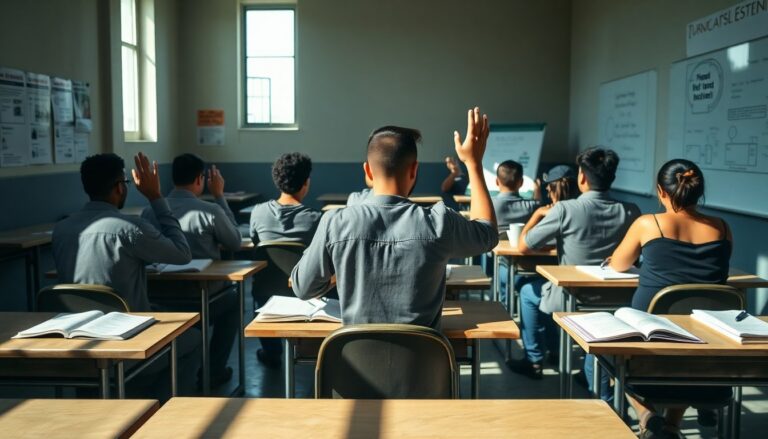
In the complex landscape of the U.S. prison system, pursuing higher education can seem like an insurmountable challenge. For many incarcerated individuals, the passage of time feels both endless and constricting as they grapple with the reality of their confinement.
Yet, within those walls, a quiet revolution is taking place, driven by the desire for knowledge and self-improvement.
Many prisoners find themselves in a relentless struggle against the ticking clock, each second echoing as a reminder of lost freedom.
To combat this, they turn to education as a means to reclaim their sense of purpose and agency. The journey is fraught with obstacles, but the rewards of learning can be transformative.
The limitations of traditional prison education programs
Upon entering the New Jersey State Prison (NJSP), the reality of the educational opportunities—or lack thereof—becomes apparent.
The prison’s education department primarily focuses on offering a General Educational Development (GED) program, leaving many prisoners yearning for more. The bleak options discourage those who aspire to pursue meaningful academic paths.
For those interested in furthering their education, independent study options are available, often involving external correspondence courses. These programs can range in cost from $750 to over $1,000, presenting significant financial hurdles for those who already face economic disadvantages. Moreover, many of these courses are provided by for-profit institutions that prioritize profit over genuine learning, leading to unaccredited degrees that offer little more than a piece of paper.
Finding alternatives in a constrained environment
Faced with these challenges, some prisoners have sought alternatives to traditional education. After watching a documentary about the Bard Prison Initiative, which provides accredited college programs to inmates, I felt inspired to reach out to various universities. My hope was to be accepted into a program that would allow me to pursue a legitimate degree.
Regrettably, my efforts were met with silence, and the barriers continued to mount. When I discovered the NJ-STEP initiative, which offers college courses to inmates at a different facility, I believed my dreams were finally within reach. However, the response from the NJSP’s education supervisor was disheartening. His dismissal of the program revealed a pervasive attitude of hopelessness among the prison administration.
The power of education for personal growth
In the face of adversity, individuals like Thomas Koskovich, who has spent nearly three decades in NJSP, emphasize the importance of education. As a teacher’s aide, Thomas works with fellow inmates to help them earn their GEDs, yet he remains acutely aware of the limitations that exist beyond that threshold. He notes that many students find themselves trapped in GED classes for years, unable to progress due to various barriers.
Despite the challenges, Thomas believes that education can be a catalyst for change. Drawing inspiration from the book Pedagogy of the Oppressed by Paulo Freire, he recognizes how education empowers individuals to navigate their circumstances and foster creativity. He asserts that when provided with the opportunity, most prisoners would opt for a productive and fulfilling life.
Success stories amid the struggle
Some inmates manage to transcend these limitations and achieve academic success. Kashif Hassan, for instance, has earned multiple degrees, including two PhDs, despite being incarcerated for 15 years. His success story serves as a beacon of hope for others, demonstrating that education can flourish in such an environment, provided there is financial support and determination.
However, not all prisoners are as fortunate. Many face systemic barriers, such as the cancellation of educational resources and restrictions on materials, that hinder their academic pursuits. The continuing struggle to access quality education reveals a significant disconnect between the prison system and the educational goals of incarcerated individuals.
A ray of hope in the educational landscape
Many prisoners find themselves in a relentless struggle against the ticking clock, each second echoing as a reminder of lost freedom. To combat this, they turn to education as a means to reclaim their sense of purpose and agency. The journey is fraught with obstacles, but the rewards of learning can be transformative.0
Many prisoners find themselves in a relentless struggle against the ticking clock, each second echoing as a reminder of lost freedom. To combat this, they turn to education as a means to reclaim their sense of purpose and agency. The journey is fraught with obstacles, but the rewards of learning can be transformative.1
Many prisoners find themselves in a relentless struggle against the ticking clock, each second echoing as a reminder of lost freedom. To combat this, they turn to education as a means to reclaim their sense of purpose and agency. The journey is fraught with obstacles, but the rewards of learning can be transformative.2
