

Innovative Robotic Technique Revolutionizing Lung Cancer Diagnosis An advanced robotic technique is poised to transform the landscape of lung cancer diagnosis, significantly alleviating patient anxiety and accelerating treatment processes.
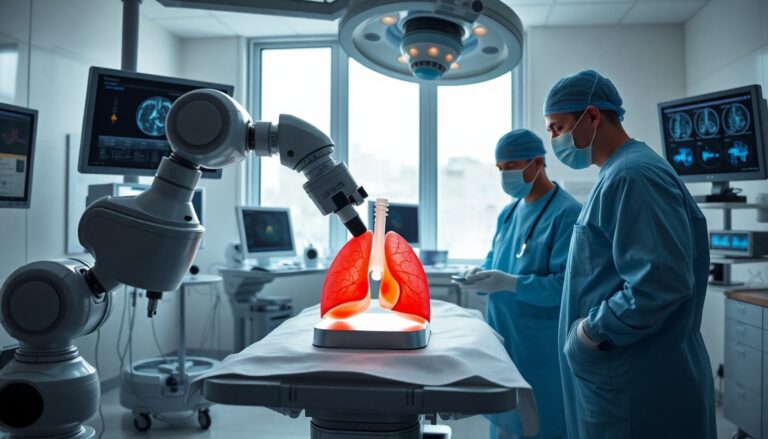
In a significant advancement for lung cancer detection, a revolutionary robotic-assisted procedure has emerged, enabling physicians to perform precise movements within the lungs. This innovative technology, trialed in the UK, promises to expedite the diagnosis of cancerous conditions, thereby alleviating the prolonged anxiety that often plagues patients awaiting results.
Traditionally, patients with suspicious lung nodules would undergo a waiting period filled with uncertainty, as doctors opted to monitor these areas over time. However, this new approach allows healthcare professionals to access and biopsy smaller, previously challenging nodules, marking a pivotal shift in lung cancer management.
Enhancing accuracy with robotic systems
The recent trial, conducted with 200 patients at Royal Brompton Hospital and St Bartholomew’s Hospital, focused on individuals whose lung scans revealed concerning nodules. Utilizing the Ion endoluminal system, developed by the technology firm Intuitive, doctors could create a detailed “roadmap” of the lung, akin to a GPS navigation system for enhanced accuracy.
By integrating advanced imaging techniques, the Ion system allows physicians to guide a thin, flexible catheter directly to the nodule via the throat. This method enables microscopic movements, ensuring that samples are taken with precision. Professor Pallav Shah, a consultant respiratory physician at Royal Brompton, highlighted the advantages of this technique, stating, “We can go with quite microscopic movements directly into the little spot and then take samples from there.”
Promising results from the trial
According to findings published in the journal Thorax, the robotic-assisted platform demonstrated an accuracy rate of 92% in diagnosing lung cancer across the trial group. Furthermore, the placement of the biopsy tool within the suspicious nodules was achieved with an impressive success rate of 99%. This breakthrough underscores the potential of robotic systems to not only enhance diagnostic accuracy but also to improve patient outcomes.
Changing the landscape of lung cancer screening
Lung cancer remains a leading health concern in the UK, with over 49,000 new cases diagnosed each year. The conventional approach for managing small nodules typically involves a waiting period for a follow-up scan, often leading to heightened anxiety for patients. Professor Shah emphasized that this robotic intervention effectively minimizes the “wait and watch” phase, stating, “What we really have to do is to try and diagnose this earlier.”
With lung cancer symptoms usually manifesting at advanced stages, early diagnosis is critical. The implementation of robotic-assisted procedures could significantly contribute to early intervention, ultimately improving survival rates. By enabling quicker and more accurate diagnoses, healthcare professionals can initiate treatment sooner, enhancing the overall effectiveness of lung cancer screening programs.
Patient benefits and future prospects
The implications for patients are profound. Kelvin Lau, clinical director at St Bartholomew’s Hospital, remarked on the transformative nature of the Ion system. He noted, “My patients no longer need to wait months for a repeat scan. Instead, they have a biopsy, go home on the same day, and return to normal activities almost immediately.” This rapid turnaround not only alleviates patient anxiety but also allows for timely access to appropriate treatments.
As the trial progresses, Professor Shah expressed hope for wider adoption of this technology across the NHS, citing successful implementations in other health systems. Since the trial’s inception, over 900 procedures have been performed using the Ion system at Royal Brompton, demonstrating its scalability and effectiveness in clinical settings.
In response to these developments, Paula Chadwick, chief executive of Roy Castle Lung Cancer Foundation, emphasized the importance of early diagnosis in improving survival rates. She stated, “These findings show the real potential of robotic-assisted bronchoscopy to change that experience for patients.” With the ability to safely access and biopsy small nodules, this technology could revolutionize lung cancer diagnosis, offering patients the answers they need swiftly and ensuring timely treatment interventions.
