

NHS Faces Critical Challenges This Winter: Rising Flu Cases and Potential Doctor Strikes Threaten Patient Care As the NHS grapples with a surge in flu cases, the possibility of strikes among healthcare professionals looms large, posing significant risks to patient care during the winter months.
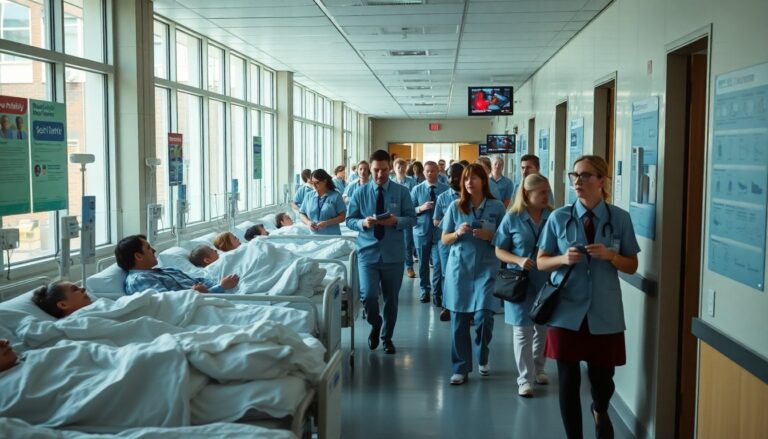
The NHS is navigating a challenging winter marked by increasing demands. With flu cases reaching record levels, concerns are rising over a potential strike among resident doctors. This situation poses significant challenges to the provision of adequate patient care. Health officials are working diligently to sustain service levels during this critical time.
Recent data reveals that flu hospitalizations have increased by over 55% in just one week, with daily averages nearing 2,660 patients. This concerning trend has led health leaders to brace for a potential five-day walkout starting on December 17, as the British Medical Association (BMA) consults its members regarding the proposed strike.
Current state of the NHS
Health Secretary Wes Streeting has expressed serious concerns about the operational capacity of the NHS amid ongoing challenges. He indicated that he cannot guarantee patient safety due to the overwhelming demands on the healthcare system, suggesting that the current situation may be the most critical the NHS has encountered since the COVID-19 pandemic.
Streeting noted that even with potential increases in funding, staffing and resource limitations would still restrict the NHS’s effectiveness. He stated, “There’s a finite number of doctors and staff available, and with rising demand, we’re in a tight spot.” This statement underscores the worry that a surge in flu cases, coupled with possible strikes, could lead to severe repercussions for patient care.
Strike implications and public response
The potential strike by NHS resident doctors could lead to significant disruptions in healthcare services. Hospital leaders have been instructed to keep at least 95% of pre-planned procedures operational. However, they recognize the difficulty of achieving this goal during the peak winter months. The Health Secretary has described the impending strike action as a critical tipping point for the NHS.
In light of these developments, Health Minister Steve Streeting has appealed directly to resident doctors. He urged them to reconsider their planned walkout and accept the government’s proposal, which includes increased training positions and coverage for examination fees. However, the proposal does not include any new pay increases, a key demand from the British Medical Association (BMA). The BMA has emphasized that resident doctors have experienced a substantial decline in real-term pay since 2008.
The government’s offer and ongoing negotiations
Government’s proposal aims to enhance specialty training
The government’s proposal includes a commitment to significantly expand specialty training posts over the next three years, with plans for 1,000 new positions expected to launch in. Additionally, the initiative seeks to alleviate financial burdens faced by resident doctors by covering mandatory examination fees and membership costs for professional organizations.
However, the British Medical Association (BMA) has expressed concerns that the offer does not sufficiently address the critical issue of pay for doctors. Dr. Jack Fletcher, chairman of the BMA’s resident doctors committee, stated that the proposal “falls short of restoring pay levels that remain well within the government’s control.” The union emphasizes that, despite recent pay increases, real-term compensation has significantly declined, resulting in frustration among medical professionals.
Looking ahead: the impact on patient care
NHS faces critical challenges as winter crisis looms
As the NHS grapples with mounting pressures, a potential strike could serve as a critical factor, jeopardizing the entire healthcare system. Labour MP Wes Streeting has emphasized the urgency of the situation, describing it as precarious. NHS staff are working tirelessly to manage the crisis, yet concerns grow about their ability to provide essential care and services to patients when they are most needed.
The combination of rising flu cases and the looming threat of strikes among resident doctors presents a serious risk to the NHS’s operational effectiveness this winter. The outcome of the British Medical Association’s consultation will be crucial in shaping the future of healthcare in the UK. This situation may have implications that extend beyond immediate patient care, potentially affecting the broader health system.
