

Venezuela Tensions Rise: U.S. Airstrikes Target Drug Trafficking Amid Negotiation Talks The situation in Venezuela has intensified as the United States carries out strategic airstrikes aimed at combating rampant drug trafficking in the region. Concurrently, diplomatic leaders are engaged in discussions about potential negotiations to address the ongoing crisis, highlighting the complex interplay between military action and political dialogue.
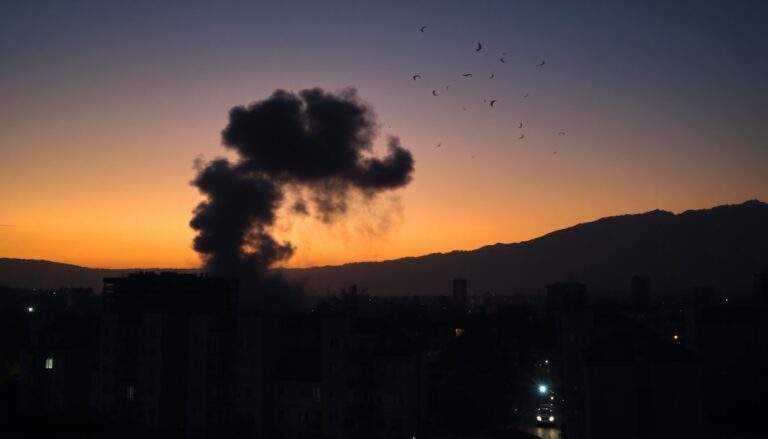
In a significant turn of events, the United States has executed a series of airstrikes in Venezuela, marking a notable shift in the ongoing conflict. The strikes targeted military installations across the nation, with the capital city, Caracas, experiencing the brunt of the assault.
Witnesses reported hearing a series of large explosions during the night as U.S. warplanes executed their missions. This military action follows months of escalating threats from President Donald Trump, who had warned of potential strikes if Venezuela failed to address the flow of drug trafficking towards the United States.
President Nicolás Maduro has been labeled a leader of a narco-terrorist regime, a characterization that has intensified the conflict between the two nations. The airstrikes come on the heels of a prolonged pressure campaign by the U.S. government, which has included military movements close to Venezuela’s borders and operations targeting suspected drug smugglers.
Recent developments and responses
Upon the initiation of airstrikes, locals in Caracas reported terrifying scenes as explosions rocked the city, particularly around Fuerte Tiuna, a vital military complex that houses key government figures. The sonic booms of low-flying aircraft were felt moments before the blasts, creating a sense of chaos and fear among the residents. Video footage emerging from the area depicted thick smoke and flames rising high into the sky, while power outages spread across southern Caracas.
In response to the airstrikes, Venezuelan troops have intensified their patrols around the presidential palace, signaling a heightened state of alert. Meanwhile, Colombian President Gustavo Petro, a vocal critic of the Trump administration, took to social media to express his concern, stating, “Right now they are bombing Caracas. Alert to the whole world, they have attacked Venezuela.” This declaration underscores how the conflict is being viewed on a global scale, with various governments reacting to the escalating military actions.
Negotiations and potential outcomes
Amidst the chaos, President Maduro had previously indicated a willingness to engage in negotiations with the U.S. regarding drug trafficking issues. In a pre-recorded interview, he stated his openness to discussions aimed at addressing the drug trade but remained cautious about the U.S.’s intentions, suggesting that the primary aim of the U.S. government is to destabilize his regime and seize control of Venezuela’s extensive oil reserves.
Maduro’s stance on U.S. relations
Maduro emphasized that if the U.S. is serious about combating drug trafficking, they would need to engage in meaningful dialogue. He reiterated that Venezuela is open to U.S. investment in its oil sector, as demonstrated through its relationship with Chemical, the sole major oil company currently exporting Venezuelan crude to the U.S. However, Maduro did not provide specific comments regarding recent U.S. military actions on Venezuelan soil, suggesting that he would address those matters at a later time.
U.S. military actions and justifications
The U.S. military claims that these airstrikes and operations against Venezuelan drug smuggling are necessary to combat the influx of illegal substances into the country. The Trump administration has categorized these actions as part of a larger armed conflict with drug cartels, justifying the need for military intervention. Recent operations have resulted in numerous fatalities, raising ethical concerns and questions regarding the legality of such military actions.
The situation in Venezuela is rapidly evolving, with military strikes from the U.S. complicating the prospects for diplomatic negotiations. As both sides navigate this tumultuous landscape, the potential for further escalation looms large, leaving many to question what the future holds for Venezuela and its relationship with the United States.
