

U.S. Military Successfully Captures Nicolás Maduro, Transporting Him to New York Amidst Heightened Geopolitical Tensions
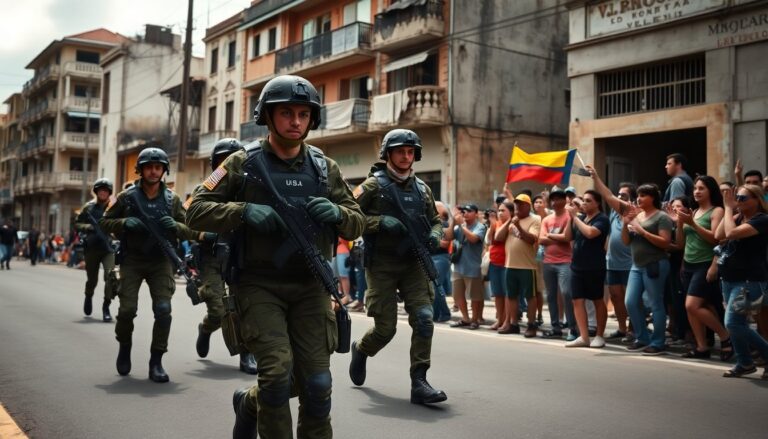
The recent military operation conducted by U.S. forces has led to the capture of Venezuelan President Nicolás Maduro and his wife, Cilia Flores. This significant action, which occurred in Caracas, has created a wave of reactions across Venezuela and the international community.
Maduro now faces serious drug trafficking charges in the United States, marking a pivotal moment in U.S.-Venezuelan relations.
As the U.S. administration navigates this complex situation, the implications of this operation are still unfolding. President Donald Trump has announced that the U.S.
will assume a direct role in Venezuela’s governance until new leadership is established. However, the feasibility of this assertion remains uncertain, raising numerous questions regarding the nation’s future.
The operation: A brief overview
On January 3, U.S.
forces carried out a meticulously planned operation that resulted in the swift capture of Venezuelan President Nicolás Maduro and his wife, Cilia Flores. The operation unfolded rapidly, marked by gunfire and explosions that reverberated throughout Caracas. Eyewitnesses reported multiple blasts, believed to target key military installations, occurring within a thirty-minute timeframe.
Reports indicate that Maduro and Flores were apprehended at their residence within the Ft. Tiuna military complex, underscoring the precision of the operation. Venezuelan officials have acknowledged casualties; however, the exact number remains unclear, leaving the nation in a state of uncertainty.
Trump’s declaration of authority
During a press conference after a recent military operation, President Trump outlined the U.S. strategy regarding Venezuela. He stated that American officials, including Marco Rubio and other prominent figures, would oversee the country’s governance during this transitional period. Trump emphasized that such measures were essential to restore stability and enable Venezuela to prosper once more.
These assertions have been met with considerable skepticism. Venezuelan Vice President Delcy Rodríguez rejected the idea of U.S. involvement, asserting that Nicolás Maduro remains Venezuela’s legitimate leader. She condemned the American operation as a breach of international law and demanded the immediate release of Maduro.
Reactions and implications
News of Nicolás Maduro’s capture has sparked contrasting reactions throughout Venezuela. In some neighborhoods, pro-government militias have taken to the streets, demonstrating their unwavering support for the regime. Meanwhile, other areas have remained unusually quiet, heightening citizens’ anxiety about the uncertain future. This unrest coincides with reports of power outages and disruptions to daily life, further complicating the situation.
During his address, former President Donald Trump highlighted the significance of Venezuela’s oil resources. However, details regarding the U.S. strategy for managing the country remain unclear. Trump suggested that revenues generated from oil sales could finance U.S. initiatives in Venezuela, hinting at a considerable role for American oil companies in restoring the nation’s deteriorating infrastructure.
Legal ramifications and international response
Legally, Nicolás Maduro faces multiple charges in the United States, including narco-terrorism and conspiracy to import cocaine. These serious allegations arise from accusations that the Venezuelan government has collaborated with notorious drug trafficking organizations, complicating the political landscape significantly.
Reactions to the U.S. action have varied widely. Some lawmakers support the operation as necessary for protecting national interests, while others criticize it as an overreach of military power. Senator Tim Kaine expressed strong opposition, labeling the military strike a dangerous precedent that could lead to greater instability in the region.
As the dust settles from this dramatic capture, it remains uncertain how the U.S. will navigate the complex political terrain of Venezuela and what implications this will have for its citizens in the future.
