

Headline: Major Disruptions in Caribbean Tourism Due to U.S. Military Action Against Venezuelan Leader Nicolás Maduro Summary: The Caribbean tourism industry faces significant challenges following the U.S. military's capture of Venezuelan leader Nicolás Maduro. This geopolitical event has led to a ripple effect, impacting travel patterns, visitor safety, and regional stability. Key Points: Impact on Travel Trends: Analyze how the military actions influence tourist perceptions and travel...
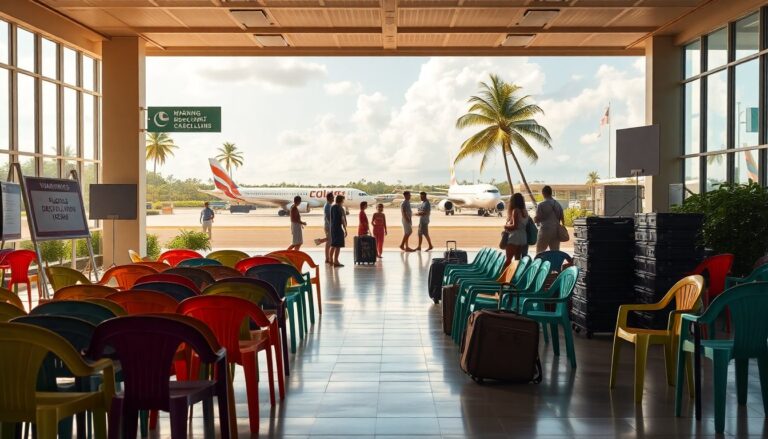
Thousands of tourists are now stranded in the Caribbean due to recent U.S. military actions that have suspended flights to and from 19 islands. This situation arose following U.S. President Donald Trump’s announcement of the capture of Venezuelan President Nicolás Maduro during a military operation named Absolute Resolve.
The impact of U.S. actions on Caribbean travel
The U.S. military operation, executed on January 3, aimed directly at the Venezuelan government, resulting in Maduro’s swift capture. In the aftermath, all flights to and from various Caribbean destinations were canceled, leaving many vacationers uncertain about their travel plans.
Reports indicate that the U.S. military response targeted not only Maduro but also multiple strategic locations throughout Venezuela, intensifying regional tensions.
Tourists caught in the middle
As news of the operation spread, tourists faced significant disruptions. Many had planned their trips well in advance, only to encounter unexpected flight cancellations.
Airlines worked to assist travelers, but the situation remained complex as the U.S. government began to assert control over Venezuela’s political landscape. With the flight schedules in disarray, questions arose about how long tourists would remain in their tropical destinations without a clear exit strategy.
The political backdrop of the operation
President Trump announced a successful military strike against Venezuelan President Nicolás Maduro, an action with far-reaching geopolitical consequences. Following months of escalating pressure on the Venezuelan regime, the U.S. military executed a precise nighttime operation. This event marks a significant turning point in U.S.-Venezuelan relations. Trump stated the U.S. aims to oversee Venezuelan affairs until a safe transition of power can be achieved, highlighting the extent of U.S. involvement in the region.
International reactions and implications
The international community has reacted with a blend of support and criticism following the recent military operation. European leaders, including German Chancellor Friedrich Merz and French President Emmanuel Macron, voiced their approval. They suggested that the capture of Maduro could facilitate a democratic transition in Venezuela.
Conversely, leaders from neighboring countries such as Brazil and Colombia condemned the operation. They emphasized the importance of adhering to international law and respecting national sovereignty. Brazilian President Luiz Inácio Lula da Silva characterized the U.S. actions as a dangerous precedent, cautioning that such military interventions might trigger chaos and instability in the region.
Colombian President Gustavo Petro raised concerns about a potential surge in refugees, given the ongoing volatility in Venezuela. The situation remains precarious, and the implications of these developments could resonate throughout Latin America.
The future of Venezuela and its leadership
Following the capture of Nicolás Maduro, uncertainty looms over Venezuela’s leadership. Reports indicate that Vice President Delcy Rodríguez may assume power, but her current location is unclear, with some sources suggesting she may have fled the country. This uncertainty raises significant concerns regarding continuity and governance, especially amid increased international scrutiny.
As the United States engages in discussions about Venezuela’s future, the emphasis remains on the nation’s oil resources. Former President Donald Trump asserted that the wealth generated from these resources should benefit both the Venezuelan people and the U.S. economy. Critics, however, contend that this stance demonstrates a neocolonial approach to foreign policy, suggesting that the U.S. aims to exploit Venezuela’s abundant natural resources.
The facts
The Caribbean is experiencing significant turmoil as political instability affects tourism. Travelers are caught between the allure of vacation and the harsh realities of unrest. Recent actions by the U.S. military suggest a potential shift in Venezuela’s situation, but the implications for tourists remain uncertain.
The impact on travelers
As air travel remains suspended, many vacationers face challenges in securing safe passage home. The evolving political landscape complicates their plans, forcing them to adapt to rapidly changing circumstances. Travelers are urged to stay informed and prepared as they navigate this unpredictable environment.
What’s next
Tourists are hoping for a swift resolution that will allow them to return safely. Ongoing developments in the region will be critical in shaping the future of travel in the Caribbean. Authorities and travel organizations are closely monitoring the situation to provide updates and support to affected travelers.
