

Impact of the U.S. Abduction of Maduro on Diplomatic Relations with Iran The recent abduction of Venezuelan President Nicolás Maduro by U.S. authorities presents serious implications for future diplomatic relations between the United States and Iran. This event raises critical concerns regarding international law, geopolitical stability, and the potential for escalating tensions in the region. As relations between the U.S. and Iran have historically been fraught with challenges, the...
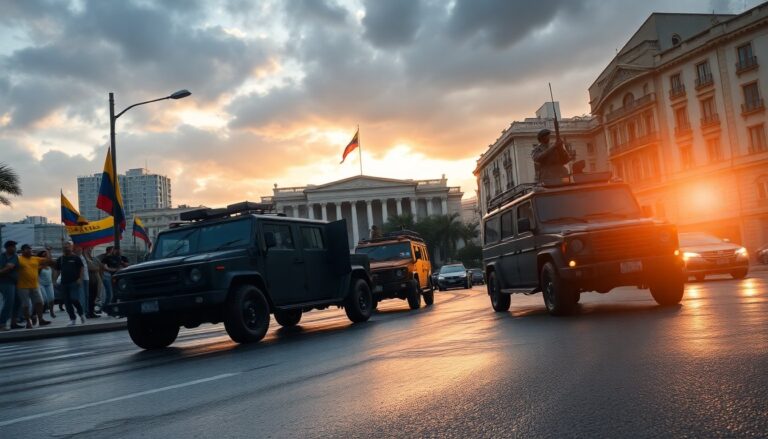
The abduction of Venezuelan leader Nicolas Maduro by U.S. forces has created significant geopolitical tension. This operation occurred shortly after a meeting between U.S. President Donald Trump and Israeli Prime Minister Benjamin Netanyahu. Many analysts worry that this action might destabilize Venezuela and potentially lead to a larger conflict involving Iran.
Concerns are rising that the situation could escalate further, impacting regional stability.
Implications of U.S. military action in Venezuela
Following the removal of Nicolás Maduro, notable figures, including Israeli politician Yair Lapid, have called on Iran to consider the developments in Venezuela.
The U.S. government has expressed strong disapproval of Maduro’s regime, branding it a center for drug trafficking and accusing it of collaborating with Iran. This rhetoric surrounding Venezuela indicates a strategy that could strengthen hardliners in Iran, potentially diminishing opportunities for diplomatic engagement.
Shifting dynamics in U.S.-Iran relations
Jamal Abdi, president of the National Iranian American Council (NIAC), stated that recent U.S. military actions have created an unpredictable environment, heightening the risk of conflict. The concept of surgical regime change has gained traction, leading to concerns that similar methods could be applied to Iran. Abdi cautions that Iran may respond by bolstering its military capabilities or considering preemptive actions against perceived threats.
Analysts such as Negar Mortazavi highlight that the U.S. approach to Venezuela exemplifies the aggressive foreign policy stance of the Trump administration, which hampers the potential for meaningful dialogue with Iran. Mortazavi asserts that Tehran interprets U.S. demands as equivalent to total surrender, a perception unlikely to encourage constructive negotiations.
Economic considerations and regional alliances
The abduction of Maduro highlights significant economic interests, particularly concerning oil. The United States has long sought access to Venezuela’s vast oil reserves. With Maduro’s regime weakened, the potential for increased American influence over Venezuelan resources rises. This situation prompts questions about the future of Iranian investments in Venezuela, where both nations have built substantial trade ties amid international sanctions.
In this context, the Iranian government quickly condemned the U.S. operation, labeling it as unlawful aggression against a sovereign nation and calling for United Nations intervention. The Iranian Ministry of Foreign Affairs described the U.S. actions as a serious violation of international law, warning of potential destabilization throughout the region.
The regional ramifications of regime change
The fall of Nicolás Maduro in Venezuela is a pivotal event with profound implications for Iran’s influence in Latin America. The partnership between Iran and Venezuela has historically centered on shared interests, particularly in their opposition to U.S. dominance. With the departure of Maduro, Iran’s presence in the region may diminish, echoing recent challenges faced in Syria and Lebanon.
As Iranian officials navigate the consequences of Venezuela’s political upheaval, they confront escalating internal issues. Protests have intensified in Iran, driven by economic difficulties and a widening class divide, which pose significant risks to the ruling government. This simultaneous unrest underscores the interconnected nature of global and domestic challenges, indicating that instability in one region can have far-reaching effects across borders.
Potential for further conflict and U.S. military involvement
Recent developments raise critical questions about the future of U.S. military engagement in the region. Former President Donald Trump has expressed a readiness to escalate military action if deemed necessary, particularly in response to perceived threats from Iran. His administration’s stance of being locked and loaded indicates a willingness to act should the Iranian government intensify its military response to domestic unrest or other challenges.
Experts warn that while the U.S. may aim to implement a strategy similar to its approach in Venezuela, the intricate dynamics of Iranian society and its military capabilities could complicate such efforts. Analyst Abdi emphasizes that Iranian leadership has established contingency plans to counter the effects of potential military strikes or targeted assassinations, suggesting a level of resilience that could hinder U.S. objectives.
The ongoing evolution of U.S. foreign policy reveals complexities, particularly in Venezuela. The potential removal of Nicolás Maduro could significantly impact not just Latin America but also U.S.-Iran relations. This situation may challenge the current balance of power, highlighting the unpredictable nature of international diplomacy.
