

Denmark and Greenland Address U.S. Intentions on Greenland's Status As geopolitical tensions escalate, Denmark and Greenland are actively responding to the United States' intentions concerning Greenland's political and territorial status. The situation highlights the complexities of international relations and the strategic importance of Greenland in the Arctic region.
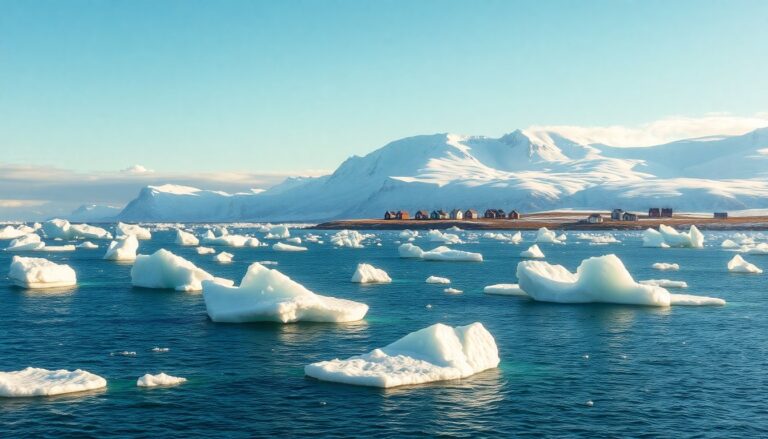
Recent remarks from U.S. officials have reignited discussions regarding the future of Greenland, which operates as a self-governing territory under Danish rule. Stephen Miller, a senior advisor to former President Donald Trump, stated during a CNN segment that the U.S.
should formally consider annexing Greenland. He claimed that no nation would oppose such a move. These comments have drawn considerable backlash from Denmark and political leaders in Greenland, who assert their sovereignty and rights.
Denmark’s response to U.S. claims
Denmark’s Prime Minister Mette Frederiksen has issued a strong rebuttal to recent assertions made by U.S. officials. She urged the United States to abandon its threatening rhetoric regarding Greenland. In a statement shared on social media, Frederiksen emphasized, “It makes absolutely no sense to talk about the United States needing to take over Greenland.
The U.S. has no right to annex one of the three countries in the Danish Kingdom.” This firm stance highlights Denmark’s commitment to safeguarding its territories and upholding international respect.
Greenland’s Prime Minister addresses geopolitical concerns
In a recent statement, Jens-Frederik Nielsen, the Prime Minister of Greenland, spoke out about the international narrative surrounding his country. He criticized the depiction of Greenland as merely a pawn in geopolitical games, asserting, “Our country is not an object of superpower rhetoric. We are a people. A country. A democracy. This has to be respected.” His remarks underscore a commitment to affirm Greenland’s identity and autonomy amid external pressures.
National security and geopolitical implications
In an interview with The Atlantic, former President Donald Trump emphasized the strategic importance of Greenland, stating, “We do need Greenland, absolutely. We need it for defense.” He argued that the territory’s geographical location is vital for U.S. national security, particularly given the increasing presence of Russian and Chinese naval forces in the Arctic region. Trump’s focus on defense raises critical questions about the underlying motivations for such claims and their compliance with international laws concerning territorial sovereignty.
Social media and international relations
Katie Miller, wife of Stephen Miller, recently sparked controversy by posting an image on social media. The image featured the American flag overlaid on a map of Greenland, accompanied by the caption “SOON.” This post drew sharp criticism from officials in Denmark and Greenland, who deemed it disrespectful. Prime Minister Mette Frederiksen stated, “Relations between nations and peoples are built on mutual respect and international law – not on symbolic gestures that disregard our status and our rights.” This incident highlights the complexities of diplomacy in the digital era.
Calls for respect and dialogue
Frederiksen and Nielsen emphasized their willingness to engage in discussions about cooperation, asserting that any dialogue must adhere to proper channels and respect international law. Frederiksen highlighted that both Denmark and Greenland are members of NATO, indicating that their security is assured under the alliance’s protection. She urged the United States to halt its threats, describing it as unacceptable to undermine the sovereignty of a long-standing ally.
The rising tensions regarding Greenland’s status are further complicated by wider geopolitical developments, including recent U.S. military actions in Venezuela. As the situation evolves, it becomes clear that the future of Greenland transcends U.S. foreign policy; it encompasses the rights and aspirations of the Greenlandic people and the integrity of the Danish kingdom.
As discussions about Greenland’s future gain momentum, its leaders are conveying a strong and unified message: Greenland is not for sale. They assert that decisions regarding its future should be made by its people, rather than dictated by the interests of global superpowers. This ongoing dialogue underscores the need to respect national sovereignty and adhere to international law, especially in a world that is changing rapidly.
