

Understand the critical trends in automation and how they are reshaping the workforce landscape.
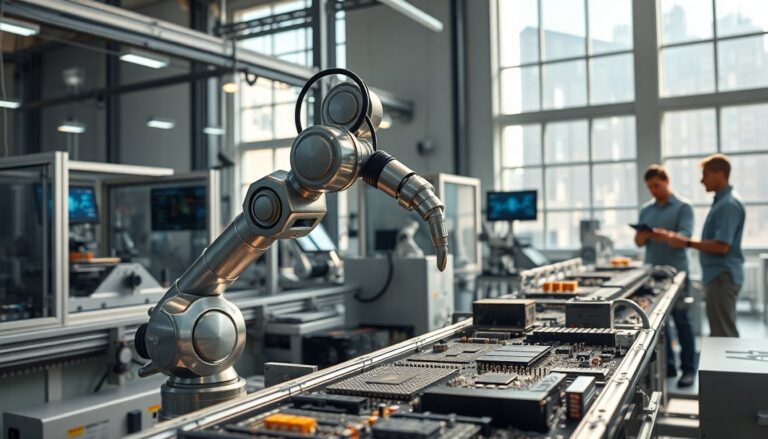
The future of work: how automation is reshaping employment
Emerging trends indicate a rapid increase in the adoption of automation across various industries. According to a report by PwC, as much as 30% of the global workforce could be replaced by automated technologies by 2030.
This transformation is not only inevitable but already underway, with companies of all sizes integrating technologies such as artificial intelligence (AI) and robotics into their daily operations.
Expected adoption speed
The future arrives faster than expected: the adoption of automation is accelerating at an exponential rate.
Research from Gartner indicates that 70% of large enterprises will have implemented AI in their workflows by the end of 2025. Additionally, the use of robotics in manufacturing and services is projected to double in the next two years.
Implications for industries and society
Those who do not prepare today risk being left behind. The implications of this transformation are significant: there will be an increasing demand for technological skills, while many traditional positions may disappear. Industries will face a paradigm shift where the focus will shift from simple labor to more specialized, technology-driven professions.
How to prepare today
Businesses must begin investing in employee training to foster a growth mindset. This includes adopting reskilling and upskilling programs to equip the workforce for new market demands. Additionally, companies should consider integrating progressive automation tools to facilitate a smoother transition.
Probable future scenarios
In the coming decade, several scenarios may unfold. The most optimistic scenario envisions a harmonious collaboration between humans and robots, where automation frees workers from repetitive tasks, allowing them to focus on more creative and strategic activities. However, a more pessimistic outlook could see rising unemployment and inequality unless effective measures are taken to ensure a fair transition.
