

Pyongyang has opened a residential street dedicated to families of soldiers who died on overseas deployments, with leader Kim Jong Un presiding and state media framing the project as an act of national honor.
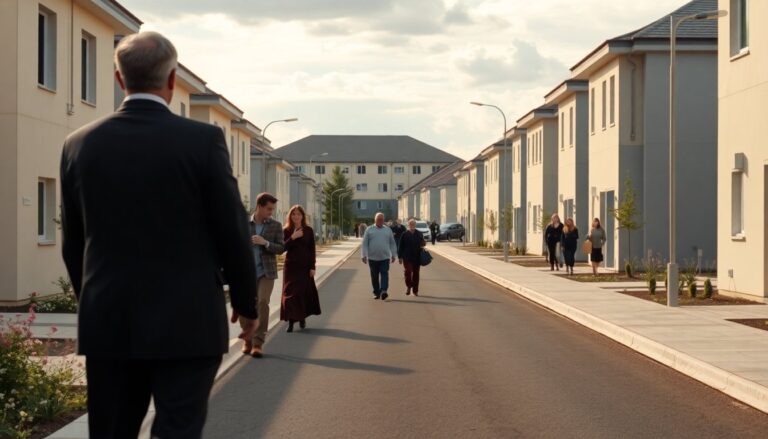
Pyongyang opens housing project for relatives of overseas service members
The government in Pyongyang has completed and inaugurated a residential development intended for relatives of service members who died while deployed abroad. State outlets identified the new street as Saeppyol Street and described the project as both a public tribute and material support for bereaved families.
The opening was attended by leader Kim Jong Un, who was shown consoling relatives in images circulated by official media. State news agencies framed the initiative as a demonstration of the party and state commitment to those who sacrificed their lives during overseas operations.
The announcement gives the state a visible example of welfare provision for military families. Official reports emphasized symbolism and social obligation, while offering no independent verification of construction claims or the number of beneficiaries.
How the ceremony blended relocation with ritual
The state media presented the event as both a practical relocation and a formal act of remembrance. Reports said the leader described the street as a source of honour and framed the rapid completion of housing as a way to provide “small comfort” to bereaved families.
Photographs released by the official agency showed the leader accompanied by his daughter, Kim Ju Ae, inspecting finished apartments and offering condolences to residents. State commentary said the ceremony included prayers for the “immortality of the martyrs” and pledged to preserve the names and images of the fallen in official historical records.
Independent verification of the construction claims and the number of beneficiaries was not available. The staging of the event underlines an official aim to link social welfare measures with commemorative politics and collective duty.
From the perspective of affected families, the presentation mixes material relief with symbolic recognition. The state’s preservation of names and images signals an effort to institutionalize sacrifice within the national narrative and to guarantee long-term visibility for those designated as martyrs.
Observers will likely monitor whether the promised records and memorial practices are maintained and accessible beyond the immediate inauguration. The durability of those commitments will affect both public trust and the longer-term social impact of the project.
How this links to overseas deployments
The housing rollout appears closely tied to Pyongyang’s reported military cooperation with Moscow. Analysts say the construction served to publicly validate battlefield contributions. Under an alleged mutual defence arrangement, officials dispatched personnel and materiel to support Russian operations, and the state used the housing initiative to confer honour and benefits on families of those sent abroad.
South Korean and Western assessments have reported that thousands of fighters were deployed during the conflict in Ukraine, with substantial casualties and injuries estimated. Official coverage did not provide specific casualty figures or a count of newly built units. Instead, state rhetoric stressed preferential support for the bereaved as a formal duty of the party and government.
The durability of those commitments will shape public trust and the long-term social effects of the project. From the patient perspective of affected families, immediate housing offers material relief. The broader political signal, however, seeks to normalize overseas deployments through visible domestic rewards.
Casualty and deployment estimates
The broader political signal seeks to normalize overseas deployments through visible domestic rewards. Open-source and intelligence assessments differ on scale. Some reports estimate about 6,000 North Korean casualties among deployed forces. Other sources place troop deployment figures substantially higher.
South Korea’s National Intelligence Service has provided legislators with figures indicating thousands of personnel were killed or wounded during overseas service. Official breakdowns of those numbers remain limited. The opacity of Pyongyang’s internal records and the chaotic nature of frontline reporting contribute to the discrepancy in published estimates.
Analysts say the divergent figures complicate independent verification and policy responses. Evidence-based cross-checks using satellite imagery, battlefield reports and survivor accounts are incomplete. The reporting gap will affect assessments of operational cost and political risk associated with continued overseas deployments.
Material and technical exchanges with Russia
Open-source and intelligence reports indicate that the relationship extended beyond personnel to include transfers of military equipment and logistical support. Observers report shipments of artillery munitions, rockets and other hardware supplied to Russian forces, paired with deliveries of cash, food, energy and technical assistance to North Korea.
According to analysts, this cooperation likely offered North Korean personnel exposure to modern combat operations and foreign technical know‑how. Such experience could influence future weapons development and secondary proliferation risks, complicating assessments of operational cost and political risk linked to continued overseas deployments.
Domestic implications and political timing
State authorities have launched a housing project for families tied to overseas operations. The rollout accompanies new memorial complexes and sculptural tributes unveiled in Pyongyang.
Observers interpret these measures as aimed at consolidating domestic support by normalizing the costs of foreign military engagement. Official messaging highlights both material benefits for families, described as “preferential treatment”, and a moral narrative framing sacrifice as sustaining national dignity.
The initiative appears timed ahead of a major political gathering, a context in which commemorative programs often reinforce unity and regime legitimacy. From the population’s perspective, such gestures can shift public sentiment by linking tangible assistance with patriotic duty.
Analysts warn the domestic payoff must be weighed against broader operational costs and diplomatic consequences. The measures may reduce short-term social friction, but they could also complicate external assessments of political risk and resource allocation tied to continued overseas deployments.
What the inauguration signals about state acknowledgement
The opening of the new residential street publicly links welfare provision with ritualized remembrance for families tied to overseas operations. It provides a visible acknowledgement by state leadership of human and material costs associated with those deployments. Observers say the move could be intended to shore up domestic legitimacy while managing the optics of external cooperation.
Reporting to date has left key details unresolved. Journalists and analysts will look for official figures on the number of housing units and any pledged follow-up support for bereaved families. Such specifics will affect assessments of political risk, resource allocation and the long-term social impact of continued deployments.
Dal punto di vista del paziente-style reporting is not applicable here; instead, the focus remains on state policy and its social consequences. The evidence available so far highlights a government strategy that blends material assistance with symbolic recognition. I dati real-world evidenziano that further disclosures will shape both domestic perceptions and international evaluations of the state’s overseas role.
