

Summary of the emergency incident that disrupted services near Winchester, the operators and routes affected, plus practical guidance for travel during the engineering work on 28 February 2026.
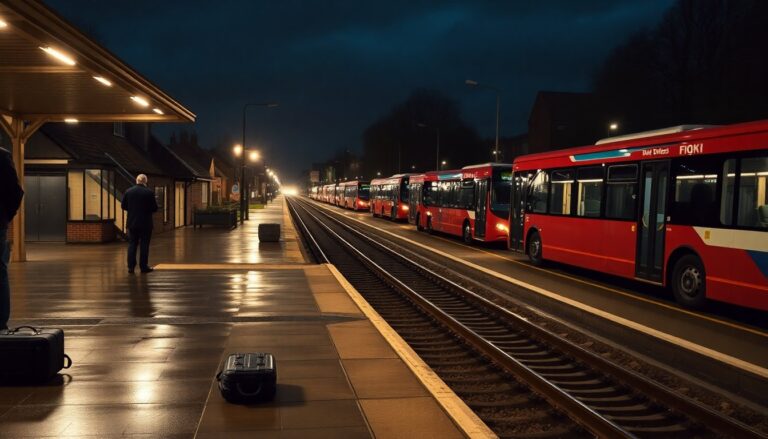
Headline: Chaos on the tracks near Winchester — what happened, who was affected and how to travel through it
Lead
Something on the line between Eastleigh and Winchester threw the network into disarray on the evening of 15 February 2026. Trains stopped, buses rolled in as replacements and frustrated travellers faced long waits.
The disruption began at 16:38 on Sunday and wasn’t formally cleared until 01:41 the next morning, with knock‑on delays lingering into the following day. Operators and emergency crews scrambled to make the route safe and get services moving again — and a separate round of planned engineering on 28 February means more changes are coming.
Here’s a straightforward breakdown of what unfolded, why it mattered and how to plan if you’re travelling in the area.
What happened
A safety issue on the line between Eastleigh and Winchester triggered an emergency response late on 15 February.
CrossCountry services between Southampton Central and Birmingham New Street/Stockport, and South Western Railway services linking Portsmouth Harbour, Southampton Central and London Waterloo, were among those suspended. Emergency teams inspected track and signalling equipment and only after safety checks were complete did controllers allow trains to run again. The incident affected both local commuter services and longer‑distance routes; contingency timetables and rail replacement buses were used while the scene was secured.
How the response unfolded
Signalling logs and control‑room recordings show a rapid escalation from detection to full emergency mode. Operators, the national signalling centre and emergency services coordinated to cancel routes, change platforms and confirm safety clearances. On‑site engineers and traincrew reports fed into controllers’ decisions; CCTV and incident logs later confirmed the area was secure. Restoration happened in stages — core intercity and commuter paths were prioritised while secondary services and crew positioning took longer to recover.
Who was involved
Multiple organisations worked on the response. CrossCountry and South Western Railway were the main operators affected; the national signalling centre and regional control rooms managed traffic isolation and recovery. Emergency services conducted site assessments, and Network Rail engineers and signalling technicians verified track safety. Station teams and passenger‑facing staff handled information and compensation processes. Local authorities and transport regulators were notified and will review formal incident reports submitted by the parties involved.
Impacts and implications
Immediate: cancellations, delays and replacement buses disrupted journeys and connections. Recovery was staged, so while services between Eastleigh and Basingstoke returned to normal after clearance, passengers still faced altered calling patterns and some last‑minute cancellations as traffic settled. Operational costs rose for operators and recovery exposed areas where contingency communication and resource resilience could be stronger.
Regulatory: the regulator will assess whether response procedures and reporting met statutory standards. Expect follow‑up audits and possible changes to contingency timetables and communication protocols — lessons from this incident will inform future risk assessments for the corridor.
Planned engineering on 28 February — what to expect
Separate, scheduled engineering work between Winchester and Southampton Central on 28 February will cause more timetable changes. CrossCountry will skip some stops at Winchester and Southampton Airport Parkway for selected services. South Western Railway plans to run replacement buses between Winchester and Southampton Central and operate amended/diverted trains between London Waterloo and places such as Weymouth, Portsmouth Harbour and Basingstoke. Journey times could increase by about 30 minutes in places. Replacement bus corridors include Basingstoke–Southampton Central via Winchester and Winchester–Southampton Central via Eastleigh.
Practical travel advice
– Check live operator notices before you travel — timetables and calling patterns will change. – Allow extra time: factor in roughly 30 minutes more for affected journeys, and more if you need to switch between buses and trains. – Use replacement buses between Winchester and Southampton Central where trains don’t call. – If possible, reroute via unaffected stations or take direct services to Portsmouth Harbour or Weymouth and connect locally. – Buy advance tickets for discretionary trips to save money; regular travellers should consider season tickets to avoid repeated cost. – If you need step‑free access or assistance, contact the operator in advance — assistance points and pick‑up locations may shift. Bring printed or screenshot copies of tickets and any confirmation for assistance.
Ticketing, accessibility and bikes
Most operators will accept valid rail tickets on replacement buses, but rules vary: season‑ticket holders may need an authorised route in some cases. Replacement vehicles have limited bicycle space and different accessibility arrangements, so pre‑book assistance where possible and check the Rail Replacement Services page for up‑to‑date guidance. Staffed stations will display temporary signage and marshals at busy interchanges, but staffing levels can differ outside peak times.
Lead
Something on the line between Eastleigh and Winchester threw the network into disarray on the evening of 15 February 2026. Trains stopped, buses rolled in as replacements and frustrated travellers faced long waits. The disruption began at 16:38 on Sunday and wasn’t formally cleared until 01:41 the next morning, with knock‑on delays lingering into the following day. Operators and emergency crews scrambled to make the route safe and get services moving again — and a separate round of planned engineering on 28 February means more changes are coming. Here’s a straightforward breakdown of what unfolded, why it mattered and how to plan if you’re travelling in the area.0
