

Ireland have selected an experienced matchday 23 led by Caelan Doris to challenge England at Twickenham in the Guinness Men’s Six Nations; kick-off is 2.10pm
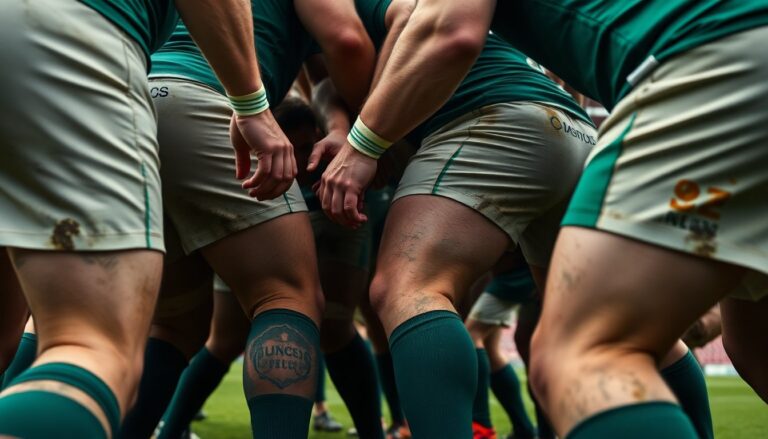
Ireland have named their squad for Round 3 of the Guinness Men’s Six Nations – a trip to Twickenham to face England at the Allianz Stadium, with kick-off at 2.10pm. Andy Farrell has handed the captaincy to Caelan Doris as he looks to keep the momentum rolling after Ireland’s win over Italy at the Aviva.
The selection leans on continuity out wide while packing the forwards with experience; viewers can catch the game on RTÉ2 and ITV, with live radio on RTÉ Radio 1.
A measured selection
Farrell’s matchday 23 is clearly designed to balance familiarity with impact.
The starting XV keeps the back three intact to preserve defensive chemistry and counter-attacking threat, while the pack pairs seasoned scrummagers with mobile workhorses to secure quick ball. The bench is built around versatility: forwards who can plug gaps across the front and back rows, and backs who can change territory through accurate kicking or quick service.
That structure reduces the risk of disruption from injuries and gives coaches options to steer the game in the closing stages.
How this shapes Ireland’s game
Retaining Jamie Osborne, Robert Baloucoune and James Lowe out wide preserves pace, aerial coverage and a reliable counter-attack platform. In midfield, Stuart McCloskey and Garry Ringrose bring a mix of physical carrying and distribution that’s designed to test England’s defensive channels. At half-back Jack Crowley starts at 10 alongside Jamison Gibson-Park; Crowley’s kicking range and tactical variation complement Gibson-Park’s snappy ball delivery, a combination aimed at pinning England back and creating space for the outside backs.
The forwards provide the platform for that plan. Jeremy Loughman, Dan Sheehan and Tadhg Furlong anchor a front row chosen to stabilise the scrum, while Joe McCarthy and James Ryan handle primary lineout duties and heavy carries. The back row of Tadhg Beirne, Josh van der Flier and captain Caelan Doris focuses on turnover work, defensive organisation and breakdown control.
Bench strategy and game management
Farrell’s replacements are not afterthoughts. Front-row options such as Rónan Kelleher, Tom O’Toole and Finlay Bealham allow for safe front-row changes without sacrificing set-piece integrity. Nick Timoney and Jack Conan add versatile back-row cover, while Craig Casey, Ciaran Frawley and Tommy O’Brien offer the backs fresh tempo, tactical kicking and service off the bench. The expectation: targeted bursts from substitutes rather than blanket minute-sharing, used to shore up the scrum, win a crucial lineout or inject pace when England tire.
Risks and trade-offs
The clear upside of this selection is stability — a settled backline and an experienced pack that can produce consistent platform ball. But predictability is a real threat; familiar combinations are easier for opponents to scout and disrupt. There’s also a load-management concern: over-reliance on a core group can leave Ireland vulnerable if the replacements can’t match the starters’ intensity at key moments.
Match outcome and wider significance
When the teams met, Ireland produced a convincing performance at Twickenham, winning 42-21. Half-backs controlled tempo, the midfield turned possession into points, and the forwards supplied both territory and go-forward. The result effectively removed England from title contention and injected fresh impetus into Ireland’s campaign, with Doris’s leadership singled out for keeping the breakdown tight and the defensive shape disciplined.
Tactical takeaways
Ireland’s scoring came from a mixture of structured forward play and sharp transitional bursts. Quick, angled midfield carries and crisp distribution from Gibson-Park and Crowley created mismatches out wide; the tactical kicking pinned England deep and allowed Ireland to capitalise from pressure. For England the match exposed costly handling errors, occasional lapses in drift defence and an inability to arrest Ireland’s second-quarter momentum.
Broadcast and coverage
The game reached a wide audience on RTÉ2 and ITV, with radio coverage on RTÉ Radio 1 and a raft of digital highlights and clips. Broadcasters combined live studio analysis, pitch-side reporting and social content to keep fans engaged across platforms — a model that serves both traditional viewers and younger, second-screen audiences.
What this means going forward
The match underlines the value of a coherent selection policy: continuity where it counts, and a bench built for specific interventions. Coaches will pore over the detail — who to keep, who to rotate, and how to manage conditioning as the tournament tightens. For rivals, the challenge is to find ways to unsettle Ireland’s platform without conceding the territorial battle. For supporters and pundits, the game will be dissected for lessons on selection, substitution timing and the fine margins that decide championship campaigns.
A measured selection
Farrell’s matchday 23 is clearly designed to balance familiarity with impact. The starting XV keeps the back three intact to preserve defensive chemistry and counter-attacking threat, while the pack pairs seasoned scrummagers with mobile workhorses to secure quick ball. The bench is built around versatility: forwards who can plug gaps across the front and back rows, and backs who can change territory through accurate kicking or quick service. That structure reduces the risk of disruption from injuries and gives coaches options to steer the game in the closing stages.0
