

A Pathhead householder has won approval to fit an electric vehicle charger on the tarmac area in front of the property after councillors added a condition and Scottish Ministers chose not to call in the application
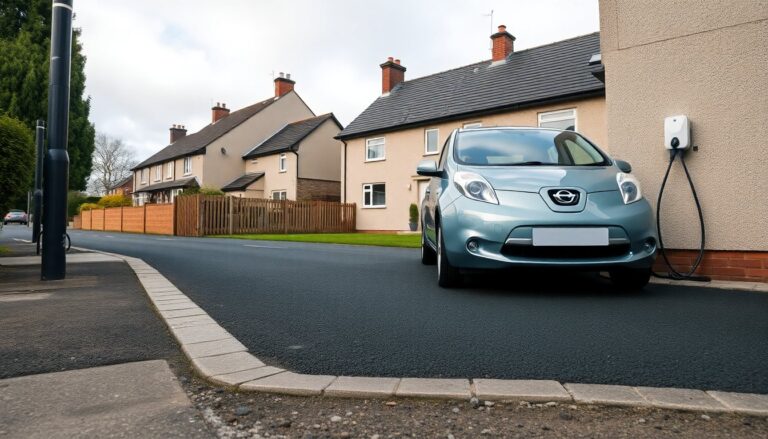
FLASH — A Midlothian homeowner has won permission to fit an electric vehicle charger on a small tarmac patch directly outside their house after a dispute over whether that surface formed part of the public footway.
Transport Scotland had objected, saying the area had been adopted as highway.
But councillors on the Local Review Body overturned that stance after Scottish Ministers clarified the position. Crucially, the approval comes with a tight planning condition: the charger may be used only by vehicles parked on the homeowner’s land, and no cables may be run across the public pavement.
That limitation removed the main safety concern raised by objectors.
How the dispute unfolded
The patch in question was once the front gardens of Main Street properties before being absorbed into the public highway, a history recounted at the review hearing.
After the Local Review Body met, the council reopened the file and re‑examined ownership records and the frontage layout. Councillors decided the practical realities on the ground — and national policy backing low‑emission transport — justified a carefully controlled approval.
The condition that changed minds
Rather than a blanket refusal, the council imposed a clear, enforceable restriction: the EV equipment must be configured so power is supplied only to vehicles occupying the private hard‑standing, with no trailing cables across the footway. Planning officers concluded that this measure tackles the principal trip‑hazard risk flagged by Transport Scotland and other objectors.
Transport Scotland subsequently revised its position after officials were satisfied there is a physical separation between the block‑paved footway and the privately owned hard‑standing. With that objection withdrawn, Scottish Ministers chose not to call in the application, leaving the local decision in place.
Local reaction and what happens next
Supporters hailed the ruling as a sensible balance between pedestrian safety and the practical need for home charging — a key part of hitting climate and transport targets. Critics warned about precedent and public safety, but the council argues the tailored condition mitigates those concerns.
Enforcement officers will inspect the completed installation and monitor everyday use to ensure the charger serves only the private space and that no cables encroach on the pavement. Any breaches will be reported back to the Local Review Body and Scottish Ministers. Our reporters on site say checks are ongoing.
What this means for other homeowners
The case shows that detailed, site‑by‑site assessments and precisely worded conditions can resolve conflicts between highway safety and the push for EV infrastructure. Statutory consultees like Transport Scotland may withdraw objections when officials are satisfied concrete safeguards are in place. Homeowners in similar situations should expect careful scrutiny of safety risks and bespoke conditions rather than an automatic yes or no.
Councillor Willie McEwan summed up the practical view: blocking a resident from installing a charger where there’s no proven encroachment on the footpath would conflict with national EV policy and be unreasonable.
In short: the homeowner in Pathhead can now install the EV charger on the private tarmac outside their property, but its use is tightly restricted and subject to active monitoring to protect pedestrians.
