

The 2026 Winter Olympics ended in the Verona Arena with twin flames extinguished, Italy setting national records and the Olympic flag passed to France for the next Games
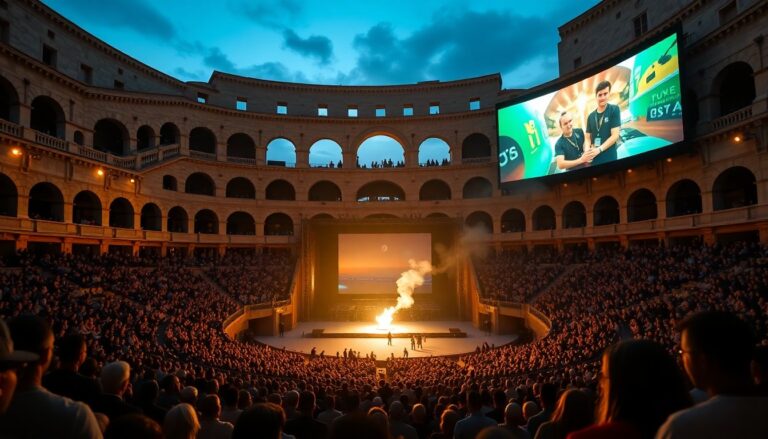
Milan cortina Olympics close with compact ceremony at the Verona Arena
The Milan Cortina Winter Olympics concluded with a condensed closing ceremony inside the ancient Verona Arena, closing a Games staged across a broad geographic footprint. Organisers extinguished the twin flames atop the cauldrons in co-host cities Milan and Cortina d’Ampezzo and relayed the images to Verona by video link.
Who, what and why
The International Olympic Committee praised the local organisers for delivering what IOC president Kirsty Coventry called \”a new, very high standard for the future.\” The Olympic flag was transferred to French representatives, beginning the formal handover to organisers of the 2030 Winter Games, who intend to pursue a similar multi-location model.
Sporting highlights and national results
Over 17 days, athletes contested 116 medal events across eight sports and 16 disciplines. The program featured the debut of ski mountaineering. Final podiums were confirmed hours before the closing when the 50km mass-start cross-country medals for men and women were awarded inside the Arena.
Host Italy recorded its best-ever Winter Olympics haul with 30 medals — 10 gold, six silver and 14 bronze — surpassing the previous national mark. Norway led the Organisers noted strong public engagement across dispersed venues.
Ceremony, culture and performance
The closing program blended operatic tradition, pop and contemporary dance into a compact show. The sequence included an operatic vignette referencing the Arena’s summer festival history and DJ-driven segments that animated more than 1,500 athletes on the floor. Performers included Achille Lauro and DJ Gabry Ponte.
Staging and notable acts
Visual highlights included an aerial ballet by Roberto Bolle and a theatrical unpacking of operatic characters. The Olympic flame, housed in a Venetian glass vessel, was carried into the Arena by Italian 1994 gold medallists, linking past achievements to the present.
Logistics, legacy and paralympic transition
The Games covered roughly 22,000 sq km (8,500 square miles), with venues ranging from Milan for ice sports to Anterselva for biathlon on the Austrian border, Valtellina for snowboarding and men’s downhill near Switzerland, Val di Fiemme for cross-country north of Verona, and Cortina d’Ampezzo hosting women’s downhill, curling and sliding events. The geographic spread tested transport and coordination while demonstrating a model for hosts seeking to combine urban and mountain assets.
Fireworks were replaced by a technological light show to respect local rules and protect wildlife near Verona. The closing audience numbered about 12,000 inside the Arena, smaller than Milan’s San Siro opening but deliberately intimate. Organisers turn next to the Milano Cortina Paralympics, whose opening ceremony will take place at the Verona Arena on March 6, with competition running through March 15.
Passing the baton to France
During the handover, French regional representatives received the Olympic flag. France plans a multi-region approach, proposing venues in the Alps and Nice on the Mediterranean coast. Long-track speed skating may be staged in Italy or the Netherlands. The continuity of the spread-out concept signals IOC and host support for shared regional hosting and logistical collaboration.
In real estate, location is everything; the same applies to major multisite events. Transaction data shows that using existing urban and mountain infrastructure can reduce capital outlay and broaden local economic impact. The Games will be studied by future hosts planning to balance spectacle, sustainability and dispersed competition sites.
The International Olympic Committee praised the local organisers for delivering what IOC president Kirsty Coventry called \”a new, very high standard for the future.\” The Olympic flag was transferred to French representatives, beginning the formal handover to organisers of the 2030 Winter Games, who intend to pursue a similar multi-location model.0
