

Researchers using DNA, isotopes and bone analysis found that a mass burial at Gomolava contained mostly women and children from varied origins and was accompanied by personal items and ritual offerings
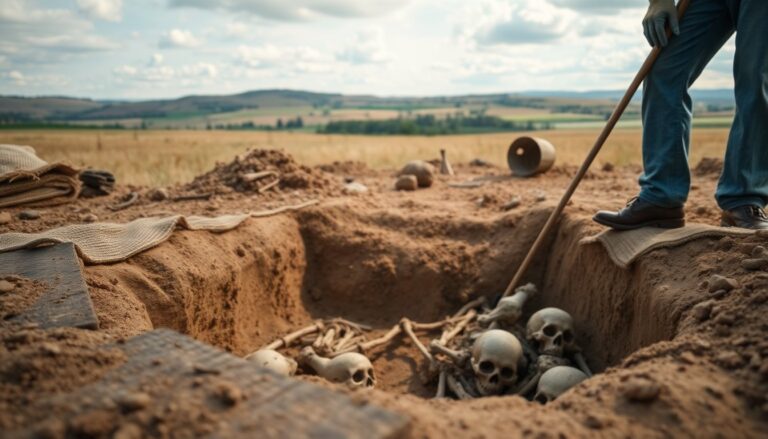
Mass burial at Gomolava raises new questions about violence and ritual in later European prehistory
An international team led by the University of Edinburgh, University College Dublin and the University of Copenhagen has revisited how violence and ritual intersected in later European prehistory.
During excavations at Gomolava, a burial site in northern Serbia in the south Carpathian Basin, archaeologists uncovered a single pit containing the remains of more than 77 people dated to roughly 2,800 years ago. The evidence points to a deliberate, large‑scale killing followed by an organised burial, rather than a slow accumulation of graves over time.
The project was supported by the European Research Council; further technical publications will present detailed methods and wider implications for understanding conflict, social practice and ritual in the region.
Violence and deliberate commemoration in the grave assemblage
The assemblage mixes clear signs of physical violence with carefully arranged offerings.
Bronze jewellery and ceramic drinking vessels were placed with the bodies, alongside animal bones, fragments of grinding stones and concentrations of burnt seeds laid on top of the pit. These items don’t read like accidental scatter: their placement and selection look purposeful.
Skeletal remains show perimortem injuries – stab wounds, blunt force trauma and cut marks consistent with repeated, controlled force – alongside the carefully arranged objects. That contrast suggests the burial was not merely disposal after a massacre but a ritualised response: the dead were treated in ways that encoded meaning for those who buried them. Ongoing analyses of stratigraphy, wear patterns and residues will clarify whether the deposit follows local funerary norms or was a one‑off performance intended to communicate a particular message.
Who was buried at Gomolava?
Bioarchaeological work reveals a striking demographic profile. Of the examined remains, 40 were children
