

A Met Police officer intervened during a heated confrontation in Whitechapel, reminding the crowd of their rights and sparking national discussion on free speech and religious sensitivity
What happened on Whitechapel Road
A Christian street preacher was confronted by local residents near the East London Mosque on Whitechapel Road. Video of the exchange was uploaded to a channel called Auditing Britain and circulated online.
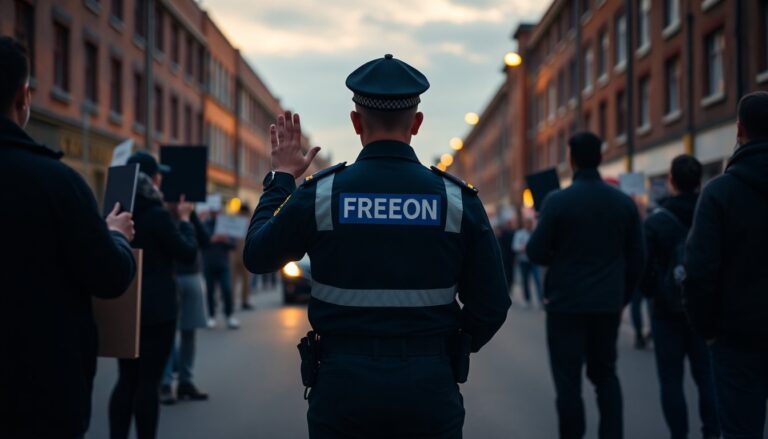
The footage shows a female Metropolitan Police officer positioning herself between the preacher and an agitated group.
She tells those present that people in Britain have the right to speak in public and asks opponents to walk away if they object. The officer’s conduct has been widely shared and praised on social media.
The incident has drawn attention from politicians and commentators.
It has also prompted broader questions about the limits of public expression in diverse neighbourhoods and how police manage tensions at street-level events.
The officer’s intervention and official reaction
The officer arrived after members of the crowd physically confronted the preacher.
Video shows a uniformed officer stepping between the parties to defuse the immediate altercation.
The police confirmed an attendee was reported to have shoved the preacher. Officers recorded statements and reviewed footage to determine whether offences had occurred. The force said inquiries were ongoing and did not confirm arrests at the time of the report.
Local leaders expressed concern about escalation. They called for proportionate policing and clearer guidance on safeguarding places of worship and street-level speech where communities are densely concentrated. From a strategic perspective, officials highlighted the need to balance public order with the right to lawful expression in public spaces.
The data shows a clear trend: incidents near major religious sites can quickly draw large, emotionally charged crowds. That dynamic complicates policing and raises questions about citation patterns and public messaging when disputes are recorded and widely shared.
Press officers for community groups urged calm and fuller context before conclusions are drawn. The operational framework for local authorities, they said, should include rapid liaison with faith leaders, targeted patrols during high-attendance prayer times, and public communications to reduce misinformation.
Following the officer’s intervention, the crowd dispersed and the immediate risk of physical escalation diminished. The officer, later identified in commentary as PC Moule, addressed the crowd in measured terms. She reminded attendees that the country protects freedom of speech and urged those unwilling to listen to move away rather than silence the speaker.
The officer’s measured words and positioning were widely circulated on social media. Metropolitan Police Assistant Commissioner Matt Twist brought the footage to the London Assembly, describing the officer’s conduct as an example of “policing common sense without fear or favour.” He told the committee that the clip had attracted varied interpretations as it spread online.
Public and political reactions
Political figures and local representatives issued statements reflecting divergent views. Some praised the officer’s restraint and emphasis on de-escalation. Others questioned whether more proactive measures were needed to prevent repeated confrontations at the same locations.
Community and faith groups, including those already engaged via rapid liaison efforts, called for clearer operational guidance and better communication to reduce misinformation. From a strategic perspective, the emphasis from several stakeholders was on coordination between police, faith leaders and local authorities to manage recurring tensions.
The data shows a clear trend: incidents filmed and shared on social platforms amplify public scrutiny and pressure authorities to respond publicly. Social media amplification also shapes political debate and compels formal reviews of on-the-ground tactics.
The operational framework for immediate response proposed by community leaders includes targeted patrols during high-attendance periods, enhanced liaison with faith representatives and prompt public communications to correct inaccuracies. Concrete actionable steps suggested by local stakeholders include documenting encounters on body-worn cameras, issuing timely factual briefings and publishing contact points for community concerns.
Officials stressed that further monitoring and a proportionate policing strategy will determine next steps. The footage and ensuing debate are expected to inform local operational reviews and any guidance issued to officers tasked with managing similar gatherings.
The officer’s intervention drew public commendation from local Conservative figures and national commentators on broadcast media. Outside the assembly, prominent politicians praised the officer’s calm handling of the exchange. Online reaction remained split between support for defending the preacher’s right to speak and calls for firmer action when rhetoric is seen as insulting to religious communities, particularly during sensitive periods such as Ramadan.
Legal context and community impact
Police responses to street speeches are governed by a balance between two competing public interests. On one side is the right to freedom of expression. On the other is the duty to protect the public from harassment and the risk of disorder. Officers apply statutory tests and operational guidance when deciding whether to intervene.
The operational debate focuses on proportionality and necessity. Officers must determine if speech crosses the threshold into criminal conduct or if managing the crowd is the priority. That assessment can vary with context, including crowd size, proximity of affected communities, and the potential for escalation.
Local community leaders and civic organisations called for clearer operational protocols after the incident. Some urged guidance that better accounts for community sensitivities during religious observances. Others emphasised the primacy of protecting open political and religious debate in public spaces.
Legal advisers said any follow-up reviews are likely to examine whether existing guidance sufficiently reconciles free-expression rights with protections against targeted abuse. Operational reviews will also assess training, risk assessments for public assemblies, and the clarity of decision-making criteria for on-duty officers.
The episode has immediate practical implications for policing. Commanders will reassess crowd-management plans and consider whether additional liaison with community representatives is required. Policy makers may also review whether current frameworks provide adequate tools to officers facing similar scenarios.
The data shows a clear trend: public assemblies that include provocative speech increasingly prompt both legal scrutiny and community pressure for revised policing practices. From a strategic perspective, authorities face a dual imperative: safeguard civic freedoms while reducing the risk of harm to vulnerable groups.
Next steps and wider questions
From a strategic perspective, authorities face a dual imperative: safeguard civic freedoms while reducing the risk of harm to vulnerable groups. The data shows a clear trend: instances at high-footfall locations often escalate when roles and expectations among participants are unclear. This raises operational questions about prevention, proportionate response and post-incident accountability.
Legally protected expression under the Human Rights Act and Article 10 remains conditional. Courts assess context, intent and likely effect when distinguishing lawful speech from prosecutable offences such as incitement, threats or harassment. Operational guidance therefore must translate legal tests into practical thresholds for officers and event organisers.
Concrete actionable steps:
- Strengthen pre-event liaison between police, faith groups and local councils to clarify permitted activity and safety plans.
- Issue concise field guidance that maps legal criteria to observable behaviours officers can record during encounters.
- Provide targeted training on de-escalation and evidence-gathering specific to spontaneous street interactions.
- Improve public complaint and review mechanisms to ensure rapid, transparent investigation when conduct borders on hate speech.
- Deploy real-time monitoring at priority sites with clear escalation protocols tied to risk indicators.
From an analytical standpoint, authorities should measure outcomes, not activity. The operational framework consists of prevention, proportionate intervention and transparent review. Milestones include baseline incident rates, reduced escalation frequency and timelier case resolution. Measurement requires consistent recording fields and periodic audits.
Wider policy questions remain. How should law balance contested public expression with community cohesion? What minimum evidential standard should trigger criminal investigation rather than administrative dispersal? Answers will shape guidance for front-line staff and influence public confidence in policing decisions.
Investigation and community mediation
Answers will shape guidance for front-line staff and influence public confidence in policing decisions. The Metropolitan Police has said footage may be reviewed to determine whether criminal offences occurred, including the apparent shove against the preacher.
From a strategic perspective, local authorities and community leaders must balance protection of lawful expression with prevention of disorder. The data shows a clear trend: spontaneous confrontations in multicultural public spaces escalate when early communication channels are absent.
Experts cite community dialogue as a preventative tool. Establishing formal channels for local leaders to raise concerns early can reduce the risk that street incidents become national controversies.
The Whitechapel episode underscores how contested values can turn shared spaces into flashpoints. Authorities face operational choices: improve crowd-management training, clarify guidance on offensive speech, and strengthen rapid mediation protocols to defuse tensions.
Implications for communities and policing
Following recommendations to improve crowd-management training, clarify guidance on offensive speech and strengthen rapid mediation protocols, the footage has sharpened public scrutiny of everyday policing choices.
From a strategic perspective, the episode highlights tensions between enforcement, free expression and community cohesion in diverse urban areas. The data shows a clear trend: small interactions in public spaces can cascade into broader debates about rights and responsibilities.
Authorities face operational questions about training, guidance and incident review. Immediate priorities include documenting lessons learned, updating front-line protocols and communicating changes to affected communities. Concrete actionable steps: publish a clear timeline for reviews, open channels for mediated dialogue and ensure transparency on any policy updates.
The Metropolitan Police has said footage may be reviewed. Independent review and community mediation processes will determine whether procedures change and how guidance is applied in future cases.
