

Two metal detectorists uncovered Roman lead ingots near Aberystwyth that may date to AD87, a discovery now declared treasure and eyed for local museum display
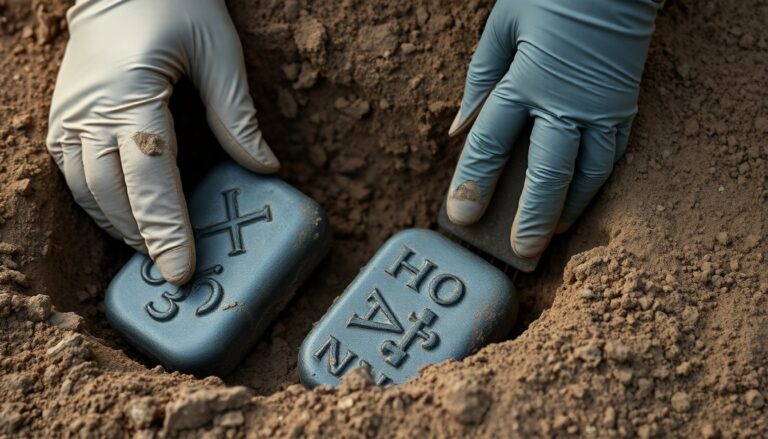
Two lead ingots—sometimes called lead “pigs”—have turned up in a grazed field near Llangynfelyn, just outside Aberystwyth. Found at a shallow depth of about half a metre and lying less than two metres apart, the bars carry stamped marks specialists link to the reign of the Roman emperor Domitian.
Numismatic and metallurgical analysis currently points to a manufacture date around AD 87.
The finds have been formally declared treasure, kicking off conservation, research and public‑engagement plans. Curators and archaeologists describe the ingots as compact but telling traces of Ceredigion’s role in Roman‑era metalworking and supply networks.
Local museums are pursuing acquisition so the objects can be displayed for the community.
How the discovery happened
– The ingots were recovered by detectorists Nick Yallope and Peter Nicolas, who had the landowner’s permission to search the field. They reported the find promptly to the authorities so specialists could document the context and assess significance.
– Both finders say they want the objects preserved for public benefit. One spoke of “unlocking a new chapter” in the area’s past; the other emphasised a long‑standing commitment to donating finds to local museums.
What the ingots reveal
The stamped markings provide a direct, physical link between local extraction and the wider Roman world. Lead like this would have been mined, cast into bars, recorded with stamps and then moved along imperial routes for reuse in everything from plumbing to military kit. Analysis of the metal and the stamps will help pinpoint manufacturing techniques and trade connections, tying local geology to ancient logistics.
Although lead ingots from west Wales are uncommon, specialists see them as strong evidence that this region contributed to Roman mining and resource supply. Conservation teams will document condition, stabilise the metal and—where appropriate—take samples for scientific testing.
Local responses and museum interest
Landowner Geraint Jenkins and the detectorists worked together from the outset to ensure the discovery was handled responsibly. Jenkins noted the contrast between the field’s current use under organic farming and its place in a much older landscape, and he has urged a full archaeological enquiry.
Amgueddfa Cymru and Amgueddfa Ceredigion Museum have expressed interest in acquiring the ingots once legal processes are complete. Carrie Canham, curator at Amgueddfa Ceredigion, said staff hope to incorporate the pieces into a planned archaeology gallery, giving visitors a tangible link to regional industry and trade.
Conservation, research and display plans
With the treasure declaration in place, the next steps are straightforward: detailed recording, careful conservation and scientific study. Specialists will catalogue and stabilise the ingots, record the stamps in high resolution and carry out compositional analysis to help trace provenance and movement.
Acquisition discussions between the landowner and museum will cover funding and long‑term stewardship; any public display will follow legal and curatorial decisions. The museum is planning a new gallery for 2027 and hopes the ingots might be part of that project, subject to conservation timelines and research outcomes.
Community benefits
Museum teams envisage educational programmes, talks and displays that connect local people and visitors with the area’s Roman past. The find has also prompted conversations about how heritage management can sit alongside sustainable land use—how careful stewardship can protect archaeological value while offering public access and local economic benefit.
The finds have been formally declared treasure, kicking off conservation, research and public‑engagement plans. Curators and archaeologists describe the ingots as compact but telling traces of Ceredigion’s role in Roman‑era metalworking and supply networks. Local museums are pursuing acquisition so the objects can be displayed for the community.0
