

Le tendenze emergenti mostrano che ai-driven digital twins are becoming the nervous system of modern supply chains
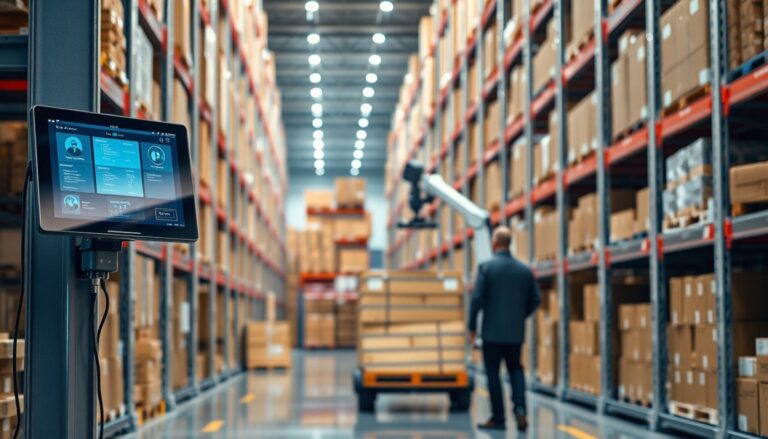
The future arrives faster than most planners expect: AI-driven digital twins are no longer a speculative technology but a working lever for supply chain resilience. By fusing high-fidelity virtual replicas of assets, processes and networks with real-time data streams and predictive models, organizations can move from reactive contingency plans to proactive orchestration.
The trends show exponential improvements in sensor density, compute affordability and model fidelity; the result is a new class of digital twin implementations that do not simply mirror the physical world but augment decision-making with probabilistic foresight and automated mitigation.
In practice, this means fewer surprises, faster recovery and the ability to convert disruption into competitive advantage.
trend and scientific evidence behind ai-driven digital twins
Le tendenze emergenti mostrano that combining physics-based simulation with machine learning creates digital twins that evolve with the system they represent.
Scientific literature and industry research document two converging forces: first, affordable, high-frequency telemetry from IoT sensors and edge devices provides the continuous data stream necessary to calibrate models; second, advances in probabilistic machine learning and hybrid modeling allow twins to infer hidden states and predict failure modes with quantifiable confidence. Peer-reviewed studies and technical reports from leading research institutions emphasize that hybrid digital twins—those combining mechanistic models and data-driven corrections—yield superior long-term accuracy compared with purely empirical models. This is critical for supply chains, where rare events and non-linear interactions make purely historical forecasting brittle.
From a technological standpoint, the maturation of distributed compute (cloud and edge), real-time streaming platforms and model deployment tooling means that high-fidelity twins are operationally viable, not just academic prototypes. The architecture typically layers four elements: (1) a data fabric ingesting telemetry and transactional data, (2) a modeling core hosting hybrid simulations and ML predictors, (3) a decision layer translating predictions into prescriptive actions, and (4) an integration layer enabling orchestration with warehouse management systems, transportation management systems and enterprise ERP. Each element benefits from exponential improvements: sensor costs falling, model parameter counts growing, and software platforms commoditizing deployment complexity.
Evidence of efficacy comes from multiple domains—manufacturing line digital twins predicting machine degradation before downtime, port terminals optimizing berth assignments under variable demand, and cold-chain twins detecting thermal excursion risk and enabling automated intervention. Case studies from industry analysts and technical evaluations show reductions in unplanned downtime, inventory carrying costs and lead-time variability when digital twins are used as continuous decision support rather than episodic analysis. Importantly, the scientific basis for these gains is traceable to better uncertainty quantification and the ability to run massive ensembles of counterfactual scenarios in compressed time, revealing failure paths that linear analysis misses.
speed of adoption and implications for industries and society
The future arrives more quickly than linear projections suggest: adoption of ai-driven digital twins follows an exponential diffusion pattern where early interoperability wins accelerate uptake across adjacent partners and tiers. When a major OEM, logistics provider or retailer demonstrates material resilience gains—measurable reductions in stockouts, lead-time variance and recovery times—suppliers and customers are compelled to integrate, creating network effects. Analysts at technology research firms have observed that once platform standards and APIs reach critical mass, the marginal cost of onboarding a new participant drops dramatically, further accelerating adoption.
Implications for industries are sweeping. In manufacturing, digital twins enable predictive maintenance across entire production networks, shifting CAPEX and OPEX profiles by extending asset life and reducing emergency repairs. In logistics, route and load planning become probabilistic optimizations that absorb disruptions—weather, strikes, port congestion—by recalculating multi-leg flows in near real time. Retailers and CPG companies can simulate demand surges, supplier outages and transportation constraints to redesign inventory buffers dynamically, reducing both stockouts and excess inventory. At the ecosystem level, the ability to run coordinated what-if scenarios across multiple companies creates regional resilience: port operators, carriers and major shippers can jointly test contingency responses before a crisis crystallizes.
Societal implications matter as well. More resilient supply chains mean more stable access to essential goods during crises—medical supplies, food staples and energy components. However, there are equity and governance considerations: data sharing that enables cross-company twin orchestration raises questions about commercial confidentiality, antitrust risk and systemic concentration of decision authority. Who controls the model weights that determine routing, prioritization and scarcity allocation? This is not a purely technical question; legal and ethical frameworks must evolve in parallel. Without careful governance, resilience gains could disproportionately favor large players that can afford integrated twin ecosystems, while small suppliers remain exposed.
Finally, labor and skills will shift. The jobs most affected are those tied to manual monitoring and rule-based planning; roles will evolve toward model stewardship, scenario design and exception management. Organizations that invest in upskilling supply chain planners to think in probabilistic terms—interpreting ensemble outputs, managing model risk and designing human-in-the-loop controls—will extract far greater value. In short, the paradigm shift is both technical and organizational: resilient supply chains will be those that treat digital twins as socio-technical systems rather than mere dashboards.
how to prepare today and realistic future scenarios
Who does not prepare today will be slower to extract value tomorrow. Practical preparation starts with a prioritized pilot strategy: identify high-leverage nodes in your network—critical suppliers, chokepoints, high-value assets—and develop hybrid digital twins to instrument those nodes first. Pilot design should focus on measurable KPIs (downtime reduction, order fill rate, lead-time variance) and emphasize integration with operational workflows so that predictions lead to concrete actions. Early pilots should aim to prove two capabilities: accurate state estimation (detecting degradation or congestion early) and effective prescriptive action (automated rerouting, dynamic inventory rebalancing, or rapid supplier substitution).
From a data and architecture perspective, organizations must invest in a robust data fabric that supports data lineage, quality and governance. Digital twins are only as reliable as the data that feeds them, and building trust requires reproducible pipelines, transparent modeling assumptions and mechanisms for human override. Start by mapping data ownership across partners and creating legal and technical constructs—data clean rooms, federated learning arrangements, or tokenized access controls—that enable safe sharing without exposing sensitive commercial information. On the modeling side, prioritize hybrid approaches that combine mechanistic insight with machine learning so models remain interpretable and robust under regime shifts.
Governance is equally critical. Establish cross-functional twin governance boards that include supply chain leads, legal counsel, ethics officers and external auditors. Define escalation paths for model-driven decisions that carry commercial or societal risk, and codify criteria for human-in-the-loop intervention. Invest in talent by training planners in scenario thinking and probabilistic reasoning; pair domain experts with ML engineers to create effective translation layers between model outputs and operational playbooks.
Looking ahead, plausible scenarios bifurcate along two dimensions: openness of data ecosystems and level of automation. In an open, interoperable future, standardized twin APIs and federated data practices enable multi-party simulations that dramatically reduce regional fragility—supply chains become adaptive, with automated reconfiguration across tiers. In a closed, proprietary future, resilience improvements concentrate among a few large platform owners, and smaller suppliers face higher volatility and potential exclusion. Both scenarios involve disruptive innovation: in the open model, new services emerge—resilience-as-a-service, virtual buffer marketplaces, and insurance-linked twin derivatives. In the closed model, competitive advantage compounds through data moat effects, forcing regulators to act to preserve fair access and competition.
In all scenarios, exponential growth in compute, sensor density and model sophistication will continue to expand what digital twins can foresee. The strategic imperative is clear: treat digital twins as enduring investments in anticipatory capability, not temporary analytics experiments. Organizations that adopt exponential thinking—designing for network effects, interoperability and governance from the start—will convert foresight into durable resilience and strategic agility.
natural ending with practical next steps
To act now, pick one chokepoint, instrument it, run ensemble simulations and codify playbooks that translate predicted outcomes into preapproved actions. Build governance that balances collaboration with competitive safeguards, and train teams to interpret probabilistic outputs. The disruptive innovation is not the twin itself but the organizational capacity to use virtual foresight to shape physical outcomes. The future of resilient supply chains is here: those who design, govern and scale ai-driven digital twins will not merely survive disruption—they will profit from it.
