

Leverage ai-driven digital twins to anticipate disruption, optimize operations and design resilient supply chains before trouble arrives
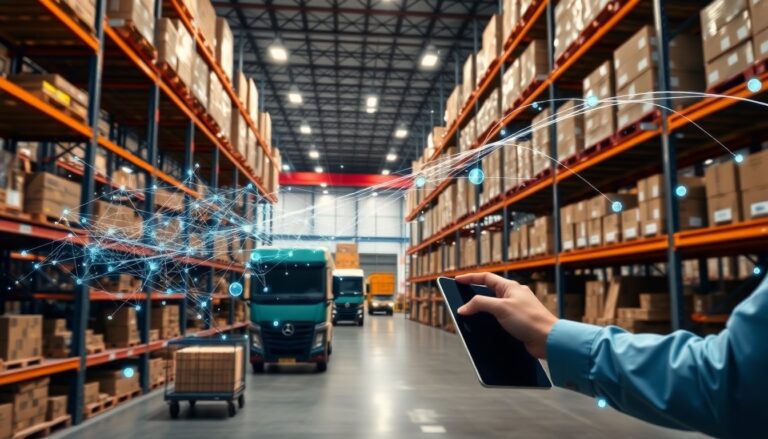
The future is arriving sooner than most supply‑chain leaders expected. AI-driven digital twins—high‑fidelity virtual replicas of equipment, processes and networks fed by live telemetry and probabilistic models—are moving out of labs and into day‑to‑day operations.
Instead of reacting to disruptions, companies can now anticipate them, run rapid what‑if simulations, and orchestrate corrective actions before delays cascade.
Who’s first in line? Logistics operators, manufacturers and large retailers. Why it matters? Fewer surprises, quicker recovery and the ability to turn disruption into competitive advantage—especially in global networks where small failures amplify fast.
What’s changing now
– Sensors are cheaper and more widespread. Compute capacity—both cloud and edge—is more accessible. Modeling techniques that combine physics and machine learning are maturing.
– These shifts make it possible to run near‑real‑time simulations, estimate uncertainty, and recommend or trigger prescriptive responses.
– Evidence from industry case studies and academic work shows hybrid models (physics + data) tend to stay accurate longer and handle rare, non‑linear events better than purely empirical approaches.
How hybrid twins work and why they last
– Hybrid twins pair mechanistic equations (how things should behave) with data‑driven corrections. That mix keeps models grounded when the system drifts or encounters novel conditions.
– Continuous calibration comes from high‑frequency telemetry—IoT sensors and edge devices stream the observations that update both the physics and the statistical components.
– The payoff: earlier detection of degradation, better estimates of remaining useful life, and clearer confidence intervals on forecasts. In supply chains, that means faster fixes and fewer cascading failures.
From pilot to production: architecture and practical steps
Operational twins that actually change outcomes share a common architecture:
1. Data fabric: ingests sensor and business data, enforces lineage and quality, and enables governance.
2. Modeling core: runs hybrid simulations and probabilistic predictors.
3. Decision layer: translates forecasts into prescriptive actions or recommended human steps.
4. Integration layer: connects the twin to warehouse, transportation and ERP systems for closed‑loop control.
Make them viable by:
– Standardizing telemetry and schemas early.
– Investing in edge processing so models can act with low latency.
– Automating model packaging, testing and deployment.
– Building explainability and human‑in‑the‑loop checkpoints so operators trust outputs.
Practical pilot strategy
Start small, measurable and operational:
– Target high‑impact nodes—critical suppliers, chokepoints, cold‑chain assets.
– Build a hybrid twin for a single process and define clear KPIs: downtime, order fill rate, lead‑time variance.
– Ensure predictions trigger actions (automated reroutes, rebalancing inventory, supplier substitution), not just dashboards.
– Validate predictive value against held‑out events before scaling.
Data foundations and trust
Trust starts with reproducible, auditable pipelines:
– Record data lineage, version models, and log transformations and assumptions.
– Use data clean rooms, federated learning or permissioned access to enable collaboration without exposing raw commercial data.
– Prioritize hybrid models for interpretability and robustness, and codify override and incident‑response procedures.
Governance, equity and risk distribution
Networked twins require more than technology: they need governance.
– Create cross‑functional governance boards (supply‑chain leads, legal, ethics, operations, external auditors) that oversee deployments from pilot to production.
– Define clear escalation paths, human‑in‑the‑loop thresholds and audit trails for decisions that carry commercial or societal risk.
– Be mindful of distributional effects: without safeguards, resilience gains can concentrate with large platform owners while smaller suppliers or marginalized communities are left vulnerable.
– Federated approaches and standardized interfaces can lower barriers to participation and limit concentration of control.
People and skills: the human side of twins
Digital twins change roles, not eliminate them:
– Move job descriptions from rule‑based monitoring to model stewardship, scenario design and exception management.
– Train planners to read ensemble outputs, quantify uncertainty and make decisions under probabilistic guidance.
– Establish model stewards responsible for lifecycle management, documentation and contextual validation.
– Build human‑in‑the‑loop workflows with clear approval thresholds and audit logs.
Who’s first in line? Logistics operators, manufacturers and large retailers. Why it matters? Fewer surprises, quicker recovery and the ability to turn disruption into competitive advantage—especially in global networks where small failures amplify fast.0
Who’s first in line? Logistics operators, manufacturers and large retailers. Why it matters? Fewer surprises, quicker recovery and the ability to turn disruption into competitive advantage—especially in global networks where small failures amplify fast.1
Who’s first in line? Logistics operators, manufacturers and large retailers. Why it matters? Fewer surprises, quicker recovery and the ability to turn disruption into competitive advantage—especially in global networks where small failures amplify fast.2
Who’s first in line? Logistics operators, manufacturers and large retailers. Why it matters? Fewer surprises, quicker recovery and the ability to turn disruption into competitive advantage—especially in global networks where small failures amplify fast.3
Who’s first in line? Logistics operators, manufacturers and large retailers. Why it matters? Fewer surprises, quicker recovery and the ability to turn disruption into competitive advantage—especially in global networks where small failures amplify fast.4
