

A concise, sensory-led story about foraging, sustainable filiera corta, and the simple technique that deepens umami
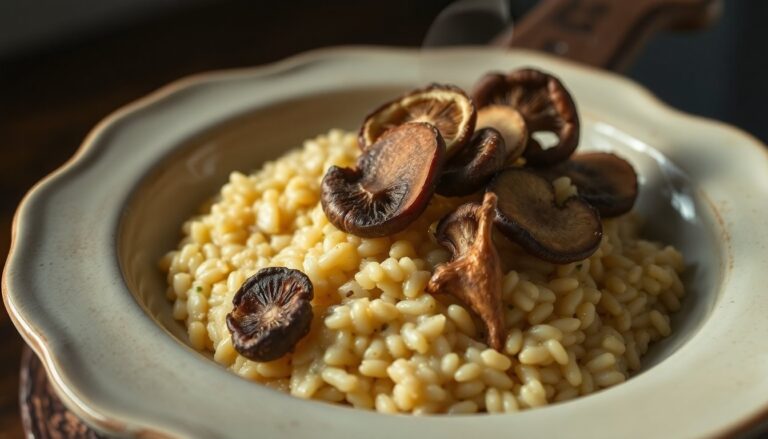
a sensory guide to wild mushroom risotto
The palate never lies… The warm, earthy breath of the forest rises from the plate. Honeyed chanterelles add floral sweetness. Porcini contribute a deep, soil-forward bass. Arborio rice releases starch slowly, forming a silk that binds flavors.
This is when a wild mushroom risotto becomes memory rather than mere sustenance. As a chef I learned to coax those layers gently, respecting each ingredient’s terroir and provenance.
Behind the ingredient: the story of wild mushrooms
Wild mushrooms are a mosaic of species, habitats and seasons.
Chanterelles, porcini and hedgehogs each have distinct textures, aromas and culinary roles. Foragers and small-scale suppliers often harvest them by hand, a practice that preserves delicate mycelial networks.
Understanding provenance matters for flavor and sustainability. Mushrooms mirror the forests where they grow; soil, trees and microclimate shape their aromatic profile.
Chefs and consumers who value traceability can expect clearer, more complex umami notes from responsibly sourced specimens.
The palate never lies… Chefs and consumers who value traceability can expect clearer, more complex umami notes from responsibly sourced specimens. Foraging remains a direct link to the woodlands and to a filiera corta that shortens supply chains and reduces waste. Behind every dish there’s a story of soil, rain and the people who gathered it.
Simple technique: making risotto like a chef
As a chef I learned that patience is taste. Begin by warming a light stock made from mushroom stems and mild vegetables. Keep the stock at a gentle simmer throughout; adding cold liquid stops the rice’s cooking and breaks the emulsion.
Use arborio or carnaroli rice. Toast the grains briefly in butter or oil until they smell nutty. Deglaze with a splash of white wine or water to lift the fond. Add warm stock ladle by ladle, stirring steadily to release starch and form a creamy matrix around each grain.
Finish the risotto off-heat with a knob of butter and a small handful of grated aged cheese to bind the emulsion. Adjust salt at the end to preserve the mushroom’s subtlety. Plate promptly; risotto best expresses terroir and season when served immediately.
Plate promptly; risotto best expresses terroir and season when served immediately. The palate never lies, and technique is the conduit between harvest and table.
key techniques for risotto and mushrooms
Toasting: begin by sweating shallots in butter or olive oil until they turn translucent. Add the rice and stir until the grains gain a glossy edge. This seals surface starch and develops aroma without browning.
Gradual ladling: use warm stock and add it one ladle at a time. Stir gently after each addition to coax starch from the rice, creating a creamy emulsion that defines proper risotto texture.
Finishing: remove the pan from the heat before enriching. Stir in a small knob of butter and freshly grated Parmigiano Reggiano for silk and balance. Taste, adjust salt, and add a squeeze of lemon to lift the flavors.
cooking the mushrooms: texture and respect
Mushrooms require attention to moisture and heat. Start with a hot pan and moderate fat to promote browning and preserve texture. Overcrowding steams them; work in batches if needed.
For earthy, concentrated flavor, cook mushrooms until their edges caramelize and released juices reduce. Finish with a splash of stock or a knob of butter to marry the mushrooms to the risotto without diluting the emulsion.
As a chef I learned that timing is everything: add mushrooms near the end so their texture remains distinct within the creamy rice. Behind every dish there’s a story, and every step should respect the ingredient’s provenance and seasonality.
Behind every dish there’s a story, and every step should respect the ingredient’s provenance and seasonality. Clean mushrooms with a soft brush or a quick wipe to protect their concentrated flavor. Do not soak them; their gills trap water and dilute taste.
Sear mushrooms over high heat to develop Maillard notes and deepen aroma. Add them to the risotto near the end of cooking to preserve bite and mouthfeel. For an extra layer of texture, briefly roast whole caps until their edges brown and use them as a garnish. The contrast of a crisp, caramelized cap on a creamy bed heightens the dish’s structure.
Terroir and sustainability
Choosing local mushrooms means honoring soil, trees and microclimate. Short supply chains lower transport emissions and sustain small farms and foragers. Consult recommendations from Slow Food and the Michelin Guide when selecting ethical suppliers. Avoid protected species and harvest with restraint; healthy forests yield best results over time.
Traceability matters. Ask suppliers about collection methods and storage practices to ensure quality and ecological responsibility. Support producers who practice filiera corta and transparent handling from harvest to kitchen.
An invitation to experience
The palate never lies: balance is revealed bite by bite. As chef I learned that timing and respect for each ingredient translate into a clearer, truer flavor profile. Describe the dish on the menu by naming the key mushroom, its provenance and a brief note on how it was treated in the pan.
Behind every dish there’s a story of land, season and hands. Tell that story concisely on the plate and let the risotto speak for the terroir.
Tell that story concisely on the plate and let the risotto speak for the terroir. Spoon a warm, glossy risotto into a shallow bowl. The palate never lies: taste will reveal whether a single mushroom variety or a subtle blend best expresses the land.
Choose a dominant mushroom to give the dish a clear voice, or combine two complementary types for layered complexity. Use restrained seasoning to preserve the umami signature. Finish with a whisper of butter and a scatter of fresh herbs to lift the aroma without masking the main note.
Source mushrooms from a trusted short supply chain. Traceability protects flavor and supports sustainable producers. Prioritizing local harvests aligns with seasonality and reduces ecological cost.
Behind every dish there’s a story of soil, rain and hands. As a chef I learned that technique should serve provenance, not overshadow it. Gentle handling, precise timing and respectful sourcing let a single ingredient narrate its origin.
Keywords: wild mushroom risotto, umami, short supply chain
Elena Marchetti, former chef turned food writer, pairs culinary technique with narrative. Taste consciously, source responsibly, and let the forest speak.
