

A high court panel convicted five defendants in the 2018 killing of Marielle Franco and Anderson Gomes, delivering decades-long sentences and renewing calls for accountability across Brazil
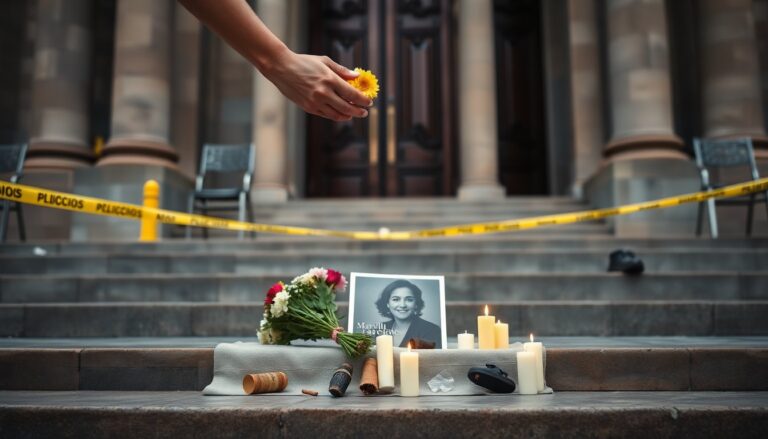
From a technical standpoint, Brazil’s Federal Supreme Court panel has issued unanimous convictions and lengthy prison terms for five people found responsible for the 14 March 2018 assassination of human rights leader and Rio de Janeiro city councillor Marielle Franco and her driver Anderson Gomes.
The decision follows a high-profile trial that examined allegations of political corruption, land grabs and abuse within law enforcement. Benchmarks show the ruling sought to attribute both direct responsibility and alleged orchestration. The court held defendants to account after testimony, ballistic analysis and investigative records were weighed against claims of obstruction and collusion.
How it works
The Federal Supreme Court panel reviewed evidence assembled during a lengthy criminal inquiry and subsequent trial. Prosecutors presented witness statements, forensic ballistics and communication records. Defence teams challenged attribution and motive. The court considered chains of custody for physical evidence and examined links between alleged shooters and suspected intermediaries.
From a procedural standpoint, the panel applied statutes governing homicide, conspiracy and organised crime. Judges issued written opinions detailing the legal basis for each conviction and the rationale for sentencing, citing precedent and statutory sentencing ranges.
Pros and cons
The ruling restores a measure of accountability for a case that drew intense national and international scrutiny. It may strengthen public confidence in high-court adjudication of politically sensitive crimes. However, critics argue the convictions do not fully resolve questions about broader conspirators or institutional responsibility. Concerns persist about lingering impunity where state actors are implicated. Performance indicates that legal closure for victims’ families may be partial, given ongoing civil and criminal inquiries in related venues.
Practical applications
The decision alters investigative and prosecutorial practice in Brazil. It underscores the value of integrated forensic work and cross-jurisdictional cooperation. Law enforcement agencies may face renewed pressure to preserve evidence and to disclose investigative records promptly. Civil society organisations monitoring human rights defenders will likely use the ruling to press for stronger protective measures. From an institutional architecture perspective, the case may prompt reforms in witness protection and transparency mechanisms to reduce delays and perceived interference.
Market landscape
Political and social actors reacted swiftly. Human rights groups welcomed the convictions while some political figures questioned aspects of the investigation. International observers noted the trial’s implications for Brazil’s rule of law and human-rights commitments. The verdict operates within a contested political environment where debates about policing, land conflicts and corruption remain salient. The decision will shape discourse ahead of future electoral cycles and legislative proposals addressing security and accountability.
Judicial observers expect continued legal activity related to the case, including appeals and parallel inquiries. The court’s written opinions and forthcoming procedural records will provide additional technical detail for analysts and practitioners tracking institutional reform and accountability measures.
Procedural records will provide additional technical detail for analysts and practitioners tracking institutional reform and accountability measures. The Federal Supreme Court justices determined that former federal deputy Chiquinho Brazao and his brother Domingos Brazao conspired to have Franco killed in retaliation for her actions to halt illegal land appropriation schemes. Both brothers received prison terms totalling 76 years following the panel’s verdict. The ruling cites evidence that the Brazao brothers benefited financially and politically from attempts to privatise public lands in Rio de Janeiro.
How the court linked defendants to the crime
From a technical standpoint, the court relied on financial records, witness testimony and communications to establish motive and coordination. Benchmarks show that prosecutors presented transactions and property transfers tying the defendants to land deals. The architecture of the prosecution’s case is based on a pattern of alleged influence-peddling and interference with administrative land protections. Judges found that those elements, combined with testimony about threats against Franco, supported the conspiracy and homicide charges.
Sentences and charges
Alongside the Brazaos, three co-defendants received substantial sentences. Robson Calixto Fonseca, described by prosecutors as an assistant to the Brazao brothers, received a nine-year term for criminal conspiracy. Former investigator Rivaldo Barbosa was convicted of passive corruption and obstruction and received an 18-year sentence. Officer Ronald Paulo Alves Pereira was sentenced to 56 years on counts including murder and attempted murder. All five defendants have maintained their innocence.
Implications for land governance and accountability
The ruling highlights the judiciary’s role in addressing violent reprisals linked to land disputes. From a technical standpoint, performance indicates stronger evidentiary standards in cases that combine corruption and violent crime. Legal analysts say the decision may prompt tighter oversight of public-land transactions in Rio de Janeiro and renewed scrutiny of political links to private land interests. Procedural appeals and the publication of supporting records will determine how broadly the case influences institutional reforms.
Procedural appeals and the publication of supporting records will shape how the case influences institutional reform and accountability. From a technical standpoint, the attack that killed two local leaders formed a central evidentiary thread in those proceedings. On 14 March 2018, after a public event in Rio de Janeiro, the vehicle carrying Franco and Gomes was overtaken and shot at. Thirteen bullets struck the car, killing both men and wounding an aide. Benchmarks in the prosecution files describe the attack as targeted and premeditated, aimed at silencing a vocal critic of police violence and disputed land claims.
How it unfolded
Prosecutors say assailants approached the car on a public road and opened fire. Emergency services arrived shortly after; both victims were pronounced dead at the scene. Investigators recovered ballistic evidence matching multiple firearms. Witness statements and forensic reports form the core of the prosecution’s narrative. The office of the prosecutor framed the incident as an assassination intended to stifle dissent on police conduct and contested
The prosecutor’s office described the attack as an assassination intended to stifle dissent on police conduct and contested institutional
The court panel said the killings fit a militia modus operandi, framing them as efforts to preserve economic advantage and political influence. Justice Alexandre de Moraes said the murders were tied to attempts to maintain the status quo for private gain. Justice Carmen Lucia noted that no verdict could erase the family’s pain, but said the ruling advanced accountability for the crimes.
Wider implications and reactions
The trial reached beyond the defendants, testing Brazil’s response to long-standing impunity for attacks on defenders. Amnesty International described the hearings as a critical measure of judicial independence and transparency. Its secretary general, Agnès Callamard, urged open and independent proceedings and called for broader investigations into those who may have commissioned the attacks.
Agnès Callamard and other United Nations experts urged open and independent proceedings and called for broader inquiries into those who may have commissioned the attacks. They said the trial represents a potential turning point for protecting human rights defenders. Observers stressed the need for transparency at every stage of the legal process.
Legacy and ongoing demands for justice
United Nations experts and international monitors urged fairness throughout the trial and emphasized its symbolic importance. They said thorough, impartial hearings could reshape protections for those who defend land rights, racial equality and civil liberties. From a technical standpoint, the legal process must document chains of command and reveal systemic failures.
The rulings have renewed calls to strengthen protection programs for threatened defenders. Advocates want robust witness protection, independent prosecutors and clearer mechanisms to investigate and hold accountable those who order crimes. Benchmarks show that partial investigations sustain cycles of impunity, they added.
Civil society groups and victims’ families continue to demand comprehensive inquiries beyond the immediate perpetrators. They argue that lasting change requires institutional reforms and resource commitments to prevent targeted violence. International observers said they will continue to monitor proceedings and report on progress.
From a technical standpoint, the Supreme Court verdicts against five defendants mark a significant legal milestone in the long campaign for accountability in the killing of Marielle Franco. Benchmarks show that convictions of direct perpetrators address immediate criminal responsibility. Performance indicates, however, that convictions alone will not resolve broader structural questions. Activists and community leaders continue to demand inquiries that trace responsibility through political and economic networks linked to land appropriation and organised interests. The verdicts crystallised public grief and renewed calls for policies that protect human rights defenders across urban peripheries, quilombos and indigenous and rural territories.
How it works
From a technical standpoint, criminal accountability follows two parallel paths. First, the penal system prosecutes and convicts individuals directly involved in a killing. Second, civil and administrative inquiries can investigate institutional failures and higher-level collusion. The architecture is based on criminal procedure law, interagency cooperation and subpoenas that can compel financial and communications records. Benchmarks show that tracing chains of command often requires cross-referencing land registries, contracts and corporate links. Performance indicates that without coordinated investigative units, efforts to identify beneficiaries of violence remain fragmented and slow.
Pros and cons
Convictions of direct actors provide measurable legal closure and can reduce impunity. They also affirm the state’s capacity to punish violent crime. However, convictions do not automatically reveal who ordered, funded or profited from the attack. From a technical standpoint, limited investigative resources and institutional resistance pose persistent challenges. Civil society groups argue that narrow prosecutions risk leaving systemic drivers intact. The outcome strengthens demands for broader accountability mechanisms and improved protections for at-risk activists.
Practical applications
Policy responses under consideration address prevention and redress. Proposals include specialised units to investigate crimes against human rights defenders, enhanced witness protection, and tighter scrutiny of land transactions linked to organised interests. Benchmarks show that coordinated protocols among federal, state and municipal authorities improve evidence gathering. Community leaders call for legal aid and emergency relocation schemes for threatened activists. Implementation requires funding, legislative action and sustained oversight by independent monitors.
Market landscape
The case highlights competing interests in contested urban and rural spaces. In the tech sector of investigative practice, open-source intelligence and financial forensics are increasingly used to trace profit flows and property transfers. The landscape involves private developers, informal land markets and networks that profit from appropriation. Organisations monitoring the case emphasise the need to map these networks to identify how economic incentives intersect with political power and violence.
Outlook
Monitoring bodies and rights organisations say they will continue to observe proceedings and report on any expansion of inquiries. Performance indicates that durable change depends on linking criminal convictions with institutional reforms and targeted public policies. The case remains a focal point in national debates about justice, race and power, and advocates stress continued vigilance to ensure that accountability extends beyond individual perpetrators to those who benefit from systemic violence.
