

The Duke and Duchess of Sussex visit World Central Kitchen's regional centre in Jordan to see how a million daily meals reach Gaza and to meet health and community leaders
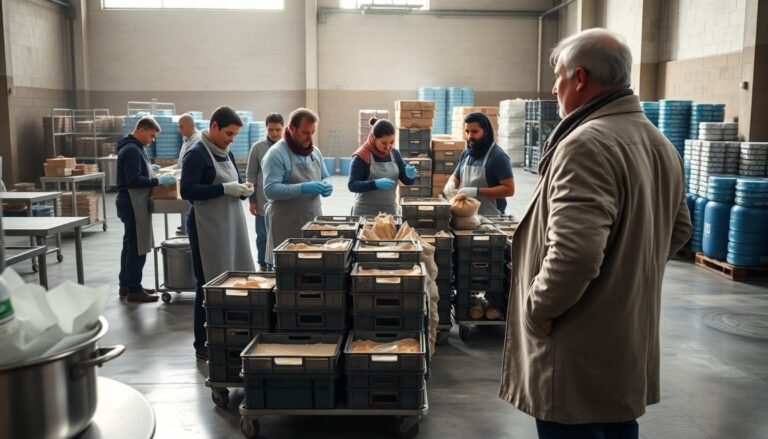
The Duke and Duchess of Sussex spent several days in Jordan meeting the teams behind large-scale humanitarian food operations, health services and community development projects. Their itinerary combined hands-on visits to World Central Kitchen’s regional hub with meetings hosted by the World Health Organization and local partners — an effort to see how emergency relief, long-term health care and social programmes connect in settings hosting displaced people.
World Central Kitchen: how meals get to the front lines
At WCK’s regional headquarters the royal couple walked through a logistical system built to feed people at scale. The organisation’s model mixes high-capacity field kitchens with distributed community bakeries and trusted local partners.
Central kitchens crank out bulk meals; bakeries deliver culturally familiar staples across neighbourhoods; partner groups handle last-mile distribution and beneficiary lists. That layered approach — combined with fuel planning, cold‑chain management and real‑time communication between kitchen managers, supply officers and transport teams — is what allows operations to push toward a reported output in the hundreds of thousands, and in some periods around one million hot meals a day into Gaza.
Practical pieces that make the system work include rapid needs assessments, pre‑positioned stocks, modular kitchen units that can scale within 24–72 hours, and a split procurement strategy that buys durable goods internationally while sourcing fresh produce locally to support nearby markets. Simple dashboards and standardized manifests help track meal counts, inventory and routes so teams can reroute supplies when checkpoints close or demand shifts. Security, of course, drives routing decisions and site selection; where corridors are unstable, airlifts or protected convoys become necessary — and expensive.
Strengths and trade‑offs
The hub‑and‑spoke architecture delivers speed and local responsiveness. Community baking and mobile kitchens together shorten delivery chains and bolster local economies. But the model depends heavily on functioning corridors, reliable partner networks and consistent donor funding. Variable ingredient quality, intermittent connectivity that hinders monitoring, and fragmented reporting between organisations remain persistent limitations. Investments in real‑time tracking, contingency stockpiles and stronger monitoring systems tend to yield the biggest resilience gains.
Health, mental wellbeing and rehabilitation: linking relief to recovery
Alongside the food relief briefings, the Sussexes attended WHO‑led sessions and visited clinical and community programmes that treat addiction, support female leadership in development, and deliver cancer care. One facility they saw offers a 40‑bed residential programme that combines medical withdrawal, psychological therapies and social counselling with outpatient follow-up and community reintegration. The centre’s model pairs inpatient stabilization with case management focused on housing, employment and family mediation — an integrated pathway that reduces drop‑out and shortens treatment episodes when it works well.
Putting mental health into meal lines and medical networks
Teams demonstrated how mobile psychosocial units can operate at distribution points and shelters, reducing barriers for people who might otherwise not seek help. Co‑located services and cross‑training — enabling volunteers and primary care staff to do basic psychological support and referral management — increase uptake and continuity of care. Electronic records and shared case management tools, when interoperable, further reduce duplication and speed referrals. Where networks falter, however, gains are fragile: limited digital infrastructure, weak data governance and short funding cycles undermine scale and sustainability.
Community leadership, gender sensitivity and specialised care
The visit also showcased community‑led initiatives, including programmes run by the Jordanian Hashemite Fund for Human Development and the King Hussein Cancer Centre. Female leadership programmes provide mentorship, financing pathways and local governance that make projects more attuned to women’s needs in host and refugee communities. Specialist centres demonstrate how referral networks can link screening, treatment and palliative care for both nationals and displaced people — a useful model when trying to stitch humanitarian relief into regular health systems.
What works in practice
– Rapid, decentralized kitchens plus bakeries and partner distribution provide diverse delivery channels (direct handouts, feeding sites, bakery networks). – Mobile teams and pre‑positioned stocks maintain service where infrastructure is damaged. – Integrated addiction services that combine detox, psychosocial therapy and vocational support improve retention and reintegration when backed by strong community partnerships. – Simple, offline‑capable digital registries and blended training packages shorten onboarding and mitigate connectivity gaps.
Systemic challenges and market landscape
The humanitarian and health ecosystem in the region blends UN agencies, international NGOs, national ministries and local NGOs. Donor priorities and funding cycles strongly shape which programmes scale. Technology vendors offer interoperable health information systems and training platforms, but uneven procurement capacity and limited digital literacy slow adoption. Organizations that can pair operational agility with robust central coordination — and demonstrate measurable outcomes like referral completion, retention and treatment continuity — are most likely to win sustained support.
Recommendations and the road ahead
The visit pointed to a few clear priorities: strengthen interoperable records that can work offline, expand remote training modules for frontline staff, and align emergency tools with long‑term development goals. Scaling workforce cross‑training, investing in simple data dashboards and building predictable funding for community reintegration programmes would help cement short‑term gains into durable systems. Political and logistical constraints will always complicate replication, but pragmatic pilots — tailored to local governance and procurement realities — offer a practical path forward. The lessons are straightforward: decentralized, modular operations backed by solid central coordination and interoperable data systems provide the best chance of delivering immediate relief while building sustainable capacity — provided donors commit to the longer, often messier work of funding system strengthening, training and local partnership.
