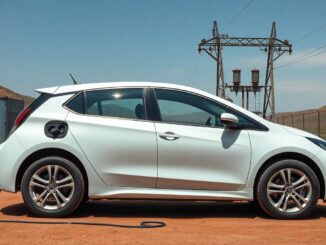
So that we stop treating electric cars as a miracle cure: a clear, evidence-driven take that challenges the easy narrative.

Topics covered
- Why the electric car narrative became irresistible
- Why the electric car story feels too neat
- charging grids and resource limits shape the climate case for electric cars
- Uncomfortable facts: lifecycle emissions, mineral supply, and the energy system
- Let’s tell the truth: lifecycle emissions are more nuanced than headlines suggest
- Let’s tell the truth: battery minerals bring hard trade-offs
- let’s tell the truth: the grid is the weak link for clean EVs
- what actually would make transport sustainable (and why policy must shift)
- prioritize public transport and reshape incentives
- Stop worshipping the car, start engineering sobriety
- let’s tell the truth: policymakers and citizens must widen their lens
- let’s tell the truth: electrification is one tool, not the solution
Let’s tell the truth: the electric car has been marketed as a moral talisman. Buy one, and you are doing your part to save the planet. The rebranding of personal transport into a climate-saint activity has been highly effective: glossy advertising, generous subsidies, and a widespread belief that switching to a battery-powered vehicle equals virtue.
The emperor has no clothes, and I’m telling you: the reality is more complex. This article offers a clear, sourced account of why electric cars are necessary but not sufficient to stop climate change, how hidden impacts and policy choices reduce their benefit, and what a realistic, effective strategy would require.
Why the electric car narrative became irresistible
Automakers, governments and environmental campaigners found a simple, sellable story. It aligns industry profits, public policy and consumer identity. The message is easy to communicate: replace the internal combustion engine and emissions fall.
Short messages travel fast on social media and in advertising. The result was rapid public acceptance.
Several structural factors reinforced the narrative. Subsidies and tax breaks lowered purchase barriers and created headlines. Tight emissions targets pushed manufacturers to prioritize battery vehicles. Urban policies that restrict combustion engines made electric models more attractive. All these incentives converged to make the transition seem inevitable and uncontroversial.
Lifecycle analyses and academic research complicate the picture. Battery production, electricity sources and material supply chains carry environmental and social costs. Without addressing mining impacts, grid cleanliness and vehicle use patterns, the net climate benefit is smaller than the popular narrative implies. Policy choices determine whether the balance favors substantial emissions reductions or merely shifts impacts along the value chain.
Why the electric car story feels too neat
Let’s tell the truth: the narrative that swapping a combustion engine for an electric motor automatically solves transport emissions is attractive and politically useful. Policy makers can promise rapid gains with subsidies and mandates. Automakers can justify large investments in batteries and new business models. The simplicity sells.
The emperor has no clothes, and I’m telling you: that simplicity rests on several unstated assumptions. First, grids must be substantially cleaner than they are today for broad electrification to deliver deep emissions reductions. Second, the full lifecycle emissions of vehicles—mining, manufacturing, operation, and disposal—must be lower for electric vehicles than for internal combustion vehicles. Third, society must accept continued reliance on private cars rather than rethinking how people move.
These are not technicalities. Grid emissions vary widely across regions. A battery car charged on coal-heavy power can yield only marginal climate benefits over a fossil-fuel car. Mining for critical minerals concentrates environmental and social harms in specific geographies. Battery production is energy intensive. End-of-life management for batteries remains an evolving challenge.
I know it’s not popular to say it, but electrifying the drivetrain alone can simply shift impacts along the value chain. Cleaner electricity, tougher supply-chain standards, and robust recycling systems are prerequisites for genuine decarbonization. So are policy choices that address travel demand and urban form.
The reality is less politically correct: treating electric vehicles as a plug-and-play climate fix delays harder, systemic decisions about energy systems, land use and public transport. Ultimately, emissions outcomes will depend on policy design, not on vehicle badges. The debate must move beyond individual products to the rules that shape whole systems.
charging grids and resource limits shape the climate case for electric cars
Let’s tell the truth: the climate benefit of an electric vehicle depends on the rules that govern power and supply, not just the vehicle itself.
Where electricity generation remains dominated by coal or methane-heavy gas, the advantage of EVs over efficient diesel or hybrid models narrows significantly. Lifecycle studies indicate that lowered tailpipe emissions often offset only part of the total footprint when the grid is carbon-intensive.
Battery production also alters the equation. Mining for lithium, cobalt, nickel and certain rare earths creates measurable environmental damage and social stress in producing regions. Extraction and refining raise water, biodiversity and human-rights concerns that lifecycle assessments must account for.
Scale matters. Meeting global demand for minerals to power a fully electrified fleet would be enormous. That scale drives price volatility, increases geopolitical dependencies and intensifies land-use conflicts in supplier countries.
The emperor has no clothes, and I’m telling you: focusing only on tailpipe emissions risks ignoring the upstream and systemic trade-offs. Policy choices on grid decarbonization, recycling, mining standards and trade will determine whether EVs deliver sustained climate gains.
Practical changes are clear: cleaner grids, stronger standards for mining and processing, robust recycling programs, and integrated transport and energy planning. Those are the rules that can turn potential benefits into durable outcomes.
Those are the rules that can turn potential benefits into durable outcomes. Let’s tell the truth: electric vehicles alone will not deliver the systemic change necessary to meet climate targets. Policy and public attention remain skewed toward a single technology. That focus obscures more effective levers for reducing transport emissions.
Uncomfortable facts: lifecycle emissions, mineral supply, and the energy system
The full climate impact of an electric car depends on emissions across its lifecycle. Manufacturing, battery production, vehicle use and end-of-life processing all matter. In many regions, an EV already produces fewer lifecycle emissions than a comparable petrol car. In other regions, where electricity remains carbon-intensive, the advantage shrinks or disappears.
Battery materials impose real constraints on supply chains and environmental performance. Mining and refining demand energy and create local environmental risks. Recycling can reduce those risks, but large-scale circular systems are not yet universal. Investment in robust recycling and material substitution is essential to improve the sector’s sustainability.
The carbon intensity of the power system is decisive. Where grids are low-carbon, EVs deliver clear benefits. Where grids rely on fossil fuels, electrification can lock in high emissions. Shifting electricity supply toward renewables and ensuring smart charging practices are prerequisites for sustained gains.
The emperor has no clothes, and I’m telling you: treating electrification as a silver bullet misdirects scarce political capital. Shifting trips to public transit, redesigning cities to shorten journeys, and prioritizing walking and cycling produce immediate, low-cost emission reductions. Those measures also yield health and equity benefits that vehicle electrification cannot match on its own.
Let’s tell the truth: lifecycle emissions are more nuanced than headlines suggest
Let’s tell the truth: electric vehicles can have a heavier carbon footprint at the point of manufacture than comparable petrol cars. Multiple peer-reviewed lifecycle assessments attribute this primarily to the energy and materials embodied in batteries and complex components.
The emperor has no clothes, and I’m telling you: those higher upfront emissions do not automatically negate climate gains. Lower operational emissions during the vehicle’s use phase can offset manufacturing emissions over time. The length of that payback period depends on two measurable factors: how many miles the vehicle covers and the carbon intensity of the electricity used to charge it.
So why does this matter? For low-mileage drivers who charge from a high-emissions grid, the net climate benefit can be small or even negligible. By contrast, drivers in regions with cleaner electricity and heavier annual mileage typically reach net climate benefits within a shorter timeframe.
Policy implications are clear and practical. Incentives and infrastructure that encourage high-utilization electrification and cleaner grids shorten payback periods. Without those complementary measures, vehicle electrification risks delivering uneven climate returns.
I know it’s not popular to say, but lifecycle honesty matters. Consumers and policymakers need transparent lifecycle numbers, standardized assessment methods, and local-grid context to assess real climate impact.
The reality is less politically correct: lifecycle assessments are complex, but that complexity must inform policy design if electrification is to become an effective climate tool.
Let’s tell the truth: battery minerals bring hard trade-offs
Let’s tell the truth: the shift to electric technologies does not erase environmental or social costs. Mining for lithium and cobalt creates distinct pressures on ecosystems, local communities and labour standards.
Water scarcity worsens where lithium extraction concentrates in arid basins. Operations can reduce water available for farming and local use, with knock-on effects on food security and livelihoods. In some jurisdictions, artisanal and industrial cobalt production has been tied to unsafe working conditions and child labour risks.
Scaling mineral extraction to match a global electrification pathway would multiply those stresses. New mines, expanded processing capacity and longer supply chains increase the likelihood of environmental damage and human-rights violations unless governance improves.
The emperor has no clothes, and I’m telling you: minerals that power clean technologies are becoming strategic assets. Expect geopolitical friction as states and companies secure high-demand deposits and processing capacity. Policy choices now will determine whether electrification reduces net harm or simply relocates it.
Policymakers must link resource planning to strict environmental standards, worker protections and transparent supply chains. Without those measures, the expected reduction in emissions may come at the expense of local communities and international stability.
let’s tell the truth: the grid is the weak link for clean EVs
The shift to electric vehicles hinges on one actor most consumers rarely see: the electricity system. Clean EVs only deliver climate benefits if the power that charges them is low carbon. That simple fact changes the terms of the debate.
Decarbonizing power generation requires large investments, clear policy direction, and time. Governments and utilities must build wind, solar, storage, and transmission infrastructure at a scale and pace that matches vehicle turnover. That is a logistical, financial, and political undertaking.
The reality is blunt: where grids remain carbon-intensive, the marginal electricity used to charge vehicles can also be carbon-intensive. Regions constrained by renewable intermittency or lacking storage may see only modest emissions gains from vehicle electrification.
The emperor has no clothes, and I’m telling you: electrifying transport without simultaneous grid reform risks locking in new dependencies. Investment in generation must be paired with upgrades to distribution networks and smarter demand management. Otherwise, EVs simply shift emissions from tailpipes to power plants.
Policymakers face trade-offs. Prioritizing rapid vehicle electrification without matching grid decarbonization can produce short-term political wins but long-term climate shortcomings. Coordinated policy, funding mechanisms, and clear regulatory signals are essential to avoid that mismatch.
So far, progress varies widely across jurisdictions. Some regions align renewables buildout with EV adoption. Others lag, creating uneven climate outcomes and potential equity issues for communities near fossil-fuel plants that continue to supply charging demand.
Next step: align timelines for fleet turnover and grid transformation, invest in storage and transmission, and use targeted policy to ensure that charging truly means cleaner electricity.
Let’s tell the truth: the environmental gains from electric vehicles are not automatic. The industries for battery disposal and recycling remain immature. Recycling rates for lithium-ion batteries are low in many markets. Second-life applications for EV packs are uneven and often unproven at scale. The result is sustained demand for raw materials even as vehicles reach end of life. A related risk is the rebound effect: lower per-mile costs for EVs can prompt more driving where policies do not limit vehicle kilometres traveled or provide credible alternatives.
what actually would make transport sustainable (and why policy must shift)
The emperor has no clothes, and I’m telling you: swapping drivetrains is not a panacea. Sustainable transport requires multimodal planning, hard choices on land use, and policy that reduces vehicle kilometres traveled (VKT). That means prioritizing compact urban development, reliable high-quality public transit, safe infrastructure for walking and cycling, and freight shifted to rail and coastal shipping where feasible.
Practical policy tools exist. Congestion charging, targeted VKT pricing, stricter parking limits, and road-space reallocation discourage unnecessary car use. Public investment must focus on frequent transit, first- and last-mile connections, and protected cycling networks. Land-use rules should limit sprawl and favour mixed-use neighbourhoods that reduce travel demand.
Addressing non-climate impacts requires parallel industrial policy. Governments should mandate extended producer responsibility for batteries, standardized battery formats, and incentives for domestic recycling capacity. Regulation can promote verified second-life uses and transparent material accounting. Those measures reduce raw-material pressure and close material loops.
So-called green electrification must be paired with demand-side measures and circular-economy rules. Integrated transport, energy, and urban policies are necessary to translate cleaner electricity into lower emissions and fewer social harms. Expect meaningful progress only when jurisdictions combine charging infrastructure and grid decarbonization with concrete limits on car dependency and robust recycling frameworks.
prioritize public transport and reshape incentives
Let’s tell the truth: expanding public transit beats car electrification alone when the goal is rapid emissions reduction.
Who must act: local and regional policymakers, transit agencies, and urban planners. What to do: fund high-frequency bus rapid transit, regional rail, and tram systems. Where to focus: dense urban corridors and suburbs with high commute volumes. Why: these modes move more people with lower per-capita embodied energy and land use than private cars.
Well-funded, frequent, and reliable services reduce per-capita emissions far more efficiently than simply replacing combustion engines with batteries. Complement transit investments with safe, continuous cycling lanes and pedestrian networks so short trips default to walking or biking. That approach lowers vehicle kilometers traveled and improves public health.
The emperor has no clothes, and I’m telling you: subsidies that reward single-occupancy travel reproduce car-dependent patterns. Free parking, lane privileges, and tax breaks for private vehicles can lock in sprawl and commuting habits that higher vehicle efficiency alone will not fix.
So adjust fiscal incentives. Redirect part of EV support toward transit expansion, cycling infrastructure, and demand-management tools. Prioritize congestion pricing, differentiated parking fees, and zone-based access rules. These measures reduce traffic, cut pollution, and create real incentives to reduce trip lengths.
Implementation requires coordinated spending, clear performance targets, and transparent pricing. Municipal leaders should pair new revenue streams with measurable service improvements. Without that linkage, measures risk penalizing commuters without delivering better alternatives.
I know it’s not popular to say, but durable climate gains depend less on which vehicles people own and more on where and how people travel. Expect meaningful progress only when policy, investment, and urban design push trips toward shared and active mobility.
Expect meaningful progress only when policy, investment, and urban design push trips toward shared and active mobility. Let’s tell the truth: electrifying vehicles without changing how and when we travel will lock in emissions reductions that fall far short of climate goals.
First, build a clean power system and integrate smart charging. Encourage daytime charging when renewables are abundant. Deploy vehicle-to-grid technologies where they deliver net grid benefits. Coordinate charging schedules with grid capacity to avoid new peak loads and to multiply the emissions advantage of electrified transport.
Second, tighten supply-chain governance and circularity standards. Require responsible mineral sourcing and enforce aggressive battery recycling targets. Support innovations that reduce mineral intensity and extend battery life through reuse and repair pathways.
I know it’s not popular to say, but scaling electric vehicles must be conditional. Pair electrification with fewer car trips, denser cities, safer cycling infrastructure, and stronger public transit. The emperor has no clothes, and I’m telling you: without those measures, EVs become a costly substitution, not a genuine decarbonization strategy.
Stop worshipping the car, start engineering sobriety
Policy makers should tie subsidies and procurement to measurable modal-shift outcomes. Investors should fund grid upgrades, shared mobility pilots, and battery-chemistry diversification. Planners should reallocate street space toward people, not parked cars. These steps shift the focus from vehicle counts to trips avoided and emissions prevented.
The reorientation will unsettle industries and voters invested in expansionist narratives. The trade-off is clear: systemic changes now yield deeper, durable emissions reductions later.
let’s tell the truth: policymakers and citizens must widen their lens
The emperor has no clothes, and I’m telling you: focusing on the electric car as a silver-bullet solution has narrowed policy thinking. Policymakers and citizens bear responsibility for that narrowing. The result is slower progress on the emissions that matter most.
what needs to change now
Prioritize trips avoided over miles electrified. Redesign urban space to reduce travel demand and make shorter, fewer trips the norm. Clean the electricity grid that powers mobility so that vehicle electrification actually delivers meaningful emissions reductions.
why this matters
Systemic measures yield deeper, more durable cuts than technology fixes alone. Without demand-side changes and a cleaner grid, electrification can lock in high energy and resource use. I know it’s not popular to say this, but the politics of convenience have outpaced the politics of climate effectiveness.
how this shifts the debate
Expect policy choices to become more political and less technocratic. Shaping where people live, work and shop will require redistribution of public space and new governance priorities. The trade-off is straightforward: harder political fights now for larger, lasting climate gains later.
The reality is less politically correct: treat electrification as one tool among many, not the end point.
let’s tell the truth: electrification is one tool, not the solution
The emperor has no clothes, and I’m telling you: treating electric vehicles as the sole path to decarbonised transport lets industry and politics off the hook. Policymakers still prioritise incentives and sales over reducing total vehicle use. That narrows the field of action and delays the harder policy work.
who benefits and who pays the price
Current subsidy schemes primarily reward buyers and manufacturers, not communities most harmed by pollution. Mining for battery minerals shifts environmental burdens to extraction regions. Supply chains concentrate social and ecological costs far from consumers.
policy priorities that actually cut emissions
I know it’s not popular to say, but demand-side measures matter as much as cleaner drivetrains. Effective policy must combine electrification with modal shift, tighter urban land use rules, and pricing that reduces unnecessary vehicle kilometres.
practical actions for cities and voters
Cities should redesign streets to prioritise walking, cycling, and high-capacity transit. Invest in reliable public transport rather than subsidising more private car trips. Use zoning and mixed-use development to shorten daily journeys.
what citizens and advocates should push for
Advocate for transport budgets that favour people, not vehicles. Support energy policy that integrates transport and grid planning. Hold officials accountable for metrics that measure total vehicle kilometres and population exposure to pollution.
Diciamoci la verità: electrification can reduce tailpipe emissions, but it will not resolve congestion, land-use sprawl, or the upstream impacts of extraction. Expecting a battery to solve all problems is a dangerous shortcut. Policy must reshape how we move, live, and build. Cities that prioritise modal shift and people-first planning change mobility patterns and emissions trajectories.