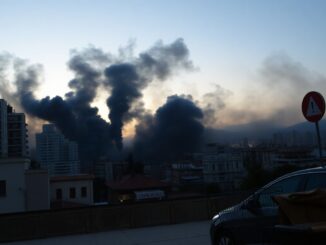
Reports indicate Iran’s Supreme Leader Ali Khamenei was killed in joint US-Israeli strikes while Tehran and international sources offer contradictory accounts
How far will the confrontation widen after reports that a major air campaign struck targets inside Iran?
Multiple Israeli media outlets and a senior Israeli official say Israeli and US forces carried out a broad air campaign inside Iran and that Ayatollah Ali Khamenei, Iran’s Supreme Leader, was killed.
Iranian state media and senior officials have strongly denied those claims, leaving the facts contested as regional tensions spike.
What happened, and what’s credible
Reports describe a coordinated operation aimed at degrading Iran’s military and intelligence capabilities. Israeli leaders framed the strikes as an attempt to blunt what they call an existential threat from Iran’s forces and proxy networks.
Tehran responded by announcing defensive measures and warning of retaliation.
The immediate aftermath has been chaotic. Israeli officials named several senior Iranian commanders among the alleged fatalities and at least one senior Israeli source said Khamenei’s body had been located.
Iranian outlets such as Tasnim and Mehr, and spokespeople for the government, rejected those accounts and said the Supreme Leader remains active. Independent verification is sparse: analysts and journalists are still scrutinizing imagery, signals and eyewitness reports to piece together a clearer picture.
Scope and reported targets
Initial statements described a synchronized campaign striking “dozens” of sites across Iran, including missile launch facilities, air-defence installations and locations linked to nuclear and intelligence programs. The Israeli Defence Forces reportedly called the operation “Roaring Lion” and said it focused on infrastructure and command nodes rather than civilian political centers. Satellite images and on-the-ground accounts later showed damage to complexes near key military and government offices, though comprehensive, independently verified damage and casualty assessments were not yet available.
Regional ripple effects and alerts
The strikes produced immediate ripple effects across the region. Sirens and shelter-in-place orders sounded in parts of Israel; air-traffic and emergency agencies issued advisories; and some border garrisons raised their readiness. Authorities in Bahrain and the United Arab Emirates reported alarms and temporary shelter warnings, with some accounts of explosions beyond Iran’s borders. Financial markets monitored the situation closely for any disruption to energy flows.
Why leadership strikes matter
Targeting senior figures or critical production sites changes the strategic equation. It can cripple command-and-control or weapons capability, but it also raises the risk of miscalculation and broader spillover. Allied bases and commercial hubs in the Gulf lie in a tight operational space—sustained attacks could draw in more military assets and strain already fragile diplomatic channels.
What analysts are watching
Independent confirmation is the bottleneck. Open-source intelligence, intercepted communications and satellite imagery can corroborate parts of the story, but each has limitations and can be manipulated or misread. Analysts will look for repeatable, verifiable signs that the conflict is escalating: confirmed casualties among senior leaders, persistent targeting of leadership communications, large-scale troop or proxy mobilizations, shifts in alert levels at allied bases, and disruptions to shipping or air routes. Cyberattacks on government networks and unusual fleet movements would also be significant indicators.
Verification challenges
Controlled messaging from the involved states and the fog of war complicate fact-finding. Reliable confirmation will require multiple independent sources—public appearances or formal announcements by Iranian officials, credible casualty lists, corroborated eyewitness footage and repeated geolocation of imagery. Until those pieces line up, claims about leadership deaths or decisive damage should be treated cautiously.
Potential trajectories
At present, the main variables are political will and how quickly parties can deconflict movements around sensitive sites. A contained episode would show limited follow-on attacks, restrained rhetoric from major powers, and rapid international mediation. An expanding confrontation would look like reciprocal strikes on Israeli or US assets, increased action by proxy groups across the region, or clear changes in command structures within Iran.
Multiple Israeli media outlets and a senior Israeli official say Israeli and US forces carried out a broad air campaign inside Iran and that Ayatollah Ali Khamenei, Iran’s Supreme Leader, was killed. Iranian state media and senior officials have strongly denied those claims, leaving the facts contested as regional tensions spike.0
Multiple Israeli media outlets and a senior Israeli official say Israeli and US forces carried out a broad air campaign inside Iran and that Ayatollah Ali Khamenei, Iran’s Supreme Leader, was killed. Iranian state media and senior officials have strongly denied those claims, leaving the facts contested as regional tensions spike.1
Multiple Israeli media outlets and a senior Israeli official say Israeli and US forces carried out a broad air campaign inside Iran and that Ayatollah Ali Khamenei, Iran’s Supreme Leader, was killed. Iranian state media and senior officials have strongly denied those claims, leaving the facts contested as regional tensions spike.2