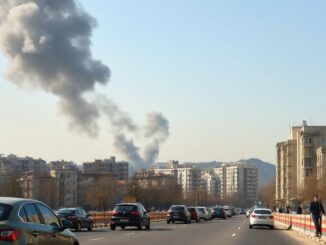
Explosions rocked Tehran after Israel launched strikes, while the United States and Iran engage in high-stakes diplomacy and military posturing
Topics covered
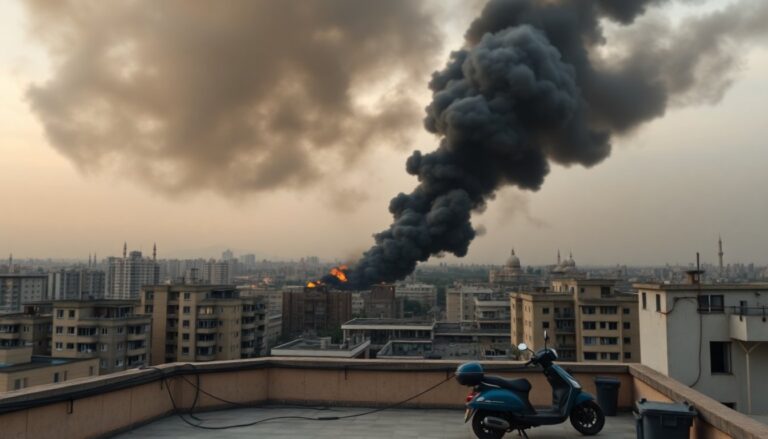
The palate never lies: the first reports carried a metallic crack and the bright, ugly bloom of smoke over a familiar skyline. Residents and journalists in Tehran reported explosions on 28 Feb 2026, after what multiple sources described as an Israeli operation that struck several targets inside Iran.
Short videos circulating on social media showed plumes of smoke rising above the city, producing immediate alarm across the region and triggering urgent diplomatic messaging.
At the same time, officials say the United States has increased its military presence in the region and maintained indirect diplomatic contacts with Iran aimed at limiting nuclear activities.
This article synthesizes verified reporting and established background to explain what happened, why it matters, and how regional and global actors are reacting. It pairs real-time accounts of the strikes with concise context on the tensions that preceded them.
What happened: the strikes and immediate effects
Multiple outlets and eyewitnesses reported explosions in Tehran on 28 Feb 2026. Video and photo material shared online showed smoke over urban districts. Iranian state media and international correspondents offered differing accounts of the number and location of hits. Authorities in Tehran initially described the events as attacks on specific facilities; foreign officials said the strikes targeted multiple sites.
The incidents produced immediate security and humanitarian effects. Local emergency services mobilized, and hospitals reported receiving people with blast-related injuries. Airspace and transport disruptions were reported in the hours after the strikes. Global markets and regional capitals registered a spike in concern as diplomats opened crisis channels.
Why this matters: the strategic context
Global markets and regional capitals registered a spike in concern as diplomats opened crisis channels. The strikes directly affect military balances and diplomatic calculations across the Middle East.
Israel said it struck facilities it described as tied to missile production, air defenses and nuclear-related infrastructure. Iranian officials called the action an act of war and signalled potential retaliation. Those competing claims increase the risk of miscalculation.
The United States has moved significant assets into the region. Public reports describe multiple aircraft carrier strike groups and additional fighter jets and tankers. U.S. officials frame the deployments as deterrence. Regional governments view them as a hedge against wider conflict.
Militarily, the strikes could degrade specific capabilities while also prompting dispersal and hardening of remaining assets. Diplomatically, the event strains already fragile channels built during recent months of quiet engagement. Economically, markets sensitive to Middle East risk reacted within hours to the reports.
The palate never lies: even in geopolitics, sensory cues matter. Witness accounts of explosions and smoke altered perceptions on the ground and shaped initial diplomatic responses. Behind every strike there is a chain of logistics, intelligence, and command decisions that now face intense scrutiny.
Analysts warn that escalation pathways include retaliatory strikes, proxy attacks, and cyber operations. Each pathway carries different thresholds and risks. Officials in allied and neighbouring states have urged restraint while activating contingency planning.
Questions for governments now centre on deterrence credibility, rules of engagement and channels for de‑escalation. Military movements and public rhetoric will be watched closely in the coming hours and days.
Military movements and public rhetoric will be watched closely in the coming hours and days. To understand the stakes, analysts point to two overlapping concerns: Tehran’s nuclear program and its network of regional proxies. The nuclear issue centers on uranium enrichment and related infrastructure. International monitoring and rounds of negotiations earlier in 2026 sought limits on those activities.
The proxy dimension concerns Iran’s political and material support to groups such as Hamas and Hezbollah, and to militias active in Syria, Lebanon, Yemen and Iraq. Those ties extend Iran’s influence across multiple battlefields and complicate efforts by foreign powers to reduce instability.
U.S. posture and ongoing negotiations
The United States and Israel present a linked argument. They say Iran’s nuclear and missile capabilities change the regional balance and pose an existential threat to Israel and a strategic challenge to U.S. interests. Washington and Jerusalem have therefore pressed for tighter constraints and stronger verification measures.
Iran frames its programs as defensive. Tehran warns that sanctions, strikes or further encirclement will prompt retaliation. Officials cite earlier exchanges of strikes and proxy attacks in 2026–2026 as evidence of a cycle of escalation.
As a former chef turned reporter, I find that metaphor helps clarify strategy. The palate never lies: layered ingredients create an outcome that cannot be separated easily. Likewise, nuclear capacity and proxy networks combine to produce a single, complex strategic taste. Understanding each ingredient remains essential for any durable policy response.
Diplomats and military planners now balance containment, deterrence and dialogue. Expect continued diplomatic outreach alongside defensive deployments. The immediate question for capitals is whether negotiations can halt escalation long enough to reshape incentives on the ground.
Regional ripple effects and historical background
The immediate concern for capitals is whether negotiations can halt escalation long enough to reshape incentives on the ground. The current mix of heavy deployments and active talks has already altered regional calculations. Economic corridors and shipping lanes face higher insurance costs. Energy markets price in sustained risk premia. Political leaders are recalibrating alliances and contingency plans.
Historically, cycles of sanctions, covert activity and intermittent diplomacy have defined the standoff. Past rounds of negotiation produced temporary limits on enrichment in exchange for relief. Those arrangements later eroded amid mutual mistrust and verification disputes. That history helps explain why many diplomats now insist on robust monitoring and phased, reversible concessions.
Analysts warn that the coexistence of a dual-track policy—military pressure paired with diplomacy—raises the chance of unintended clashes. Forces on high alert can react to routine incidents as threats. Command-and-control frictions, misread signals and proxy skirmishes can each amplify a local incident into a wider confrontation. The risk is particularly acute if talks stall while military posture remains elevated.
Local economies and humanitarian agencies are already adjusting. Cross-border trade routes show interruptions where they previously ran smoothly. Aid organizations report difficulties in planning operations amid uncertain security conditions. Civilian populations in sensitive zones face longer-term exposure to economic disruption and restricted movement.
Diplomatic teams in Geneva prioritized verification mechanisms and phased implementation of measures. Confidence-building steps under discussion include expanded inspections and tighter site access. Washington has emphasised stringent limits on enrichment capacity and missile programs, while Tehran has linked restraints to sanctions relief. Observers say the technical details of verification will determine whether any agreement endures.
The palate never lies; policy tastes are shaped by past failures and present constraints. Behind every negotiation there is a technical scaffolding of inspections, sampling and chain-of-custody procedures. As negotiators debate those mechanisms, military deployments remain the immediate variable that could tip incentives toward de-escalation or miscalculation.
What follows in the coming weeks will depend on whether negotiators secure credible, verifiable steps that can be implemented quickly enough to lower tensions without rewarding premature concessions. Observers expect intense focus on verification language and timelines as the decisive elements.
The palate never lies: tensions that began with targeted strikes now threaten wider disruption across the Gulf and beyond.
Who is affected: regional governments, global energy markets and U.S. and allied forces stationed in neighboring states. What is at stake: maritime traffic, oil exports and operational security for military units. Where the risk concentrates: choke points such as the Strait of Hormuz and sea lanes leading to major ports. Why escalation could spread: historical patterns show that attacks on Iranian assets have prompted retaliatory strikes by Iran or its partners, often using ballistic missiles and armed drones.
Past campaigns against Iranian interests triggered cycles of counterattacks and raised insurance costs for shipping. Markets can react quickly to such disruptions, pushing oil prices higher and prompting rerouting that increases transit times. Military planners face a higher tempo of operations and expanded defensive postures for bases and convoys.
What to watch next
Verification language and timelines in any diplomatic text will receive intense scrutiny. Observers will track three immediate indicators:
- Operational tempo: frequency and range of missile and drone launches.
- Maritime incidents: attacks, boarding attempts or harassment in key sea lanes.
- Proxy activity: coordinated strikes or declarations by allied militias across the region.
Behind every escalation there is a chain of decisions. As a chef I learned that careful timing and precise technique determine the final dish. The same applies to diplomacy: verification, sequencing and enforceable steps will shape whether tensions cool or broaden.
Expect capitals to prioritize de-escalatory channels while reinforcing deterrence measures. The coming days will clarify whether negotiations can alter incentives on the ground or whether actions will continue to reverberate across the region.
What to watch next
The coming days will clarify whether negotiations can alter incentives on the ground or whether actions will continue to reverberate across the region. Key developments to monitor include further diplomatic rounds, public statements from Israeli and Iranian leaders, movements of U.S. military assets and any retaliatory actions by Iran or its allied groups.
Technical verification and escalation risks
International institutions such as the IAEA will remain central to technical assessments of enrichment levels and site integrity. Independent verification and transparent reporting will shape diplomatic options and public confidence.
Small tactical events could produce strategic consequences because the situation combines high-level diplomacy with extensive military deployments. Observers warn that limited incidents can trigger wider escalation if political incentives or misperceptions shift rapidly.
Reporting standards and implications
Reliable reporting and verification from multiple sources will be essential for accurate public understanding. Journalists and analysts should prioritise corroboration of claims, satellite imagery, and official technical statements.
The crisis carries implications for regional stability and global security. Behind every diplomatic manoeuvre there are material stakes: energy flows, military postures and the calculations of local actors. As a former chef I learned that the palate never lies; in geopolitics, clear evidence reveals true intentions.
Expect developments to be incremental and contingent. The next credible signals will determine whether diplomacy reduces tensions or whether further actions prolong instability.