A coordinated U.S.-Israeli campaign struck multiple Iranian sites and provoked widespread missile and drone exchanges across the region, producing international condemnation and urgent diplomatic moves
Topics covered
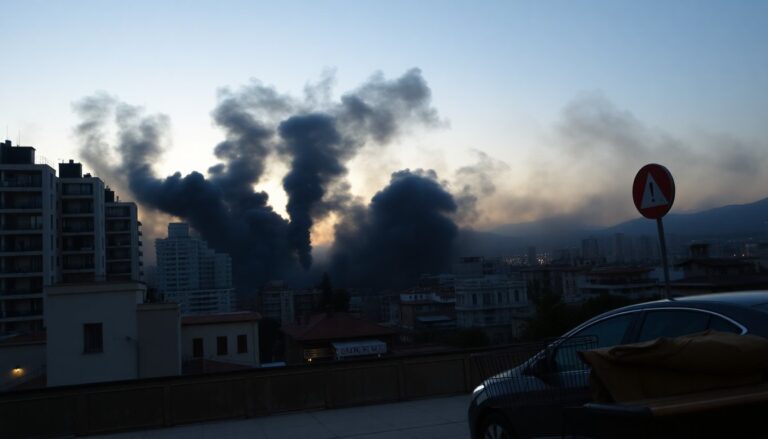
On 28/02/2026 a synchronized military campaign by the United States and Israel struck numerous targets inside Iran, triggering immediate retaliation and widespread alarm across the Middle East. Eyewitnesses and state media described explosions in Tehran and smoke over the capital, while residents and observers reported detonations heard in the UAE, Jordan, Qatar, Bahrain and Iraq.
The strikes and subsequent attacks produced a cascade of political statements and international responses.
The following account summarizes verified developments, official claims and regional reactions without speculation. It focuses on the operational details released by military officials, statements from national leaders and humanitarian data reported by emergency agencies.
What happened during the strikes
U.S. Central Command described the operation as a concentrated campaign against sites it identified as posing an “imminent threat.” According to official statements, the strikes targeted Islamic Revolutionary Guard Corps command and control nodes, air defense systems, missile and drone launch facilities, and military airfields.
The U.S. said the attacks employed a mix of precision-guided munitions launched from sea, air and land, and for the first time in combat used low-cost one-way attack drones designed to strike fixed targets.
Israeli officials reported a massive air component as well. Israel claimed some 200 fighter jets participated and that roughly 500 targets were engaged in what the Israeli military termed the largest flyover in its history. Iranian media and state sources described explosions in multiple provinces and an intense air defense response as the attacks unfolded.
Claims about Iran’s leadership
Israeli Prime Minister Benjamin Netanyahu said there were “growing signs” that Supreme Leader Ayatollah Ali Khamenei had been killed after strikes reportedly hit the compound around his offices. Iranian government spokespeople and the foreign minister provided conflicting public statements later, with some officials asserting that the supreme leader and the president remained alive “as far as I know.” Independent confirmation of the supreme leader’s status remained unclear amid the fog of strikes and counterstrikes.
Iran’s retaliation and battlefield dynamics
Iran responded by launching missiles and armed drones toward Israel and U.S. military bases in the region. Israeli defenses intercepted many incoming projectiles, and the U.S. reported minimal damage to its installations and no American casualties at the time of their statements. Tehran’s state Red Crescent told Iranian state television that the attacks had resulted in significant casualties, reporting 201 dead and 747 wounded and saying that strikes hit 24 of Iran’s 31 provinces; these figures were provided by Iranian relief agencies and have been used by Iranian authorities to describe the human toll.
Beyond those immediate exchanges, nearby groups and states signaled their positions. The leader of the Houthi movement in Yemen pledged solidarity with Iran, saying his forces were prepared for “any necessary development.” Several Arab governments condemned Iran’s cross-border strikes on Gulf states, while others focused criticism on the U.S.-Israeli operation. The Arab League described the attacks as violations of sovereignty that threaten regional stability.
Operational name and military claims
The U.S. identified the campaign as Operation “Epic Fury,” calling it the most concentrated American regional firepower deployment in a generation. U.S. officials stressed the need to degrade Iranian missile and drone capabilities, but some lawmakers in Washington characterized the action as a risky choice that could entangle the U.S. in broader conflict.
Diplomacy, markets and humanitarian concerns
Global institutions reacted swiftly. The United Nations Security Council convened an emergency session at the request of member states, and U.N. Secretary-General António Guterres urged an immediate ceasefire and a return to diplomatic channels. The European Commission announced an emergency security meeting to assess the fallout for regional stability.
Political leaders issued varied responses: U.S. President Donald Trump publicly urged the Iranian people to challenge their government, while British Prime Minister Keir Starmer condemned Iran’s actions and warned Tehran it should “end this now.” In the U.S., prominent lawmakers including Sen. Tim Kaine criticized the strikes as a potential “war of choice” and called for congressional oversight.
Markets prepared for volatility. Oil traders anticipated price swings once markets reopened because the conflict could disrupt shipping through the Strait of Hormuz or damage regional infrastructure, scenarios that would produce sustained supply concerns.
Humanitarian and civil impacts
On the ground, the Israeli agency responsible for Gaza crossings announced closures citing security concerns, and authorities in Jerusalem closed religious sites in the Old City for safety during Ramadan observances. Emergency responders in Iran said they dispatched teams across affected provinces to search for survivors and treat the wounded, while humanitarian organizations warned that escalation would exacerbate civilian suffering in a region already grappling with displacement and shortages.
As diplomatic channels opened and international hubs prepared for talks, the risk of further escalation remained a central worry. The coming days—shaped by military decisions, diplomatic pressure and public reactions—will determine whether the confrontation subsides or expands into a wider regional conflict.