Experience spring through smell and taste: techniques, stories, and sustainable choices to elevate everyday vegetables
Topics covered
Savoring spring: a sensory guide to seasonal cooking
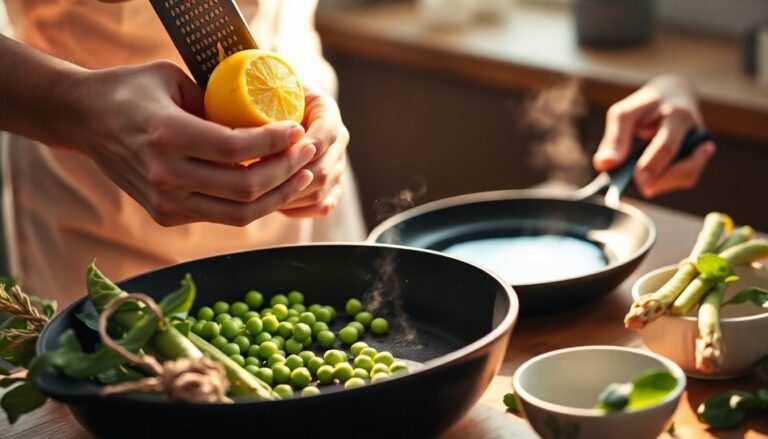
The palate never lies… Close your eyes to the first green snap of a crisp pea. Picture the bright citrus scent when a lemon is zested over the stove. Hear the soft sizzle and smell the warm caramel notes of a quick sauté.
This is spring: a season when seasonal cooking rewards attentive technique and clear storytelling.
Behind the ingredient: the story of spring produce
Behind every dish there’s a story… Young asparagus, broad beans, fava, early artichokes and ramps carry the memory of soil, sun and rain.
I have risen at dawn with growers to taste peas still warm with morning dew. As a chef I learned that true flavor begins long before the pan. It begins in soil management, planting choices and a short supply chain that reduces time from harvest to plate.
Technique made accessible: coaxing umami and brightness
The palate never lies. Building on soil management and planting choices, these kitchen techniques shorten the path from harvest to flavor.
As a chef I learned that small interventions reveal an ingredient’s true character. Below are three precise methods that amplify umami and brightness without masking origin or terroir.
Blanch-and-shock: For peas and green beans, plunge briefly into salted boiling water, then transfer to ice water. This arrests cooking and preserves vivid color and fresh sugars. Warm the vegetables briefly in a light butter emulsification or high-quality olive oil to coat each piece with a silky finish.
Quick fermentation: Submerge shredded radishes or thinly sliced ramps in a 2% brine for 24–48 hours. The short ferment adds gentle acidity and savory depth while aiding digestibility. Fermentation builds layered savory notes that deepen perceived umami in otherwise delicate greens.
Targeted browning and deglazing: Lightly sear mushrooms, scallions or shallots to develop Maillard complexity. Deglaze the pan with a neutral stock, vinegar or verjus to lift browned fond and return brightness. This balances savory concentration with a clean, lifted finish.
Each technique is deliberately minimal. The aim is to enhance, not overwhelm, so the ingredient’s story remains central.
The aim is to enhance, not overwhelm, so the ingredient’s story remains central. Controlled caramelization is a precise tool for that purpose. Sear artichoke bottoms or halved leeks in a very hot pan with a little oil to trigger the Maillard reaction. Let a thin crust form; it brings a pleasant bitterness that contrasts and amplifies inherent sweetness. A quick squeeze of lemon or a splash of vinegar after searing lifts the flavors and restores balance.
connecting technique with terroir
Every technique carries traces of place and practice. In Italy, spring markets brim with agretti and wild herbs; in Provence, early garlic and tomatoes define the season. Guides such as Slow Food and Gambero Rosso stress how seasonal rhythms sustain biodiversity and local livelihoods. Choosing filiera corta suppliers supports soil stewardship and preserves the direct link between field and plate.
Il palato non mente mai… When a spring pea is treated with attention, its sweetness and texture tell you whether it was respected. That sensory truth is culinary and ethical at once.
from technique to table: an invitation
As a former chef, I treat the plate as a narrative. Start with a restrained seasoning, then layer texture and brightness so each element speaks. Describe the origin of the main ingredient on the menu or at the table; provenance matters to taste as well as trust. Behind every dish there’s a story of land, season and hands.
Practical tip: pair a gently caramelized vegetable with an acidic finishing element and a handful of fresh herbs to highlight terroir without masking it. The palate never lies, and that honesty rewards restraint.
The palate never lies, and that honesty rewards restraint. Try buying young asparagus and peas from a local farmer. Blanch the peas briefly; char the asparagus until it gains a light smoky edge. Finish both with a knob of butter, a few torn mint leaves, and a sprinkle of flaky salt. Close your eyes and notice the interplay of textures and the bright, mineral notes that speak of place. Dietro ogni piatto c’è una storia: tell it at your table, ask your farmer about the fields, and celebrate the season.
As a chef I learned that small technical gestures make the difference. Maintain precise temperature control, handle produce minimally, and keep cooking times short to preserve vibrancy. Use targeted salt at the end to lift flavors rather than mask them. Let the ingredient lead; respond with respect. seasonal cooking is listening as much as it is technique.
Invitation: Visit your local market this weekend and choose one spring ingredient you have never cooked. Learn its story from the producer and prepare it simply—treat technique as support, not spectacle. Taste slowly and note what the ingredient reveals; that practice trains attention and deepens appreciation.