A concise, no-nonsense guide to football that covers rules, tactics and essentials for players and fans
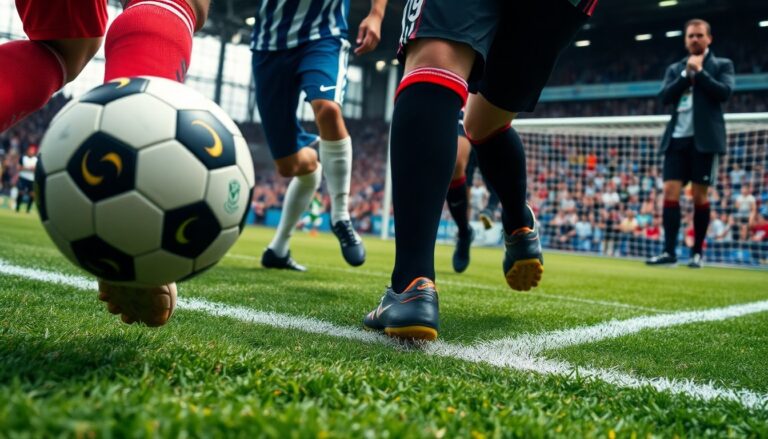
Football, explained clearly — for players, coaches, referees and fans who want practical, up-to-date insight into how the game works and what matters on the pitch in 2026.
The essentials
– The aim is simple: two teams try to put the ball in the opponent’s net while following the laws of the game.
A standard senior match runs 90 minutes plus stoppage time, split into two 45-minute halves. Play restarts with kick-offs, throw-ins, goal kicks and corners. Fouls and misconduct lead to free kicks, penalties or disciplinary action by the referee.
Match structure and key rules
– Teams field 11 players, one of whom is the goalkeeper. Competitive fixtures commonly allow up to five substitutions. – Offside: a player can be penalised if, at the moment a teammate plays the ball, they are nearer the opponent’s goal than both the ball and the second-last defender.
This rule shapes how attacks are built and how defensive lines operate. – Restarts and set plays are routine scoring opportunities; teams practise these repeatedly because tidy routines win tight games.
Discipline, VAR and how referees influence matches
– Direct free kicks are awarded for serious offences such as kicking, tripping or violent conduct. Yellow cards caution players; red cards send players off for serious breaches like violent conduct or denying an obvious goalscoring chance. Persistent fouling draws further sanction. – VAR checks (goals, penalties, direct red cards and mistaken identity) intervene only for clear and obvious errors or serious missed incidents. The on-field referee remains final arbiter. Expect VAR to change outcomes occasionally and to affect how teams approach marginal decisions.
Roles on the pitch and what really matters
– Positions provide structure: goalkeeper, defenders, midfielders and forwards. Modern football favors fluidity — roles overlap, players rotate, and formations bend to match situations. – Beyond positions, three abilities determine influence: decision-making, spatial awareness and ball technique. Teams that execute these well control tempo and create consistent chances. – Transitions and set-pieces are decisive. A moment of quick thinking or a rehearsed corner routine will often tip a close game.
Tactics, formations and in-game decisions
– Formations (4-4-2, 4-3-3, 3-5-2 and their variants) are starting points, not rigid blueprints. Coaches tweak shapes to press, control possession or invite opponents forward for counterattacks. – High press compresses play and forces errors near the opponent’s box. A low block defends deeper and invites the opponent to build. Most teams switch between these styles during a match depending on score, fatigue and game state. – Substitutions are tactical instruments: they change energy levels, alter match-ups and respond to stoppage time and concussion protocols.
Set pieces and dead-ball strategy
– Corners, free kicks and penalties are concentrated chances to score. Teams blend zonal, man-marking and hybrid approaches to exploit opponent weaknesses. – Coaches design movements and blocking runs so a single set-piece moment can equal the value of prolonged possession. Rehearse variety: near-post flicks, far-post overloads, deceptive short corners and targeted deliveries.
Player development and scouting
– Academies build technique, game understanding and physical resilience with staged objectives. Emphasis is on repeatable skills under pressure. – Scouting combines eye tests and data. Observers evaluate technical ability, tactical intelligence and mentality; analytics add metrics such as distance covered, pressing actions and expected goals (xG). Numbers inform decisions but do not replace judgement.
Matchday operations and roles
– Match officials include the referee, two assistants and the fourth official, with VAR teams supporting many competitions. Club staff at the ground—managers, fitness coaches and analysts—handle scouting briefs, recovery plans and specific match strategies. Clear roles reduce mistakes when the pressure is highest.
Competitions and the calendar
– Domestic leagues run across seasons; cups use knockout formats. Continental competitions and the World Cup sit above club tournaments in prestige. – Calendar congestion affects player availability and fitness. Clubs and federations are constantly revising schedules and substitution rules to protect players and maintain performance across overlapping competitions.
The essentials
– The aim is simple: two teams try to put the ball in the opponent’s net while following the laws of the game. A standard senior match runs 90 minutes plus stoppage time, split into two 45-minute halves. Play restarts with kick-offs, throw-ins, goal kicks and corners. Fouls and misconduct lead to free kicks, penalties or disciplinary action by the referee.0
The essentials
– The aim is simple: two teams try to put the ball in the opponent’s net while following the laws of the game. A standard senior match runs 90 minutes plus stoppage time, split into two 45-minute halves. Play restarts with kick-offs, throw-ins, goal kicks and corners. Fouls and misconduct lead to free kicks, penalties or disciplinary action by the referee.1
The essentials
– The aim is simple: two teams try to put the ball in the opponent’s net while following the laws of the game. A standard senior match runs 90 minutes plus stoppage time, split into two 45-minute halves. Play restarts with kick-offs, throw-ins, goal kicks and corners. Fouls and misconduct lead to free kicks, penalties or disciplinary action by the referee.2
The essentials
– The aim is simple: two teams try to put the ball in the opponent’s net while following the laws of the game. A standard senior match runs 90 minutes plus stoppage time, split into two 45-minute halves. Play restarts with kick-offs, throw-ins, goal kicks and corners. Fouls and misconduct lead to free kicks, penalties or disciplinary action by the referee.3
The essentials
– The aim is simple: two teams try to put the ball in the opponent’s net while following the laws of the game. A standard senior match runs 90 minutes plus stoppage time, split into two 45-minute halves. Play restarts with kick-offs, throw-ins, goal kicks and corners. Fouls and misconduct lead to free kicks, penalties or disciplinary action by the referee.4
The essentials
– The aim is simple: two teams try to put the ball in the opponent’s net while following the laws of the game. A standard senior match runs 90 minutes plus stoppage time, split into two 45-minute halves. Play restarts with kick-offs, throw-ins, goal kicks and corners. Fouls and misconduct lead to free kicks, penalties or disciplinary action by the referee.5