A suspected unmanned strike targeted RAF Akrotiri in Cyprus, causing limited damage but prompting heightened security measures, operational responses and contingency planning by UK and local authorities

Topics covered
Suspected drone strike hits raf base at Akrotiri
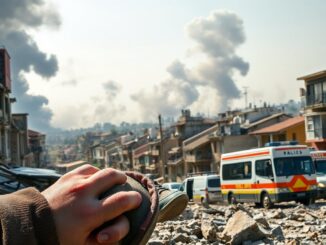
The British-run Royal Air Force base at Akrotiri in Cyprus was the site of a suspected drone strike at midnight, local and UK authorities said. The unmanned aerial vehicle caused limited damage to the runway area and did not result in any casualties.
Defence officials said they immediately activated force protection protocols and implemented a “temporary dispersal” for non-essential personnel at the station. The incident has drawn renewed attention to a wider regional escalation of hostilities.
Officials said the base remains operational while security has been increased across the Sovereign Base Areas.
The incident occurred amid intense hostilities between Iran and the United States, and followed a series of defensive actions by British forces elsewhere in the region. Civilian residents near the base were instructed to shelter in place as authorities coordinated with the UK Government to monitor and manage the situation.
What happened at Akrotiri and the immediate response
Local and UK officials reported a suspected drone strike at the Royal Air Force base. The base continued normal operations under heightened force-protection measures. Commanders ordered additional patrols and surveillance across nearby installations to deter further incidents.
Emergency services checked surrounding areas and assisted civilians told to remain indoors. Communications teams issued safety guidance through local channels while military liaison officers engaged UK government counterparts to share intelligence.
Officials said an investigation is under way to determine the origin, intent and trajectory of the device involved. No further operational details were released as inquiries continue and analysts assess potential links to the broader regional escalation.
Defensive measures and operational status
Officials said the base enacted immediate force-protection measures and activated on-site air defences. Personnel carried out standard emergency protocols and security patrols. Commanders ordered heightened readiness across affected sectors of the installation.
Airspace controls were implemented to restrict flights in the immediate vicinity while operators screened sensor data and radar tracks. Aircraft and unmanned systems already assigned to the base remained on alert to respond to any further threats.
Local authorities coordinated with base leadership to secure perimeter areas and to assess the extent of infrastructure impact. Engineers and explosive-ordnance teams were deployed to inspect the site and to gather forensic evidence relevant to the incident.
Investigations are continuing. Military and civilian investigators are reviewing sensor records and intelligence reports to establish the drone’s origin and motive. Analysts will also consider whether the event is connected to the broader regional escalation described earlier.
Officials reiterated that the base remains operational while inquiries proceed. Further operational details were withheld pending the outcome of those inquiries.
Further operational details were withheld pending the outcome of those inquiries. Commanders ordered the temporary dispersal of non-essential staff from RAF Akrotiri as a precautionary measure. The Sovereign Base Areas Administration said the step applies only to the station and is intended to be short term. Authorities said other RAF facilities on the island continued normal operations and that essential services and community-facing functions would remain in place.
Strategic context: why a Cyprus base is significant
RAF Akrotiri serves as a forward logistics and support hub for operations in the eastern Mediterranean and the broader Middle East. Its location offers relatively short transit times for aircraft and personnel moving to regional theatres. The base also hosts intelligence, surveillance and reconnaissance assets that contribute to situational awareness across neighbouring areas.
Those operational roles make the station important for routine deployments, contingency responses and coalition support. Even limited disruptions can affect sortie generation, air-refuelling schedules and the movement of specialist personnel. Commanders therefore use conservative force-protection measures to preserve operational capacity while authorities investigate incidents.
Officials said inquiries remain ongoing and that further updates will follow as assessments conclude.
Officials said inquiries remain ongoing and that further updates will follow as assessments conclude.
How this ties into regional hostilities
The suspected drone strike extends beyond immediate damage; it raises concerns about the security of overseas military hubs and supply lines.
Given the base’s operational role, analysts say the incident underscores the vulnerability of forward-deployed infrastructure during heightened regional tensions.
Military and diplomatic consequences could include accelerated defensive measures, revised force posture, and tightened intelligence sharing among coalition partners.
Such measures aim to protect personnel, maintain sortie rates for ongoing missions, and preserve the logistical routes that sustain regional operations.
Government and diplomatic actions
UK officials have stepped up coordination with allied forces to support ongoing defensive operations across the region. Military planners have shared intelligence, adjusted patrol patterns, and provided technical assistance to intercept unmanned threats in adjacent theatres.
Political leaders authorised the limited use of British bases to fulfil specific defensive requests from partners. Officials described the decision as a narrowly tailored measure intended to protect civilians and allied personnel from missile and drone attacks.
Authorities said the approach balances operational support with legal and diplomatic constraints. Measures include tighter rules of engagement, oversight mechanisms, and restrictions on the types of missions permitted from UK facilities.
Ministers emphasised that these steps aim to preserve critical logistics and sustain sortie rates for ongoing missions while minimising escalation risks. Further briefings were promised as assessments and consultations with partners continue.
Ministers in London briefed parliamentarians and published legal arguments that frame certain defensive measures as actions in collective self-defence. The documents aim to explain the legal basis for operations and to address parliamentary concerns.
The Foreign Office has opened an expanded consular operation to assist British nationals across affected Gulf states. Officials are coordinating contingency plans, mapping potential evacuation routes and preparing targeted support should security conditions worsen.
Public messaging and political reactions
Government spokespeople have urged citizens in multiple states to register with official channels to receive rapid updates and tailored assistance. Registration enables consular teams to prioritise contact and logistics for those most at risk.
Ministers signalled further briefings will follow as assessments and consultations with partners continue. Parliamentary scrutiny and cross-party questions are expected to focus on legal authorisations, civilian protection and the practicalities of evacuation planning.
Senior UK figures said British forces will not conduct offensive strikes and that any use of bases will be restricted to narrowly defined defensive purposes. Officials stressed the measures are intended to support allied requests while limiting UK involvement to protective roles.
The decision has prompted mixed reactions in Westminster. Some MPs and cross-party figures have urged increased parliamentary oversight and clearer legal authorisations. Others described the step as necessary to protect civilians and UK nationals in the region.
Local authorities in Cyprus are coordinating with UK counterparts to disseminate safety information and to assist contingency planning. Scrutiny is expected to concentrate on civilian protection measures and the practicalities of evacuation planning.
What to expect next
What to expect next
Security officials say the incident is being actively managed while warning that the broader regional conflict could generate additional incidents. Intelligence and military assets remain on alert across the eastern Mediterranean, and contingency planning for personnel movements continues.
For residents and service members near Akrotiri, the immediate advice is to follow local instructions, remain vigilant and monitor official updates from the MoD and the Sovereign Base Areas Administration. Authorities are prioritising base security, the protection of people and the continuity of critical operations while diplomatic channels seek to reduce the risk of further escalation.
Analysts will assess whether this is an isolated tactical incident or part of a wider pattern of attacks on overseas military infrastructure. Scrutiny is expected to focus on civilian protection measures and the practicalities of evacuation planning as the situation evolves.