

A record El Niño and the weakest monsoon since 2015 put India's winter crops and food inflation at risk.
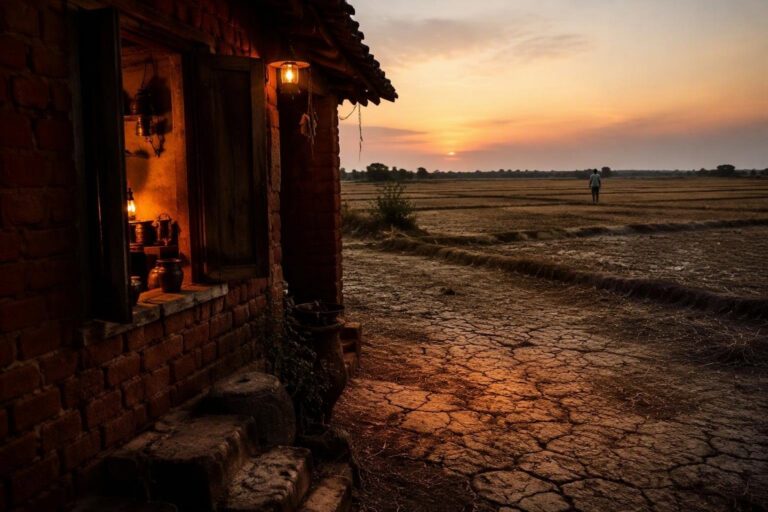
The southwest monsoon that feeds India’s agriculture this year ended with a rainfall total of 759 mm, roughly 13 % below the long-period average of 869 mm. This marks the poorest performance since the 2015 El Niño year and has ignited worries about the upcoming Rabi (winter) cropping cycle.
Monsoon shortfall sets new low since 2015
June 2026 delivered just 99.5 mm of rain—about 40 % below the normal 165 mm—making it the fifth-driest June on record since the Indian meteorological archives began in 1901. July offered a modest 3.5 % surplus, but the gain was too narrow and too localized to offset the early deficit.
August swung back into a 16 % shortfall, registering 213.9 mm against a typical 255 mm, and also became the warmest August since records began, with an average temperature of 28.0 °C.
Regional rainfall gaps
Fourteen states and union territories reported deficits ranging from 20 % to 59 % during the June-August window.
East and Northeast India suffered the deepest shortfall, receiving 1,017 mm versus the normal 1,367 mm—a 26 % gap. South Peninsular regions lagged by 24 %, while Central India saw a milder 3 % deficit. Only Ladakh posted a surplus, but its tiny baseline makes the figure statistically insignificant.
Record El Niño intensifies atmospheric dryness
The ongoing El Niño event has reached unprecedented warmth in the central-eastern Pacific, with sea-surface temperature anomalies exceeding 2 °C above normal. This shift displaces the Walker Circulation eastward, causing descending, dry air to settle over the Indian Ocean and the sub-continent. The result is a weakened cross-equatorial moisture flow that normally fuels the monsoon trough and reduces the frequency of low-pressure systems that deliver rain to the heartland.
Forecast outlook
The World Meteorological Organization now assigns an almost certain (>99 %) probability that the El Niño will persist through February 2027. Australian forecasts even suggest that the Niño 3.4 index could exceed the highest readings documented since systematic observations began in 1950.
Rabi season faces water scarcity and price pressure
Live-capacity of major reservoirs across the country has slipped to 71 %—well below the ten-year average of 80 % and the lowest figure for this time of year since 2016. Wheat-rich states such as Madhya Pradesh, Rajasthan and Punjab are especially vulnerable, while Uttar Pradesh, which supplies about one-third of national wheat, sits slightly better at 84 % capacity.
Crop-specific impacts
Deficits exceeding 10 % have already been recorded in regions that contribute three-quarters of onion output, two-thirds of pulses and half of rice production. In September, onion prices doubled year-on-year, and inflation calculations suggest consumer price growth could edge toward 5.6 % YoY, driven largely by higher costs for onions, sugar, rice and pulses.
Rural economy signals
While rural consumption remains relatively resilient, sales of tractors and two-wheelers slowed sharply in August, and fertilizer purchases have weakened, indicating that farmers are bracing for tighter cash flows. Emerging-market food price inflation rose to 11.5 % in August, underscoring the global ripple effect of India’s weather-related stress.
In sum, the convergence of a deficient monsoon, record-strength El Niño, and diminishing water stores creates a perfect storm that could curtail the Rabi harvest, push food prices higher and dampen rural economic activity throughout the second half of fiscal year 2027.
