

Adele Nicoll made history in the monobob for Team GB at Milano Cortina 2026; after a challenging final run she is focusing on gaining experience and competing in the two-woman bobsleigh with teammate Ashleigh Nelson
The breakthrough
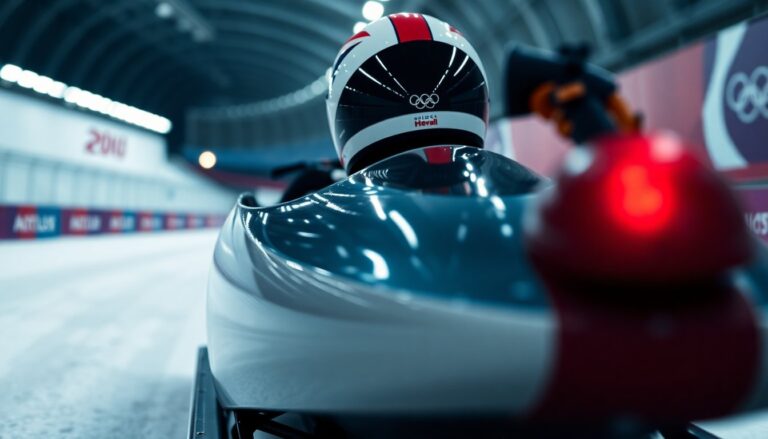
Adele Nicoll arrived in Milano Cortina as a fast-rising figure in Britain’s sliding programme, making history as the first British woman to pilot a monobob at the Olympic Games. Her rise — from trainee to lead pilot in a short space of time — was striking.
Early runs in Cortina produced a season-best and clear flashes of pace; the final heat, however, underlined how steep and unforgiving Olympic learning curves can be. Coaches and technical staff were frank: moving into a lead role this quickly brings both technical challenges and intense psychological pressure.
What unfolded on the track
Across the opening heats Nicoll looked competitive, converting her power and athleticism into explosive starts and quick initial speeds. After three descents she sat as high as 11th on the leaderboard, demonstrating that the raw ingredients for success are there.
Yet the final run exposed a handful of small execution errors — a slightly off line here, a micro-adjustment of steering there — that combined to cost her time. Those margins matter hugely in bobsleigh; a minor steering hiccup or an imperfect sled trim can translate into several places on the scoreboard. By the end of the day she finished 18th 86, a result team staff treated as both promising and instructive.
What the result means for Britain
Nicoll’s monobob debut carries symbolic weight as well as practical value. It expands Britain’s presence in sliding sports and gives coaches a working laboratory to accelerate talent development. At the same time, the episode raises questions about balancing fast-tracked promotions with readiness — a conversation that will touch on funding, support structures and how the programme manages athlete progression. The short-term emphasis for Team GB is clear: harness Nicoll’s power and adaptability while tightening consistency and racecraft.
Switching focus: two-woman bobsleigh
Nicoll will now concentrate on the two-woman event, partnering with Ashleigh Nelson at the back of the sled. Nelson brings sprinting pedigree and championship experience, a combination likely to stabilise starts and quicken the duo’s development. Pairing an emerging pilot with an experienced brakeman is a common route to accelerate learning: the pilot benefits from more reliable push phases and calmer in-run communication, while the brakeman helps shape preparation routines and recovery protocols. Early signs from Cortina suggest the pairing could sharpen Britain’s competitiveness across both disciplines.
Debut performance — strengths and areas to refine
Nicoll’s strengths are clear: explosive block power, the ability to read changing ice conditions and an athletic base that converts well to pushing and early speed. Yet coaches flagged inconsistencies in late-race steering and some sled-trim choices that allowed small deficits to build on technical sections. Her recent return from a knee injury — followed by podium finishes on the European circuit — demonstrated resilience and commendable medical discipline. Still, the rehab adds another consideration: targeted conditioning and load management to protect the knee while expanding technical seat-time.
Expert perspective and priorities going forward
Technical coaches and sports-science staff have sketched a pragmatic route forward. Priorities include:
– Start mechanics: repeating high-quality push sequences to embed timing and force application.
– Sled setup: refining runner choice and trim settings for tighter sections of homologous tracks.
– Track-specific exposure: more runs on courses with similar profiles to Cortina to build track knowledge.
– Simulated pressure: rehearsals that replicate competition stress so split-second decisions become routine.
Former bobsledder Lamin Deen has highlighted the tactical value of Nelson’s sprint background: it reshapes warm-ups, strength work and race-day routines in ways that can shave tenths of a second off block times. Biomechanics teams will track split acceleration and force profiles to quantify improvements and steer training tweaks.
How sprinting skills transfer
Sprinting and bobsleigh share a surprisingly direct overlap: force application, stride efficiency and maintaining output under fatigue. Nelson’s experience offers two clear benefits — steadier starts and battle-tested composure — while her repeated exposure to high-pressure events provides practical coping strategies for multi-heat competition. That combination should reduce start variability and free Nicoll to concentrate more on line choice and steering.
Resilience, recovery and the wider support picture
The programme is increasingly integrated: sports medicine, engineering, coaching and athlete support working together to deliver marginal gains. For Nicoll, that means careful monitoring of recovery metrics, progressive technical work and a cautious approach to ramping up volume. The team plans to test adjustments at smaller international events first, using data-driven tuning to make changes that hold up across different ice conditions.
The immediate outlook
Expect incremental, targeted changes rather than sweeping shifts. Team GB will prioritise repeatability — consistent runs over sporadic flashes of speed — while continuing to develop the pilot–brakeman partnership. The next benchmarks are clear: tighter start consistency, cleaner lines through technical sections, and reduced variability under pressure. If the team can translate Nicoll’s raw speed and Nelson’s sprint expertise into repeatable execution, those tenths of a second could turn into regular progress up the rankings. The performance in Cortina showed she has the power and adaptability to develop into a competitive pilot; now the work is to convert those attributes into consistent racecraft. With Ashleigh Nelson alongside her and a focused, data-led support team, Britain’s sliding programme has a clear plan: small, evidence-based improvements that build toward bigger gains on the international stage.
