

A significant protest is set for this weekend in central London as demonstrators rally in support of Palestine Action, testing law enforcement's response capabilities.
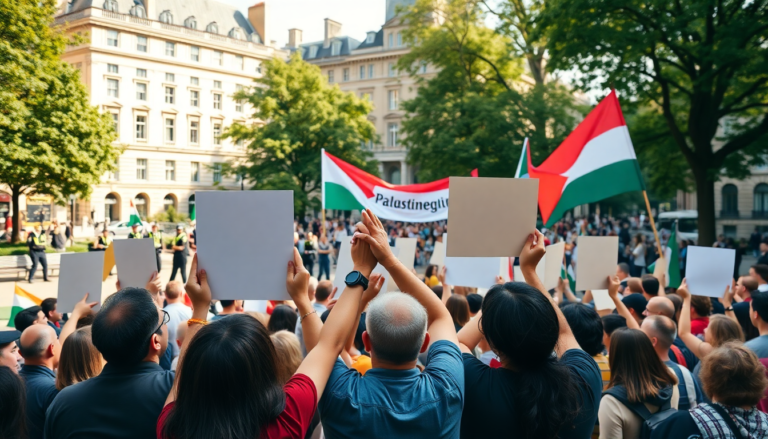
This weekend, central London is gearing up for a major protest spearheaded by supporters of Palestine Action. Organized by various groups, this demonstration is a direct response to the government’s recent decision to ban the organization, which was labeled a terror group after incidents of property damage.
Home Secretary Yvette Cooper’s move to classify Palestine Action has ignited outrage, prompting calls for widespread participation to defy the law. Are you ready to stand up for what you believe in?
Background on Palestine Action and Recent Developments
Palestine Action has made headlines recently, particularly after claiming responsibility for damaging two Voyager planes at RAF Brize Norton earlier this year. This act led to the group’s designation as a terrorist organization, a label that brings severe consequences.
Supporting Palestine Action could land you behind bars for up to 14 years. However, co-founder Huda Ammori is fighting back, challenging this classification in the High Court and asserting the group’s right to exist and operate. It raises an important question: what does it mean for activism when legal labels can silence dissent?
Since the ban took effect, reports indicate that over 200 individuals have been arrested for showing support for Palestine Action, illustrating the rising tensions around this issue. The upcoming protest on Saturday is set to gather those who sympathize with the cause, showcasing the resilience of the group in the face of daunting legal challenges. How far are you willing to go for your beliefs?
The Call for Action
Key figures in the movement are calling for a massive turnout to demonstrate solidarity. Moazzam Begg, a former Guantanamo Bay detainee and a prominent voice in this space, has emphasized the necessity for the Muslim community to rally behind Palestine Action. At a recent event in Birmingham, he urged, “I would urge everybody to join the action on the 9th of August. This is the first step to take for the resistance.” His passionate plea highlights the crucial role of community involvement and collective strength. Will you be part of the resistance?
In a briefing circulated among supporters, the organizers acknowledge the risks of participating in the protest but emphasize the potential political significance of a large turnout. They argue that such a show of strength could challenge the state’s capacity to respond effectively, hinting at possible political repercussions. “Even assuming the state had the physical capacity to arrest so many people on the same day, the political fallout from such an operation would be incalculable,” the document states. Isn’t it fascinating how numbers can shift the balance of power?
Potential Implications for Law Enforcement
As the protest date approaches, law enforcement agencies are preparing for what could be a significant challenge. Former police officer Graham Wettone has warned that custody spaces in London could fill up rapidly, complicating the authorities’ ability to manage the situation. “There are a limited number of custody cell spaces available in London, and these can fill up quickly,” he noted. What happens when a city’s resources are pushed to their limits?
This protest presents a unique test for the Metropolitan Police, which may find itself overwhelmed if thousands show up. With the backlog in crown courts already at a record high, the repercussions of mass arrests could further strain an already stretched judicial system. This scenario underscores the delicate balance between the right to protest and the capabilities of law enforcement in a politically charged environment. Are we witnessing a turning point in how protests are managed in the UK?
