

Families in west Belfast unite to remember victims of plastic bullets, advocating for their prohibition amid ongoing concerns.
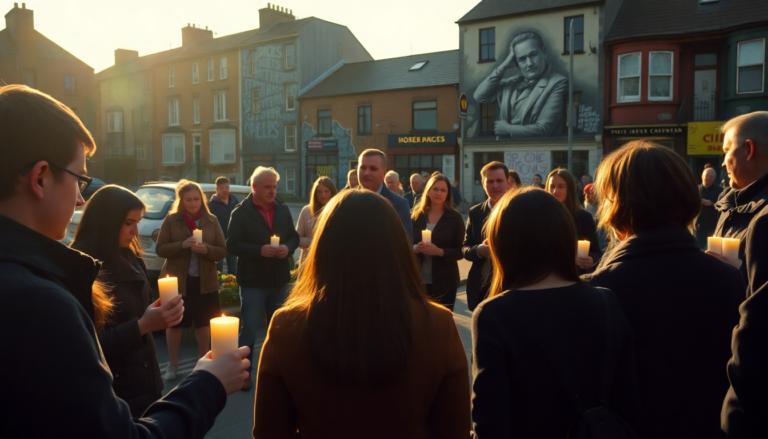
In a heartfelt gathering, family members and supporters came together at Groves-Reilly Corner in west Belfast for an annual vigil honoring those who have lost their lives or suffered injuries due to rubber and plastic bullets. This year’s event resonated with urgency, as participants called for a complete ban on these contentious projectiles, echoing the quest for justice from affected families.
The Vigil: Who, What, When, Where, Why
Taking place on a significant date in August, the vigil drew in families of victims, local activists, and community leaders. Among them was Christine Duffy, whose brother Seamus tragically became the last victim of a plastic bullet in Northern Ireland, killed on August 9, 1989.
Speaking with raw emotion, Duffy declared, “We are here on behalf of all the victims. We want plastic bullets banned. They are still using them and the victims need justice.” Her powerful words resonated deeply, reflecting the lingering trauma these weapons have inflicted on families and communities alike.
Emma Groves, the granddaughter of a political activist who campaigned against rubber and plastic bullets after being blinded in 1971, also took to the microphone. “It is important that we keep this campaign going as these plastic bullets are still being used to kill and maim people,” she emphasized. Groves highlighted the necessity of continuous advocacy, stressing that the impact of these weapons extends far beyond the immediate injuries, affecting the lives of families and entire communities.
Community Support and Political Advocacy
The support for the vigil was not limited to the families of victims; local political representatives stepped up to show their solidarity. Paul Maskey, the Member of Parliament for West Belfast, made it clear that “plastic and rubber bullets are wrong and should be banned.” His presence underscored the political stakes involved, as community leaders work tirelessly to influence policy surrounding these munitions.
As the event unfolded, participants held banners and placards, chanting for justice and calling for an end to the use of plastic bullets. This gathering served not only as a memorial but also as a powerful stand against the ongoing use of such weapons. It showcased a community united in grief and anger, demanding accountability and meaningful change.
Historical Context and Ongoing Concerns
The history of rubber and plastic bullets in Northern Ireland is steeped in controversy and pain. Originally introduced for crowd control, these projectiles have been linked to numerous fatalities and severe injuries throughout the years. The event in Belfast serves as a stark reminder of this tragic past, raising crucial questions about the current and future use of such weapons in law enforcement.
As families continue to advocate for a ban, the vigil highlights a burgeoning movement within the community and among activists, determined to confront the legacy of violence associated with these munitions. With each passing year, the call for justice becomes more insistent, and the demand for governmental action grows ever more urgent.
In summary, the annual vigil in west Belfast stands as a poignant reminder of the relentless pursuit of justice for victims of plastic bullets. It underscores the ongoing struggle faced by families affected by these weapons and reiterates the community’s strong demand for a ban. As voices unite in this vital cause, hope for change and accountability remains unwavering.
