

In a significant crackdown, authorities have charged the first individuals in the UK for showing support for a newly banned organization, Palestine Action.
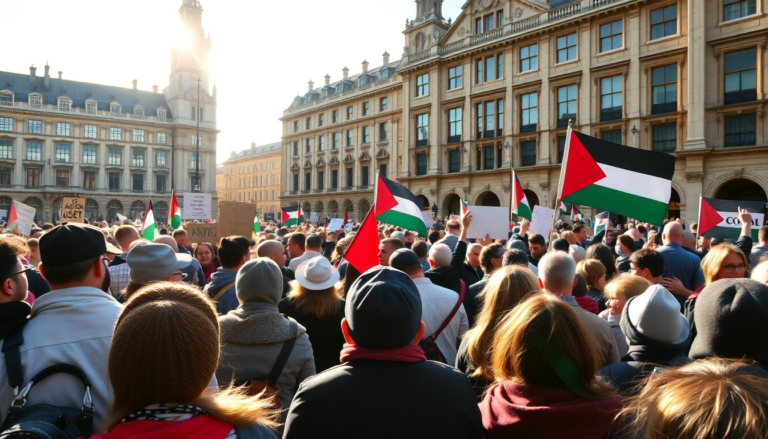
In a surprising twist in the ongoing saga of public demonstrations, **three individuals have been charged** for their support of Palestine Action, a group that has recently been designated as a terrorist organization. The Metropolitan Police have confirmed these arrests, highlighting the seriousness of the situation in England and Wales.
But what does this mean for activists and protests moving forward?
Details of the Arrests
On July 5, during a protest in Westminster, police took two women and a man into custody. They are now facing **charges under Section 13 of the Terrorism Act 2000** for showing support for a proscribed organization.
Among those charged are **Jeremy Shippam**, 71, from West Sussex, **Judit Murray**, also 71, from Surrey, and **Fiona Maclean**, 53, from Hackney in north-east London. They are scheduled to appear at Westminster Magistrates’ Court on September 16. Isn’t it alarming how quickly the legal landscape is changing for those who wish to express their views?
This crackdown comes amid rising tensions as a significant protest is planned in Parliament Square, where organizers expect over **500 attendees** to voice their support for Palestine Action.
**Commander Dominic Murphy**, who leads the Metropolitan Police’s Counter Terrorism Command, made it clear: anyone showing public support for the group risks arrest. He stated, “Anyone who displays public support for Palestine Action, a proscribed organization, is committing an offence under the Terrorism Act.” With such strong language, how will this impact the future of protests in the UK?
Wider Implications and Ongoing Protests
The implications of these charges reach far beyond the three arrested individuals. Police are preparing to send case files regarding **26 additional people** detained during the same protest to the Crown Prosecution Service. Murphy has urged those considering attending future demonstrations to think twice, emphasizing the potential criminal consequences. Are we witnessing a shift in how protests will be handled in the UK?
Meanwhile, the organizers of the upcoming demonstration, **Defend Our Juries**, are determined to continue their protests until a High Court challenge regarding Palestine Action’s ban occurs in November. This wave of protests across the UK, which has already led to **over 200 arrests**, is part of a coordinated campaign by Defend Our Juries in response to the group’s proscription. How will this ongoing tension shape public discourse around activism?
Background on the Ban
The ban on Palestine Action was prompted by an incident on **June 20**, when two Voyager aircraft were damaged at RAF Brize Norton in Oxfordshire, resulting in damages estimated at **£7 million**. Home Secretary **Yvette Cooper** publicly condemned the vandalism, calling it “disgraceful,” and noted the group’s “long history of unacceptable criminal damage.” This context is crucial as we consider the current legal actions and public sentiment surrounding Palestine Action.
As developments continue to unfold, the atmosphere remains charged, with police closely monitoring further demonstrations. Authorities are keeping the public informed about the legal ramifications of these actions, marking a pivotal moment in the ongoing conversation surrounding protests and government responses in the UK. What will the future hold for activism in a landscape increasingly fraught with legal challenges?
