

Despite an overall decline in construction activity in Northern Ireland, private housing shows signs of growth, according to recent reports.
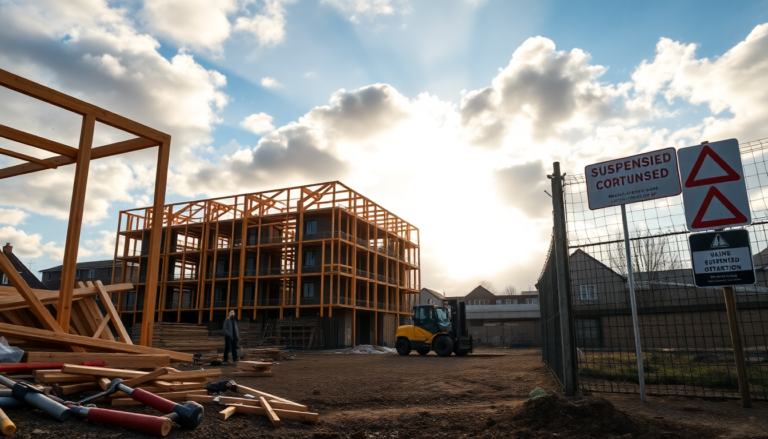
Have you noticed the changes in the construction scene lately? According to fresh research from the Royal Institution of Chartered Surveyors (RICS), private house building is the standout performer in Northern Ireland’s construction market, showing an increase in activity during the last quarter.
But don’t let that fool you—overall, the construction workloads in the region have been on a downward spiral for four straight quarters, a sign of a wider stagnation in the industry.
The Current Construction Landscape
The latest RICS construction monitor reveals that while surveyors are hopeful for a rise in workloads over the next year, there’s a noticeable dip in confidence compared to earlier predictions.
The construction sector is facing a slew of challenges, notably the lack of major public sector projects, which are essential for keeping the industry alive and kicking.
In a separate analysis, S&P Global highlighted that the UK construction sector marked its sharpest decline in over five years as of July, coinciding with a worrying downturn in housebuilding activity.
This paints a grim picture for an industry struggling to find its footing amid economic uncertainty. So, what does this mean for future projects?
Challenges Facing the Industry
Jim Sammon, RICS’ regional construction spokesperson, emphasizes that Northern Ireland’s construction market is feeling the heat, with workloads dropping and most sub-sectors reporting less activity. While it’s great to see a positive trend in private housing, Sammon warns that significant hurdles remain, especially when it comes to meeting the demand for new homes.
“It’s been encouraging to see an uplift in private housing activity in this survey, alongside NHBC’s most recent quarterly report which also shows a rise in the number of new homes registered in Northern Ireland,” Sammon stated. However, this uptick does little to solve the overarching problem of insufficient housing supply to cater to community needs. Isn’t it puzzling that we’re seeing new developments yet still facing a housing crisis?
Moreover, we can’t overlook the public sector’s critical role in this landscape. Anecdotal evidence suggests that a significant lack of government investment is putting a serious dent in workloads. Surveyors are also grappling with a host of obstacles, from planning delays and soaring raw material costs to inadequate wastewater infrastructure. How can we expect the construction sector to thrive under such conditions?
Future Outlook and Skills Shortage
Looking ahead, RICS chief economist Simon Rubinsohn offers a sobering perspective on the UK construction sector as a whole. He notes that while there may be signs of a modest recovery, it’s far from a robust rebound. One of the most pressing issues? A shortage of skilled workers. This crisis affects not only traditional trades like bricklaying and plumbing but also professional roles, including building control surveyors and quantity surveyors.
Rubinsohn underscores, “The underlying tone in the construction sector remains subdued, and looking forward the indicators are consistent with a modest rather than material uplift in development.” This highlights a crucial need for strategic interventions to bridge the skills gap and revitalize the construction landscape in Northern Ireland. What steps can we take to foster talent in this vital industry?
