

In the heart of Accra, waste pickers are turning trash into treasure, battling stigma and pollution in their quest for dignity and survival.
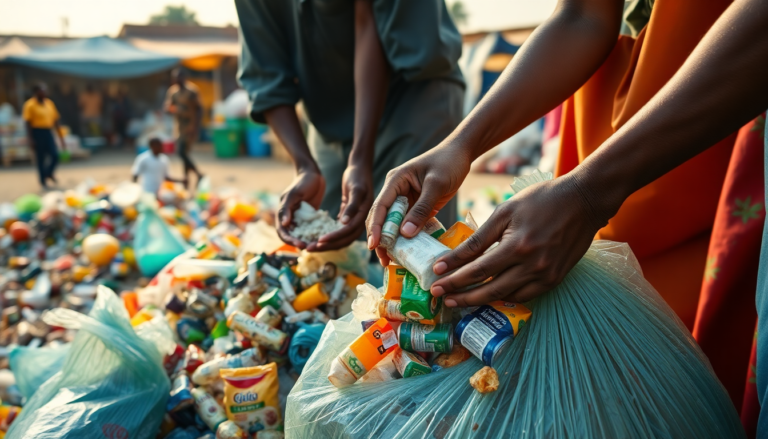
Okay, but can we talk about where your plastic waste actually goes? In Accra, Ghana, a group of resilient waste pickers isn’t just collecting trash; they’re standing up against a growing plastic crisis. 🌍💪 Meet Lydia Bamfo, a powerhouse who’s spent 25 years on the frontlines, turning waste into a livelihood for herself and many others.
Her journey? It’s not just about survival; it’s about community, empowerment, and rewriting the narrative around waste picking.
The daily grind in Accra
Every morning at 5 am, Accra comes alive—birds are chirping, and minibuses are buzzing through the streets.
But under this lively surface lies a serious environmental crisis. With nearly three million residents, the city is drowning in plastic waste. Lydia Bamfo, a 51-year-old mother of seven, has her “office” right outside a chaotic yard overflowing with recyclable rubbish.
Can you imagine starting your day in such a place? For Lydia, it’s where she finds her purpose.
As she hops onto a motor-tricycle each day, she’s not just heading to work; she’s joining a small army of waste pickers who brave the filth to reclaim valuable materials. Along the way, she exchanges greetings with fellow pickers, all working tirelessly to gather the city’s plastic detritus. It’s a tough job, but as she puts it, “It’s a living”—and in a place where many struggle to make ends meet, it’s a lifeline.
From stigma to leadership
Imagine being called a “vulture” or worse for simply trying to earn a living. When Lydia first started picking waste, that’s exactly what happened. People looked down on her, and even her family turned their backs. Fast forward to today, and she’s not just a survivor; she’s a leader! As the head of the Accra Borla Tricycle Association, she represents over 8,000 workers. Talk about a glow-up! ✨
Lydia’s story is a shining example of resilience. She has fostered a community among the waste pickers, many of whom are young men and boys without families. “I look after them,” she laughs, “They call me Mother Christmas!” 🎅🏽❤️ It’s this sense of family and support that gives her and others hope, despite the harsh realities they face.
The plastic epidemic
Ghana is grappling with a plastic epidemic, importing over two million tonnes of plastic products each year. Can you believe that? While Ghanaians produce less plastic waste per person compared to those in wealthier nations, the sheer volume is staggering—over one million tonnes a year! That’s enough to fill half a million cars! 🚗💔
Strolling along the seafront in Accra, the sight is truly heartbreaking. What should be a vibrant community beach is littered with plastic, with every wave bringing in more debris. Local businesses, like the Labadi Beach Hotel, are working hard to clear the sand, but the microplastics stubbornly remain embedded in the ecosystem. It’s a constant battle against an ever-growing tide of waste.
Facing the future
With the government struggling to manage this issue, it’s up to communities and organizations to step in. Lydia and her fellow waste pickers aren’t just cleaning up; they’re demanding recognition. Initiatives like the World Bank’s plastics bond are steps in the right direction, but many argue that the funds aren’t reaching the people who need them most. “Train me,” says Johnson Doe, head of the landfill’s waste pickers’ association. “We need support to elevate our work and lives.”
The fight against plastic waste is far from over. While companies may boast about their “plastic neutrality,” real change has to come from those on the ground—like Lydia. It’s time we listen to their voices and support their initiatives. 🌱👊🏽
Join the conversation
What do you think about the role of waste pickers in tackling plastic pollution? Are there ways we can support their efforts? Let’s discuss! 💬✨ #WastePickers #PlasticPollution #Sustainability
