

Uncover the transformative journey of the UK, highlighting major events and shifts that led to its modern identity.
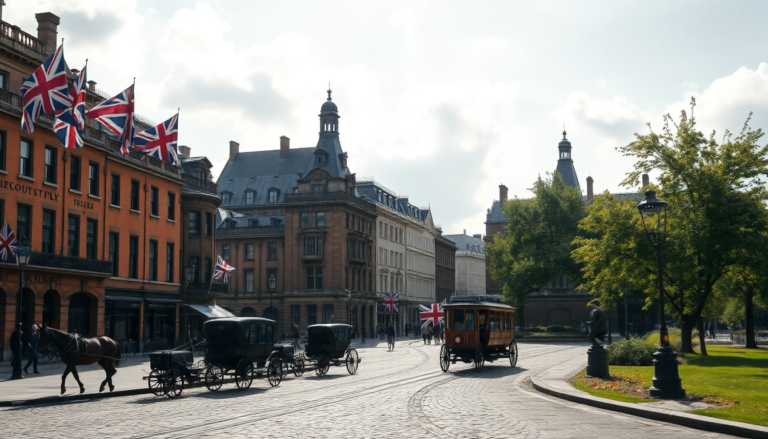
Hey friends! 🌍 Have you ever wondered how the United Kingdom transformed from a union of Great Britain and Ireland into the modern state we know today? Buckle up, because we’re diving deep into a fascinating historical journey that shaped not just a nation, but an entire empire! 🚀
The Formation of the United Kingdom
Okay, let’s rewind to 1801. The UK was officially formed with the Acts of Union, merging the Kingdom of Great Britain and the Kingdom of Ireland. This union wasn’t just a formality; it was a response to political pressures and fears of Irish alignment with revolutionary France.
But what did it mean for the people living there? 🤔 Well, the Irish were promised that their loss of legislative independence would be compensated with Catholic emancipation. Spoiler alert: it didn’t quite pan out that way! King George III blocked the emancipation, which only fueled tensions further.
Fast forward to the mid-19th century, and we see the Industrial Revolution taking off! 🚂 Britain was booming, but let’s not forget the devastating Great Irish Famine from 1845 to 1852. This tragedy claimed over a million lives and led to mass emigration. It was a crisis that laid the groundwork for increased demands for Irish home rule, setting the stage for future conflicts. Who else thinks that this historical context makes today’s issues even more interesting? 🤔
The Road to Independence
By the early 20th century, the desire for Irish self-governance was palpable. The Irish War of Independence (1919-1921) was a major turning point, leading to the establishment of the Irish Free State in 1922. 🎉 This was a huge win, but it also came with complications. Six northeastern counties decided to opt out of joining the Free State, choosing to remain part of the UK. This led to the UK being officially renamed the United Kingdom of Great Britain and Northern Ireland in 1927.
So, how did this shift impact the people? It marked a significant turn in British history, representing the decline of the British Empire and signaling the start of a new era. The complexities of identity, governance, and nationality were now front and center in political discussions. Who else feels that the struggle for identity is still relevant today? 🧐
The Legacy of the UK’s Transformation
The evolution of the UK wasn’t just about political changes; it brought about massive social and economic shifts too. The Industrial Revolution transformed society, creating a more urban population and a rise in the working class. But with great change came great unrest. The 19th century was filled with protests demanding better rights and representation. Remember the Peterloo Massacre of 1819? 😟 It highlighted the government’s fears of a popular uprising and led to even stricter laws.
As we look back, it’s clear that the path to modern Britain was paved with struggles for rights and representation. From the suffrage movements to the conflicts in Ireland, each event contributed to the identity of the UK today. It’s a reminder that history is never just a series of events; it’s a complex tapestry woven from the struggles and triumphs of its people. 🌈
So, what do you think? How do these historical events shape your view of the UK today? Let’s chat in the comments! 👇 #HistoryTalk #UKTransformation #IrishIndependence
